Silicon Valley Technology Commentary & Archives · Est. 2006 3,045 Posts · 2006–2026
Showing posts with label Web (104 posts). Show all posts

January 30, 2018

January 30, 2018 · 5 MIN READ · BY LOUIS GRAY

Real Valley Stories: Search Marketing With the Open Directory Project

Real Valley Stories: Search Marketing With the Open Directory Project

Editor’s Note: Part 12 in an irregular series of stories from my many years in Silicon Valley. Part 11 talked about the time I got called into HR's office to meet with lawyers over industrial espionage. This time, a story involving gray hat search engine marketing in the early days of the Web.

DMOZ is now closed. 

Believe it or not, before the world of automated spiders that crawled the entire Web and ranked the results for your searches, much of the way we found content on the Internet was thanks to manual updates from an invisible army of directory editors. Yahoo! defined the initial dot-com era, with its hierarchical oracle making or breaking traffic downstream, as sites were organized and shuffled into categories by unseen text tweakers, much like the editors of Wikipedia try and keep its tens of millions of article pages up to date, with a seemingly fluid mass of edits to keep the live encyclopedia current.

But Yahoo! wasn't the only Web directory. Rich Skrenta and others, also behind Web 2.0 efforts Topix and Blekko, introduced the Open Directory Project, referred to as DMOZ, for it was hosted on the directory subdomain of the Mozilla.org site, with an objective of harnessing contributions from around the world (like Wikipedia), to build a directory, similar to Yahoo!, that could plug into any site that wanted to host one. In a time when many sites were seeking Internet traffic and riches by acting as the front page for the Web, attaching the open directory project to your portal could give you an edge and not require you to bring on a ton of staff.

As with Yahoo!'s directory, a company's inclusion in the DMOZ directory could act as a binary gate as to whether or not potential users would find you. In 1999, working as a Web marketing manager for a Web startup that offered internet faxing and conference calls, I found myself irked to see that our services were not included in DMOZ. Making things worse, the categories I would expect to see us listed in seemed slapped together and without an official owner. Given my understanding of the space and knowing our many competitors, I registered an account and requested to moderate the relevant category.

The DMOZ Internet Fax Listings from 1999 (via Archive.org)

Not too long afterward, I was given the option to update the category, including those of our competitors. As it was nearly two decades ago, I honestly don't remember if I used my company email or a Yahoo! email or equivalent, but I didn't try and disguise where I worked. My application had gotten through.

FaxCube from the year 2000.
When I did log in, I found the content in a state of abandonment. There wasn't much you could do with a site's listing. Give it a title, a link, and a short description, literally about a dozen words. It was fairly impossible to differentiate services from one another, especially in a commoditized space where the core function was pretty straight forward. But I cleaned up the descriptions for all the entries, including our competitors, to accurately display their offerings. Some offered email to fax services, while others offered the reverse. Some offered broadcast faxing. Some required a proprietary fax viewer, and others were completely Web based. That kind of thing.

When content was edited in DMOZ, edits would later propagate downstream. Sure enough, my colleagues noticed a spike in Web traffic to our main sites, with referrers coming from all the places DMOZ was set up. For no cost, I had a clear impact in our customer acquisition funnel, and maintaining the DMOZ became part of my ongoing work.

Later, DMOZ added the option to highlight two entries in the group, which were solely up to the moderator. This, of course, gave me the option to expand from a gray area, to clearly going over the line into promotion. It went without saying I thought our service was the best, and highlighted it at the top. I also chose to highlight a partner site (the Netscape Fax Center) that was white labeling our service, essentially the 1 and 1A positions.

This got even better when we soon realized DMOZ was fueling search results for AOL. The more people who searched for Internet Faxing on AOL, the better we were to see results.

DMOZ listings for Internet Telephony in early 2000. (Via Archive.org)
In early 2000, we introduced a new Web based conference call and meeting product. Addicted to the free traffic from DMOZ, my team asked me to see if I could get our content similarly included on whatever the equivalent was for Internet conferencing. I poked around, and, again, applied to be an editor for the Internet Telephony page. It wasn't a perfect fit, but it was pretty good.

Again, I got approved, and again, I added our sites, and again, I promoted our main site and a partner site to be included as the pair at the top of results. Again, we started to get plenty of Web traffic from DMOZ and its downstream partners, accounting for more than double digit percentage of our traffic to both properties. But this time, it wouldn't last long. Maybe it was the clear marketing copy promoting both services, but one day, I logged in and saw our service demoted to the standard results, with another in its place. I reversed the change, and it wasn't too long until there was a debate upstream as to whether these listings were in good faith.

PhoneCube, in all its glory, from 2000.
Not too long afterward, my moderation rights had been removed from both sections. I'd essentially been fired from my side job of gray hat SEO, long before most of us knew what that meant. And yes, my engineering peers lamented the loss of traffic, as our more organic listings, on AOL search and elsewhere, didn't carry as much weight, once we became one of the fold.

Had I just stayed content to include our services in the listings, or even just to stay a moderator of the less exciting Internet faxing space, it's possible I could have been editing text descriptions for our sites and our competitors indefinitely. But pushing our own products and our partner sites turned out too good to be true. The "Wild West" Internet traffic rush didn't last forever, and, as it turns out, neither did our products. I was laid off after we couldn't get a funding round closed at the beginning of 2001, and a few months later, the company was parceled off to become part of Oracle (see 2006 post). Some of my colleagues still work there nearly two decades later. As for DMOZ, it too shut down a few years ago, a relic in the world of Google and Facebook.

Disclosures: This whole post is a disclosure! I worked at 3Cube during this time. I work at Google now, a perceived competitor to whatever Yahoo! and AOL call themselves now. And as I work on Google Analytics, this is not a post about SEO to all you SEO/SEM folks.

January 18, 2018

January 18, 2018 · 4 MIN READ · BY LOUIS GRAY

With Web at the Core, Chromebook Options are Strong, Plentiful

With Web at the Core, Chromebook Options are Strong, Plentiful

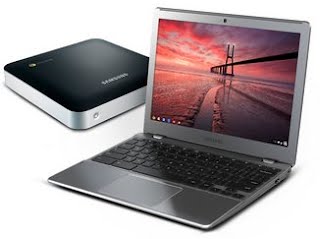
This looks like an ad. But it's just a few recent Chromebooks.

In 2011, on my first day at Google, I was asked to pick out a laptop. The choices were slim - a thin Apple MacBook Air or the larger MacBook Pro, a forgettable Windows equivalent, or a Linux device more suitable for engineers. While I had the company's first foray into Chromebooks, the CR-48, at home, in addition to my own personal Mac, picking a Chromebook wasn't even an option. The Web-centric OS, which focused on keeping all data in the cloud, and leveraging Web apps, wasn't ready for my every day use.

A few months later, I ran into then SVP of Chrome Sundar Pichai, in the office stairwell as we were on to our respective meetings. Pointing to my MacBook Air, I told him I couldn't wait to turn it in and go completely ChromeOS at home and at the office. In his usual humble and understated way, he said the team was working on it, and to stay tuned. Not too long afterward, in another unplanned hallway conversation, he introduced me to a VP on his team developing hardware, and offered me up as a willing beta candidate.

The 2013 Chromebook Pixel (version 1)
I didn't think much of the choice encounter until early 2013, when I saw Sundar take the stage and unveil the Chromebook Pixel, a high-end Chromebook with a touchscreen, and promised faster speeds and memory.

As I recounted a few years ago on Google+, I saw Sundar as available on IM shortly after the event and congratulated him on the exciting launch. His IM came moments later... "Do you have one yet?" Surprised, I said I didn't, and it was no big deal. I had no such illusions of self-importance. But he answered directly, "I'm so sorry. You were supposed to be on the list." Fast forward, less than an hour later, I had a brand-new Pixel - and I haven't seen a need to use a Mac since.

That a Googler is using a Chromebook isn't newsworthy, obviously. Water is wet. But I remember a time when betting on a Web-centric device like a Chromebook was a real leap of faith. There were always excuses not to make the switch, be it a specific piece of software, some concern about printing, or general distrust of the unknown. Maybe we were worried about moving local storage to the cloud, or editing photos, or losing access to some premium software on Mac or Windows we'd already paid for - often at a cost even higher than a new machine.

Chromebooks have proven exceptionally popular in schools, thanks to their versatility and low cost. And as people become more mobile-centric, their data also becomes more portable and Web centric. Just as you expect to have your data follow you from phone to phone, moving from device to device should be seamless. Like I'd said in 2012, the future of local storage is practically none at all.

This summer, I got my wife a touchscreen convertible Chromebook for less than $100.

Watching the many different options for Chromebook hit the markets feels a lot like the same momentum we saw when Android's many partners took imaginative approaches to new handsets. While we essentially knew the rigid details coming from Cupertino for both computers and phones, Google partners built big and small and with any number of differences to set each apart, from brands as diverse as Acer, Asus, Dell, HP, Lenovo, Samsung and Toshiba.

Now the decision process is one of plenty, not scarcity. So many options, pretty much all of them good. You can get small screens or big screens. You can get touchscreens and convertibles that act like a tablet. You can run Android apps, or even mark up the screen with a digital pen. All very cool.

This summer, while on a family vacation in Chicago, after seeing so many positive reviews for Samsung's Chromebook Pro, I figured it was time for an upgrade from my two year old Acer 710. I quickly bought one on Amazon, had it delivered to an Amazon Locker down the street the next day, and after entering my Google credentials, I had made an incredible upgrade, with no data migration needed. It was almost too easy. (And yes, that's the laptop I'm on now)

Having seen the Pixelbook, the successor to that 2013 Pixel and its 2015 follow-on, and even more good reviews, I'm already getting that itchy feeling and have added the newest device to my shopping cart more than half a dozen times, desperately wanting it, but knowing the Chromebook Pro has a long life left.

Meanwhile, my wife's slim Asus Chromebook I picked up this July gets constant use, and my 9 year old twins bang away on inexpensive Acers to do work in Google Docs. They do the work of machines that cost 10 times as much, without coming bundled with the worry that you lose your data in the event of a disk failure. And the gaps that may once have been there in 2010, 2011 or 2012... they're gone.

If you're an elite creative software wizard who has a custom setup, then keep it up, but for the rest of us who use our devices to create, engage, consume and share, the Web is the most powerful device there is, and Chromebooks were designed for it. They've come a long way.

Disclosures: I work at Google. You knew that. But I still pay for my Chromebooks, except for those provided for me to use at work, obviously.

January 10, 2018

January 10, 2018 · 4 MIN READ · BY LOUIS GRAY

Linking Less and Talking More: Disappearing Web Mentions

Linking Less and Talking More: Disappearing Web Mentions


The World Wide Web was designed to primarily do three things - inform, discover and connect. A globally connected series of documents could instantly bring you to the thoughts and experiences of someone across the world. In the earliest designs of the Web, it was through hyperlinks that you would find those new voices. Links brought you new sources of data, and those downstream documents led you even further to new people and ideas.

As the Web evolved, and incorporated photos, videos, streaming, and all manner of media, discovery expanded to include search. Without an explicit link, you could still find pointers to new content in the results of your query. Destination sites, acting as content hubs, would surface new content, usually within their network, of recommendations you might like. Ads, essentially links with pretty pictures, would offer another exit.

WebCrawler: One of the Web's first search engines
When blogging was the main medium of first person information sharing, prior to the rise and later domination of real time social streams, the way we discovered new voices was through links to others. I'd mention those I agreed with and highlight, with more links, those I didn't. One popular feature in practically everyone's sidebar was a blogroll, to show those with closest ties or just who we liked to read. And there were custom search engines, like Technorati, which when combined with tools like Google Alerts, could let you know when somebody mentioned you on the Web.

Technorati: The original blog and link search engine
But over time, a number of things happened to chop away at this fluffy cloud of friendly discovery.

1. Many Blogs Gravitated Toward Internal Linking, Not External Linking
The big sites realized that keeping visitors on their own site was more profitable and aided their metrics more than sending them away did. And while there is obvious irony in my posting to my own discussions on this from the past, we actually had lengthy discussions about these internal linking practices in 2007 (Part two and part three) 
Arguments a decade ago in favor of internal linking were that site visitors were familiar with companies and topics discussed, and could see previous coverage by their publication to learn more if they weren't. And any link off site started feeding the ad revenues of a potential competitor.
2. Dedicated Blog Search Sites Didn't Graduate to Quality Businesses
Technorati was a specialized blog search engine that skipped the general Web and went directly to blogs for its content. Its leaderboard of bloggers was closely watched, as were trending topics on the site that led to see what the blogosphere was discussing. But it was seemingly always in financial trouble, and has pivoted beyond recognition to whatever it is now.  
A 2010 interview I had with the company's leadership team claimed a pivot to quality, but their CEO was gone a year later, and so are pretty much all the discovery tools that initially aided me to find some of the best voices of the Web 2.0 era. And yes, Google Blog Search quietly disappeared not too long afterward.
3. Blog Discussions Pivoted to Real Time Streams and Sharing
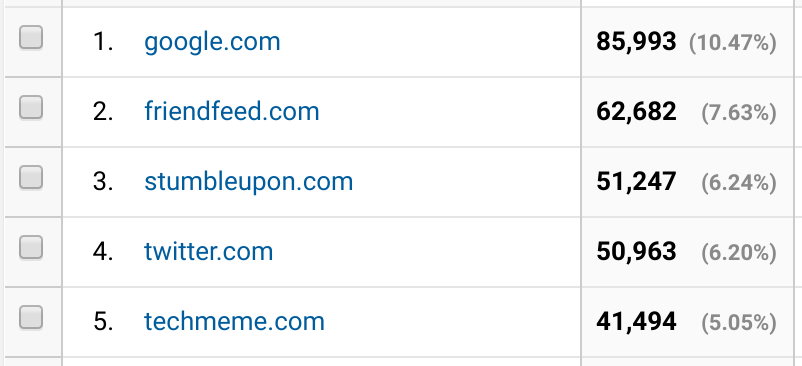
As I noted in 2009 (yet another internal link, am I right?), linking between communities was declining in favor of retweets on Twitter or sharing into the stream. The microburst of a little site traffic would provide that one time dopamine hit, but not leave a trail for later web spiders to find.
My top referring sites, via Google Analytics, from previous years

As the social streams of Twitter and Facebook took over, and bloggers (me too) got distracted, the share became the canonical mention. Your mentions on Twitter, or your notification of shares on Facebook, were faster delivered and easily quantifiable. And individual profile owners are quite unlike the publishers looking to deep dive into their analytics to discern where traffic came from.

Today, Brent Simmons laments the result of all the mentions going to the streams and leaving the Web. With links decreasing, and blog search being a relic, he yearns for a way to find again how his business is mentioned on the web or when he is being linked to. Joe Gregorio, like me, wistfully remembers analysis of referral logs to find how people found you... all through links.

Simmons' proposal is a limited one, keeping it to the MacOS/iOS community. A small project like that shouldn't be too challenging, but it speaks to a bigger problem, where the connections we once demanded are an afterthought behind the latest viral tweet and trending Facebook share. Streams are ephemeral, but the Web was built to last. It'd be great to see new voices building, informing and connecting again.

Disclosures: I work at Google and am on the Google Analytics product. So I think about publisher tools and visitor stats more than most.

January 30, 2017

January 30, 2017 · 3 MIN READ · BY LOUIS GRAY

Your Steady Stream of Tech News Will Continue When Morale Improves

Your Steady Stream of Tech News Will Continue When Morale Improves

The Web always promised to bring people together. But just as simply, it can drive people apart, as geographical barriers or partial or full anonymity empowers people to say things or behave in ways they wouldn't in a direct setting.

Accelerated by the new reality of realtime streams where everyone has a megaphone and seemingly everyone is working to "go viral" and make the biggest noise leads to a constant cacophony of shouting on the issues of the day. And of late, as I outlined in my last post about Trump's looming $100 billion productivity crisis, just about every stream and news source is dominated by politics and the impact to people by political decisions.

For those opposed to the Trump team's way of thinking, the daily barrage of news and rumors can be fatiguing. Each morning can bring new horrors of gut-churning policy and more needing to escalate to fight back. This weekend's sparked crisis stemming from an ill thought out and very likely racist and illegal refugee travel ban saw rallies across the country and millions of dollars raised to flow into the coffers of charities aiming to help, like the ACLU. (I too donated, and my company has promised to set aside millions to help.)


As colleague Yonatan Zunger warns (and you absolutely must read his post), we will likely hit a wall of outrage fatigue. If there is a steady stream of controversial news that impacts us, or people we know, or people we are tangentially fond of, we will run into capacity limits to be angry and to be heard, as the calamities run into each other. But even if that occurs, that doesn't mean we can act as if nothing is happening at all.

I've already seen people yearn for the good old days when we could debate data portability, site aggregation, text editors, or even which mobile OS is the best. But at a time when people's lives are at risk, and foundations we expected to be stable are proving themselves unstable, having a row about the latest geek gadget seems out of place.

It's not that we didn't see this coming. Back in 2006, an ancient eleven years ago, I knew we would see the web accelerate people's disagreements. People want to flock to their tribes, where others agree with them, and the opposite side can seem evil, foolish or subhuman. Most of the time, they're not - even as their words are alarming and frightful. We knew when people had an opportunity to polarize one another and their beliefs, they would. And every study shows this - including our unprecedented divisions in government, globally, nationally and locally.

We can use the Web to rally together and raise funds and awareness for our causes, and we will. But while I'm excited to see the deep pocketed among us excitedly match donations, a great chunk of society is living paycheck to paycheck, and the access to discretionary funds to hold back the government, an institution that is designed to help them, is simply going to run out.

Until we reach some level of stability and understanding with one another, and are out of a crisis mode, you can expect the 'all politics all the time' streams to continue. Mild apologies.

October 1, 2013

October 1, 2013 · 5 MIN READ · BY LOUIS GRAY

Developing for the Web or for Classic Mode

Developing for the Web or for Classic Mode

Apple's transition away from Mac OS 9 to Mac OS X is more than a decade old at this point, which means an entire generation of computer users may never have been exposed to the "Classic" Mac OS, which launched in 1984 and evolved for the next few decades before being put out to pasture.

I remember, as if it were yesterday, my own delight at hearing the deliveryman knock on the door and leaving behind a package which contained a retail box with Mac OS X 1.0 on compact disc, which promised to completely change the way I interacted with my computer, bringing with it a new and modern look, a new kernel and more.

It Looks Great, But What About Printing?

Living on the bleeding edge by installing this first version of Mac OS X meant it had some obvious holes. For one, I couldn't print. For another, I couldn't play any DVDs. So while some of the features were exciting, it was clearly limited. These limitations, and general skittishness over new technology, led many people not to dive into Mac OS X right away - and some software developers, most notably Quark and Adobe, dragged their feet on committing to the new OS, waiting for the market to demand it. In the meantime, we users had to live in a "one foot in, one foot out" experience, with "Classic" applications launching inside of Mac OS X, displaying the traditional Apple menu bar, the traditional Finder and all other bits one would expect from an older Mac.

This awkward time had developers forced to make a choice. Would they create applications solely for OS X, continue on a path of developing for OS 9, or ship both and risk a gap in features? It's, pardon the pun, a classic dilemma of developing for a known and existing market, or preparing something for a future market. In time, Classic faded away, with Steve Jobs famously holding a burial for it at the WorldWide Developers Conference in 2002. All the big vendors, from Adobe to Microsoft, shipped for Mac OS X. Printer drivers eventually came along, as did the ability to run DVDs and do everything Mac OS 9 could.

The Desktop is the New Classic. The Web is the New OS X.

I feel we're at a similar crossroads now in development, at least on the desktop. As a fulltime ChromeOS user, I don't ever install proprietary software outside of my browser - but I also don't feel limited in what it is I can do. I can print, using Google Cloud Print to my Canon printer at home. I can play all my videos on Netflix or Google Play and my music through Spotify or Google Music. I can run all my productivity apps on Google Drive, edit photos in Pixlr and so on. Even at a time when traditional operating systems are the significant market share leader, I think we've reached a point where developers looking to reach the widest numbers of potential users are better off making a product for the Web than they are by picking a desktop platform - and in those very rare cases where I find out an application needs to be downloaded to even run, I'm surprised.

When you fight against the momentum of the Web, you lose. And while this doesn't mean every part of the Earth has ubiquitous high speed broadband - far from it - I do believe we are at an inflection point, like all those Mac developers were 10+ years ago, where one would need to choose between building for the platform that's known or to the platform that's unknown. And just like in the Mac OS X scenario, the Web as a platform may have a few holes, but the Web's modern browsers are becoming stronger and more robust at a pace I'd argue is outstripping improvements in our traditional desktops.
The Pixel is My Machine of Choice and It's All Web.

My Data Follows Me On Every Device.

In 2011, just after I joined Google, I talked about how I used Chrome all day long, and used multiple browsers to separate my business profile and my consumer ID. Since then, I've moved completely to ChromeOS and Chrome has debuted on both Android and iOS, so you can sync your data to practically any smartphone and never miss a step. Working closely with the Chrome Developer Relations team here at Google, I get to see the browser get faster, and become an even more robust platform for creating rich applications, with exceptional video and sound.

By living completely on the Web, as I mentioned last year in my post on the future of storage being none at all, any computer that has Web access is my computer. Hardware is simply a conduit for my access to my data and my preferences. Once I log in to my accounts through the browser, I should be able to pick up right where I left off, and I shouldn't be limited based on whatever client software or plugins may or may not be installed on this machine.

Pick the Platform for the Future.

Hindsight is 20/20, of course, and we have the benefit of history to fall back on, which clearly shows developers were right to present a fast track for migration away from the creaky OS 9 and start coding for OS X. While Apple's incredible success over the last six-plus years especially has been due to the company's work on iPhones and iPads, had Mac OS X never delivered on its promise, the company would certainly be a shadow of itself. The direction to a more modern OS proved to be the right one.

Now, again, we have a choice - to a more modern platform with more opportunity for a rapidly-evolving set of users for whom the Web and anytime access are a given, and for whom nearly all their time is spent in the browser. Making the leap as a developer to a lesser-known path may involve some risk, but unlike that time at the beginning of the last decade, you don't need the overwhelming majority of a small market base to upgrade and get to your product. Most of those online are already there - and they want your app.

Usual Disclosures: Yes, I work for Google. I work in Developer Relations and think about this stuff a lot. It doesn't mean I have any bias for or against any of our real or assumed competitors.

September 19, 2013

September 19, 2013 · 5 MIN READ · BY LOUIS GRAY

Our Fragile Web of Dead Domains and Lapsing Links

Our Fragile Web of Dead Domains and Lapsing Links

For all our talk about how much information is produced every year, and how every little piece of our lives is being shared and instantly discoverable, it is surprising how difficult it can be to find information on the Web, in its original state from just five years ago, let alone ten or fifteen.

While we were once regaled with stories of how the Internet could withstand nuclear war, thanks to a complicated structure of redundancy and geographical backups, simple human mistakes, conflated with the occasional act of malice, have reduced our expectation that data, once posted, will be forever stable.

I believe strongly in the concept of the cloud, and have moved practically all my data to it, relying on a cloud-centric laptop each day and saving my files in the cloud. But not everyone is as careful about selecting providers and maintaining platforms and domains as I have been, and it's not too uncommon for entire sites and bookmarks to vanish from the Web, with only Archive.org and other clever cachers left to tell the tale.

Before this sounds like a sordid tale or anti-Web screed from someone embedded in the Web, let me give you a specific example. Imagine, if you would, a unique URL pointing back to the original dotcom boom - a simple one like .com.com. No, I didn't type it twice. The domain com.com has long been owned by CNET, part of CBS Interactive. While CNET has undergone a number of owners over the decades since its launch, it's also seen extreme variance in how they marketed their main site and URLs. For those of us who just wanted the news, it was News.com. Later News.com would redirect to News.Cnet.com, as it does today.

Archive.org Shows News.com.com in a Previous Known Good State

But at one point, News.com redirected to News.com.com, and for whatever reason, that's the bookmark I've had follow me from browser to browser for years. Suddenly, a couple months ago, this bookmark stopped working, instead showing me a directory of links, which looked like a squatter had seized the URL and taken it over. Archive.org shows the same. News.com.com worked and then in July... it stopped redirecting. So that's annoying. While it's simple enough for me to update my bookmark, and no doubt I'm in the small minority of users who kept that URL, to have a potentially high profile URL like .com.com do absolutely nothing ... seems foolish.

But Now The Old News.com.com URL is Pure Rubbish

Enough about .com.com. What's just as frustrating at times is the short shelf life for links and images from years past. My own blog has been around a little over seven years, and in the 3,000 or so posts I've made since start, each one has had many links. As companies come and go, their websites and the links to their subpages go away. News media sites, which one would hope would present a timeless archive, a long tail of information to the truth seekers out there, are often the worst offenders, as articles of a certain date fall behind a paywall, or site platforms change, forever hijacking link structure and rendering previous links inept.

One of the biggest regrets I have, as far as the web is concerned is one that +Ryan Tate (now with +WIRED) and I share. In the Web's more prehistoric times, back in the late 1990s, he and I both worked at the Daily Californian student newspaper at +UC Berkeley. Both of us wrote hundreds of news stories, covering everything from student elections to campus crazies and the occasional homicide. But at one point, after I'd left the paper, our site was hacked/corrupted, and all the existing content was lost - shockingly without backup. So more than 99% of that data is gone for good, and one will either have to travel to the Berkeley campus and pick up a hardbound paper to see our work, or it's just gone. While few of my stories are worth reading about 15 years later, they are part of my own personal (and work) history which has little record.

From writing on actual death to link death... while CNET's link lapse with .com.com is a surprise, it could possibly be due to a sale, to be used by an unknown acquirer, or simple neglect. Worse is when one sees links automatically shortened, only for the URL shortener to disappear, or for the hosting service to invalidate other short links. While I've made my case for URLs to look good and be intuitive, we've gotten used to seeing smaller URLs, best exemplified by the t.co from Twitter, helpful on their service, along with goo.gl from Google, bit.ly, and others. But by buying into a short URL service, you require it to be maintained by the original owners and all the tables being intact. So for those of us who long shared with ff.im from FriendFeed, it is by the grace of Facebook that those old things are still around, and practically nobody would be surprised if they went the way of the dodo in the next couple years.

My argument is that the Web should be built for permanence. A link I post today should be a link that works later. A permalink to a dedicated page with content should produce that same content, even if the surrounding frame has been upgraded, in the future. And short links and domains should behave in a trustworthy, user friendly manner. It would be a minor tragedy if the start page you use daily suddenly became something else, and a larger one if the domain on which you host your personal stories simply closed shop because the host didn't find it financially feasible to keep going any more. So while the magic of the Web is real, and it sometimes does seem you can practically find anything out there and get it instantly, assuming speedy broadband, the gaps have me thinking we can do better. And yeah +CNET, what's up?

September 19, 2012

September 19, 2012 · 7 MIN READ · BY LOUIS GRAY

The Future of Local Storage Is Practically None At All

The Future of Local Storage Is Practically None At All


Stand Back or Your Hard Drive Is Going to Get It

First they came for our floppy drives. Then, they came for our CDs and our DVD drives. It won't be too long until the concept of a hard drive, or any local storage, beyond that needed for temporary offline use, is itself antiquated. After decades of dramatically increasing PC hard disks, from megabytes to terabytes, saving local data is more likely to put you at risk of loss, relative to remote backup, than it is to keep your data safe, helped along by many trends pushing toward cloud storage and applications.

In April of last year, I talked about how I planned to forego the purchase of physical media, disavowing books, CDs, DVDs and other printed materials, when digital would do, and I haven't looked back - getting to my media from any device that recognized my signed-in identity. Meanwhile, as chronicled, starting in early 2010, when I first got a MacBook Air, and accelerated as I've turned toward ChromeOS as my primary device, I have almost entirely stopped the use of desktop applications. If it can't be reached via web browser, it's probably not worth having.

Goodbye Desktop Applications. Your Time Is Past


May's introduction of the latest Samsung Chromebooks (see my review) left me using my Mac only once per day, for a specific task - synchronizing my FitBit. Until recently, FitBit didn't have a completely cloud-capable service, so each night around midnight, after a full day's neglect, I open the Mac, sync the FitBit in the cradle, confirm the data's gone through, and close the Mac again, until the next day. With the recently announced FitBit One series promising wireless syncing to iOS or Android, I'm just one device away from being done.

For the rest of the day, without exception, I am on my Chromebook, or my Android devices. All my music, emails, photos, documents and other web services can be accessed and managed on the cloud through the browser.

Knocking Down Lagging Apps One By One

The evolution of software and its intersection with platforms is an intriguing one. We Mac users in the 1990s and early 2000s occasionally had to make sacrifices, not having access to apps available only on Windows. Similarly, as iOS and Android increased in market presence, there was the occasional app missing from one platform or the other. But over time, practically all applications, or their equivalents, make their way to the top platforms, and while my move to Android more than two years ago came with some apps missing, all the ones I needed quickly followed me there.

No Seriously, Have You Seen Pixlr on the Web? It's Great.

Now the web itself has proven capable enough for almost any task, and reasons why not to go all Web are dramatically reduced, especially the improved capabilities of documents, spreadsheets and presentations in Google Drive, the release of high quality image editing software like Pixlr, and promises that popular desktop applications like Spotify are set to reach the cloud very soon now, to stream music in addition that which you can purchase from Google Play.

Time to Move on From the Desktop and File Mentality

With solid reasons to not go all Web rapidly eliminated, this evolution also brings up the opportunity to revisit old paradigms we've always taken for granted, as how we use our computers and mobile devices has changed.

Consider, for example, the desktop and files metaphor. Decades ago, we adapted our PCs to be similar to those environments we knew offline. The desktop, folders and files all hearken back to this original model. Even the hyperlinks of today's Web follow similar structures with directories and files owned by top level domains, and today's leading cloud storage vendors, including Dropbox and Google Drive, mimic a traditional desktop environment to bring ease of adoption to users migrating from local storage. But this shouldn't always be the case.

While clean directory structures once were enough for me to almost quit a job over a decade-plus ago, machine-generated links to content are good enough, and it's possible we just need to know how content relates to one another, or what you're searching - for example, email, and tags that generate metadata, providing you with what you need even if you don't know exactly where to look.

All Your Computers Are Mine. Seriously.

The notion of this being "my laptop" or "your PC" doesn't even make sense any more if you think about it. All I need is access to my "stuff", and that stuff is tagged to my identity, be it one that is affiliated with Apple, Google, Microsoft, Facebook or any other provider. While Chromebooks have made it most clear that you can sign out of one account and sign in as another and retain access to all your things, the truth is that so long as you are using a leading provider of identity, you should be able to get to all your files, bookmarks, and media from any device with a modern browser. Go ahead, steal my laptop. I'll just get another one that will do the same things and be up and running in minutes.

Kids These Days... They Don't Need Hard Drives

Consider also that my children should never need to use or know about local storage. At ages 4 and 2, my children will enter elementary school in 1 to 3 years. They have been raised with web-connected TVs, tablets and smartphones, have an expectation of anytime access to data, and shouldn't be trained to store data that is tied to any single device. To them, every device has Netflix. To them, every device can get to Google, and anything they want to see, hear or watch can be found by asking Google for the right image or video, instantly - no buffering allowed.

Just two to three years is enough for us to see how rapidly USB thumb drives went from being the hot tradeshow giveaway to now seeming almost completely useless, with online sharing being the norm. Just two to three years was all I needed as a student attending Berkeley in the late 1990s to move from carting a floppy disk across campus to the computer lab for printing my freshman year, to instead email the document to myself as an attachment my junior year.

Oh. So You Don't Have Pervasive High Speed Wireless?

It's easy to sit in Silicon Valley's ivory tower and say that with pervasive high speed Internet, eliminating any dependency on local storage is a brilliant idea. It's easy to overlook potential power outages, cloud disruptions, dependence on third party services, and spotty web. Nobody likes being out of range for phone calls, let alone all your data, and nobody truly wants to be helpless if their account is compromised. Those are not minor and trivial concerns. But neither is ensuring data compatibility as the data is stored on multiple local machines, and backed up to temporary local storage which may or may not be less reliable than a service provider that serves millions or more.

Years ago, it may have seemed silly to move to web-based email instead of desktop applications, and the same could be said for other apps that have now become default on the web - including calendaring, address books, event planning and more. Digital media for entertainment, once the province of physical media delivered to your home or picked up at a retailer, is now accessible anywhere on any device. So too will be your photos, music, documents, and more. I even moved all my family's photos off spinning disk on an array of Macs from the last 4 years and put them on Drive.

The key to staying prepared for the next evolution of computing is to be willing to take a leap of faith - knowledge that you don't need desktop devices when a laptop will do, knowledge that you don't need to have DVDs in your living room when Netflix or iTunes have all you need, and that what you've been used to and taught over decades just might not be entirely the same any more.

Disclosures: I work for Google and yes, Google makes many services that provide for cloud storage and computing, as well as those nice Chromebooks, one of which I gained for free earlier this year and am using right now to make this post (as well as all the screenshots and images in the post, edited in Pixlr).

May 18, 2012

May 18, 2012 · 3 MIN READ · BY LOUIS GRAY

Web Data Caps Not Prepared for Pervasive Connectedness

Web Data Caps Not Prepared for Pervasive Connectedness

Comcast (Xfinity) made headlines yesterday with its discontinuation of a standard 250 gigabytes a month cap for its residential users, in favor of a new format, which starts at 300 gigabytes a month, with the option to buy more. As a residential customer, I had noticed they stopped tracking our net usage in April, as after continuous growth in our home's Web traffic, the number shockingly (and incorrectly) displayed it was stalled at 56 Gigabytes, following a 162 GB month in March, up about 20 percent from February, and in turn up nearly 40 percent from January.

The main rise in our home for data consumption is two-fold, with my kids' adoption of Netflix and YouTube on our various tablets, and our own use of Google+ hangouts for live video interactions with others on the social network, including extended family and remote friends. As I watched our monthly data consumption increase, it looked like we would be on track to hit Comcast's data cap of 250 Gigabytes somewhere in the second half of the year, barring changes in our behavior or an eventual topping out - and that doesn't include the various megabytes taken down over 3G and 4G from our Android phones and Chromebooks.


Typically, limits imposed on users are indicative of one of two matters - the first being a lack of robustness in the system, which has proven incapable of supporting a change in customer usage, and the second being bad actors within the system, who for whatever reason, consume a dramatically greater amount than the average customer. It's easy to point at illicit file sharing, pornography or piracy as the reason for these caps, but with increased use of cloud computing, high quality video consumption and web communication, including VoIP and video chat, what used to be the exception is threatening to become the new normal. The wonder is if the infrastructure can adapt to consumer needs, or if even more disruption is needed.

The face to face to face video chats of today and near instantaneous downloads of feature films that we take for granted, even in HD, seemed improbable five years ago and impossible 15 years ago. One has to wonder what could be made possible in the next five to 15 years going forward, with advancements in software codecs, fibre outlay and wireless standards. My kids are growing up in a world when they expect any TV show to be accessible on any device whenever they want it, and it's unlikely they'll ever understand the sounds of a dial-up modem, let alone references to floppy disks, analog address books and rotary phones.

Traditional infrastructure providers like Comcast and others who find themselves making incremental changes in a world that seems ripe for significant change and disruption make me feel like they are solving for today's problems without preparing for big changes that are on the way. Even their newest proposal, to start allocations only 20% ahead of previous limits, with warnings to those who hit these new limits, seem short-sighted. The answer, for me, is to prepare for a world with 10 times the bandwidth we have now, when not only every show ever is available to any device at any time, but possibly anything at any quality, anywhere.

If my kids and I, in our casual use, can start to bump up against caps designed to slow down illegal use, just imagine the damage we could do to these artificial caps with a more round the clock schedule and even more devices. Even my thermostat and my scale are connected to the web now. It's time we stopped playing with small percentages and started getting ready for a real Internet of things, or... scratch that... an Internet of every thing.

Disclosures: I work at Google, which is working on Google Fiber in Kansas City, and provides products like Google+ hangouts, YouTube, Android, and Chromebooks, and could be considered a competitor or partner to Comcast and Netlfix.

July 11, 2011

July 11, 2011 · 3 MIN READ · BY LOUIS GRAY

Still Looking to Sync the World of Desktop, Mobile Devices

Still Looking to Sync the World of Desktop, Mobile Devices


As an over-extended digital device collector, I have my unfair share of tablets, phones and laptops strewn about my office. My kids are practically tripping over them, each one having its own use or unique operating system. As I use each of these devices, I find myself seeing gaps in the way different applications share data - keeping user information local to the device and locking it away so I lose information when I switch. While the Web and the buzzword-heavy "cloud" are helping matters, we've still got a lot of room to grow.

As I move from device to device, I'm doing so making decisions based on what applications and data I will find when I get there. By using my laptop, I lose access to games and apps that run on my Android phone and tablets. By using my phones, I lose the desktop apps. While some are looking to Apple to lead the way by merging the OS X concept with iOS, less talk has been made of bringing these iOS apps to a touch-screen enabled desktop. Maybe the idea is not happening because it's a bad one, but some smart app developers have thrown caution to the wind and brought their content to practically every screen.

Take the ubiquitous Angry Birds franchise for starters. I can play Angry Birds on my Mac from the app on the Mac App Store. I can play it on Google Chrome on the Chromebook. I can play it on my Android phone and tablets. I can play it on the iPad and iPod Touch. It's everywhere. The downside, of course, is that I have to conquer all the same levels again on every device, with no central record.

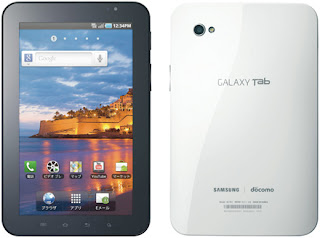
A little better is how Barnes and Noble approaches its NOOK eBooks. Purchases I make on my NOOKColor may initiate there, but I can also read the same books from my NOOK app on the Galaxy Tab (7 inch or 10 inch) and there's even a Mac client. I just have to sign in to my account and my library is right there. Very cool. If I'm connected to the Web, it will even know which book I am reading and open to the right page. That's the kind of integration I am really looking for.

You can also see smart integration of user preferences in the way Safari on iOS has the same bookmarks as on your computer, or how Chrome bookmarks follow you from Google Account-enabled machine to machine.

But most of the time apps are not behaving this way. Android's default browser is still not Chrome (and this baffles many), so the integration isn't there. Meanwhile, if I play 9 Innings baseball on my Galaxy Tab 10 and get through 81 games, starting the same app on my Galaxy Tab 7 starts at game 1. Even if I buy in-app enhancements to the game (and others like Home Run Battle 3D), those enhancements are device-specific.

Now that we can have Web-centric user profiles and can back up our user content, history and preferences, the very least we can do is be sure that our activity is matched across similar mobile devices. I recognize that often coding for desktop and mobile can be very different, but as the devices blur between smartphones, tablets, laptops and desktops, a screen is a screen is a screen, and I want to get the same stuff everywhere.

Defaulting to a Web-centric operating system like ChromeOS is a start, of course, but it's early days for that, and not everything has yet made the trip. I'd love Spotify on my CR-48 the same way it's on my phones and tablets and Mac, but it's a major hole until it hits the Web.

One practically has to make a mental matrix to remember what content and services are available on which devices, and what one loses when they choose one screen over another. I'd like to see more developers thinking about eliminating these gaps and giving users what they want no matter what screen they choose.

June 4, 2011

June 4, 2011 · 5 MIN READ · BY LOUIS GRAY

A Scorched Data Policy Is Bad for Web, Bad for History

A Scorched Data Policy Is Bad for Web, Bad for History

In a world where the cost of storage is practically zero, and the incentive to delete data declines, I'm befuddled by the lack of prioritization for some companies to focus on a complete search history, and in parallel, an intentional erasure of information by more prominent content producers, who seem to arbitrarily decide that the long tail of the Web, and the interest of future readers is less important than being seen as participating in the latest hip wave.

Even as I've changed technologies, blog providers and structures, I make extra effort to not lose historical archives and keep comment streams intact, not for ego purposes or for SEO, but because it's the right thing to do.

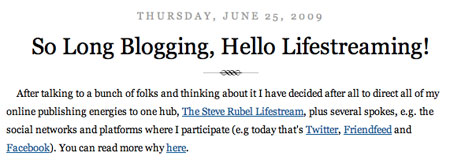
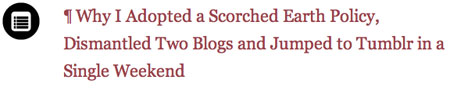
Steve Rubel, an executive vice president of global strategy for Edelman, a longtime blogger who was among the first to espouse the benefits of blogging, social media and was often at the leading edge of tech only a few years ago, has more recently swayed to and fro based on the hot startup of the day, leaving thousands of broken links in the process. After running out of time to update his blog regularly, back in 2009 he ditched the blog to run a lifestream, based on Posterous. (Google cache). Last month, he pivoted again (another hot thing to do in the Valley these days for those with unsuccessful ideas) and now is the proud owner of a Tumblr-powered blog.

Pivot Number One Saw Steve Go to Posterous

Pivot Number Two Saw Steve Go to Tumblr, and Delete Everything

But instead of leaving the older sites open, he deleted everything, proudly stating:
"With just two clicks of a mouse I rid the web of literally thousands of blog posts, some of which I am proud of - others less so - and redirected the URLs to the new site."
While no doubt many of his older posts (like mine) have limited or no value to today's readers or those in the future, they are an insightful historical record of one of the more visible bloggers of a specific period, one who is now in the process of erasing his tracks.

With more than five years of blogging myself here, the blog archives now take on their own role as a personal reference desk. When Kevin Rose left Digg, I was able to go back to my comments on Digg in 2006 to see my thoughts at the time. When TweetDeck was sold to Twitter, I could go back to 2008 and see my first thoughts on the service. With PostRank selling to Google yesterday, I found a post I made two years ago that had comments on it from people who now work at Google. If I didn't manage to keep the posts alive and the comment threads as well, this would not be possible.

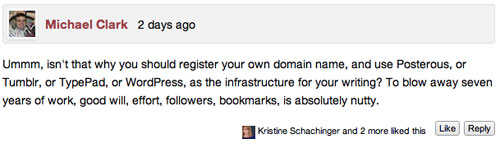
Steve's Community Is Very Unhappy With the Deletions, Calling it "Nutty"

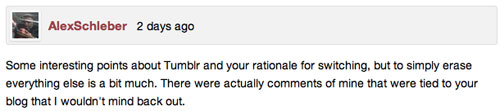
Others Say Erasing "A Bit Much", Want Their Comments Out

For those of you who don't consume my blog exclusively by RSS, you might have noticed some recent changes to the look and feel (Go ahead and look). It's not a major change, but an upgrade nonetheless. Part of the reason for my slow migration was the criticality for me to not lose the existing posts, structure, external links and attached discussions. I know some comments from a few years ago are still out of reach, but I'm hoping to bring them back.

Of all the Web content I have produced or managed in the last fifteen years, one of my biggest regrets is the complete void from my time in college, both from my own personal home page, and from the student newspaper where I was the online editor and also wrote hundreds of posts, most on the front page. Current Valleywag editor Ryan Tate, who picked up the online editor job at the paper after I had left, struggled with a series of malicious hacks, and all our collective work was gone, erased from the Web like a bad memory. Whenever we trade emails or talk in person, we both lament this loss.

Steve's Original Micro Persuasion Blog, Pre-Deletion

This data obliteration is something that really is avoidable now, and yet, we let it happen on a near-constant basis. Most newspaper stories from the terrorist attacks in 2001 come up as 404s, beyond the reaches of the Archive.org project, or Google's search engine cache.

What I would like to see is a proposal from Google, or some other well-intended Web entity, such as Amazon, to offer a solution, embedded in today's modern browsers, as an option, that solves for intentional or unintentional content deletion. All those links that I provided back to Steve Rubel's MicroPersuasion blog from 2006 to 2009 should automatically be detected as dead, and then presented, to the best of the tech's ability, as they originally were, using Google cache or S3, Archive.org or something. And yes, I'd love it if somebody like Google or Microsoft would also give Twitter or Facebook a helping hand to get their own search archives into something useful.

Steve Thinks The World Won't Care About His Old Posts.

The issues I have with Steve's approach to pouring gasoline on his past and then lighting it on fire is not one of a choice of platforms. While seeing him join Tumblr is about as hip as your dad trying to snowboard with the cool kids, the more important part is that it eliminates the choice for readers, present and future, to ever get that data, and fill in the blanks. It's not his call to decide what has value for others, even if he sent me a tweet saying "we're foolish if we think the world really cares."

The world should care about walking through the historical record - be it on Steve's blog, or Dave's blog, or Robert's blog, or Mike's blog, or Penelope's, or any of the people who have been chronicling the world they see around them. I wish we had full archives from newspapers for years and decades backward, or the personal journals of people famous and ordinary from centuries past. What they might have found mundane is intriguing to others of us - maybe not massive populations, but to one person, they could contain serious insight. The Web is supposed to cater to the long tail, and the history of what we've produced should be there when they come looking for it.

November 7, 2010

November 7, 2010 · 6 MIN READ · BY LOUIS GRAY

The Third Wave of the Web Will Be Uniquely Personal

The Third Wave of the Web Will Be Uniquely Personal


Two weeks ago, I wrote about the increasing attention crisis facing many of us as we work to find relevant and beneficial content from the many different sources that are challenging us for our time and energy. The gist? More content is being created in more places and "can't miss" content is increasing at the same rate, making many of us feel we are constantly in a state of missing things, forced to chew through the noise to find the best updates, but still falling short.

I believe we are on the cusp of a massive change and opportunity on the Web today - one that will no doubt be debated, but one that I am seeing morph in front of us, as the Web evolves, and initial problems are considered solved, while new ones crop up.

The First Wave: Information and Access

The first wave of the Web, and even precursors to the true Web, like Compuserve, Prodigy and AOL, was to deliver information, to connect information, to make it available, and eventually, searchable. The first wave saw the building up of an infrastructure of pages with links and images, audio and video, with structures based around links to show how pages and things were connected. This first wave of the Web was all about information posting, discovery, search and retrieval.

While it may initially have seemed the "winners" of this game would be those providing access to the Web, including ISPs like AOL and Earthlink, browser providers like Netscape, portals, such as Yahoo! and Excite or commerce engines like Amazon and eBay, the largest victor turned out to be Google, who made this massive information pile easily discoverable, monetized and fast to access. While many many other companies made money of information and various pieces of this wave, Google emerged on top of the first wave.

The Second Wave: Social

The second wave of the Web, which is still ongoing, is that of social. With an infrastructure in place to post information, transfer it from person to person and place to place, the friending experience of social connections was duplicated, from offline to online. Sites like Friendster and MySpace erected networks were you could connect person to person and see photos, get reminders on birthdays, and more. Plaxo connected your offline Rolodex. LinkedIn replicated your business network, and Facebook, YouTube, Twitter and Foursquare have emerged to be powerhouses in terms of sharing your every move, by video, by photo, location check-in and status update.

Now, we connect to people and follow or friend one another the way we once searched for keywords and news listings. In this wave, Facebook looks like the clear winner, if there must be just one, setting the agenda for how friend relationships are measured, and counting registrations in the high hundreds of millions. YouTube is the default for sharing video, while Twitter has carved out a solid niche for short updates, and Foursquare is the location space innovator, but Facebook is the giant in the second wave, whose numbers dwarf all challengers.

The Third Wave: Personal

Now that the world's information is posted, linked, indexed and searchable, and friends are connecting, sharing, liking, and following, the quest is on to streamline the noise and give the Web another dimension - one not measured by the data, or who led you to the data, but you as an individual. The third wave of the Web, I believe, is going to be about personalization by individual based on that individual's preferences - explicitly stated or otherwise.

The declaration of the next wave of the Web being personal is not shared universally, of course. Some say the next wave is all about mobile. Others may say the next wave is all about location. But the right approach to 'personal' absolutely encompasses each of these things. With our smartphones and tablets being increasingly powerful, they are practically an extension of us, and we are relying on them to discover relevant things, content, places and products for us as individuals. Similarly, our location is an ingredient of who we are - for where we are impacts our decisions, and what tips are relevant, be it for news, for restaurants, lodging, dating or anything else. So "personal" as an individual is both local and mobile.


my6sense: Personalized Streams for Me on my Mobile


Personal As In Me.

A lot of services say they are "personal", when in fact, most of what they do is actually social.

These services may leverage your social graph to provide personalized recommendations based on what friends or other people similar to you may like - much like television shows group people of similar demographics to guess what commercials are best suited for which episodes in which time slots. The hope may be that the more your friends like something, the more likely you are to click it or buy it. Peer pressure, you know. Meanwhile, other services say they are personal because you have specifically provided them with information about you and what you like, which goes partway to discovering your interests, but is incomplete, and possibly inaccurate, as you may want to indicate that you are something that you are not, or you may have overlooked some of your own interests in the name of rapid completion.

Beyond these initial attempts is a new wave of companies trying to crack the code of the real you. Of course, my6sense is one of those companies. Our goal is to deliver a personalized experience in all possible aspects of your life, finding the right information for you at the right time in the right context, based on you as an individual. But we are not alone. Take, for example, Hunch.com, which is talking about personalizing the Internet, and says they can build a taste profile for you, based on your own unique interests and tastes. Also, in October, Mike Arrington of TechCrunch previewed Gravity, founded by former MySpace executives. In that piece, which he headlined as "The Personalization War", he said "I saw my own Interest Graph based only on my Facebook and Twitter streams over the last several months and it’s scary-accurate."

Recommendations from Hunch.com for Me

Gravity says they will help "The right information find you. Hunch says it "Personalizes the Internet". You've heard me talk about my6sense for some time - discovering your "Digital intuition". Besides the crazy folks like us who are thinking about this constantly, there are other smart companies on the case. Start with personal recommendations from TiVo, Amazon and Netflix. Look at Google Reader Magic and Google's Priority Inbox for Gmail. Look also at LinkedIn's purchase of Mspoke for personal recommendations and Facebook's splitting of the Most Recent feed and that of the News Feed.

Get Inside My Head

The companies looking ahead to the next wave realize it is not enough to serve up the same content to everyone, as each of us is unique. We are not our friends any more than we are our neighbors or our colleagues or even our own spouses. Our interests are unique and we all want to find content tailored to our own interests. While some people are battling with the challenge of information overload and sheer noise, smart engineers are working to solve these problems - the incredible test of mimicking the human brain's ranking function, and learning what to show when, and what to make a lower priority.

The continuing rapid growth of information creation and sharing, combined with pervasive connectivity, increased capability of smartphones and other mobile devices and the growth of location is all pointing us into a direction where the services on the other end have more potential to know you than those of years past, and you have the ability to be inspired by the right information in the right place more than ever before. This is a wave, one that benefits from all these mega-changes in the Web, that small companies and big ones alike are seeing. Maybe there's another big winner in there, just like there was in the last two. Regardless, the direction is clear. Show me my Web for me.

Disclosure: I am the vice president of marketing for my6sense. Hunch and Gravity can be assumed competitors, while other companies mentioned can be considered potential partners, peers or competition, dependent on their own individual business situations.

October 20, 2010

October 20, 2010 · 3 MIN READ · BY LOUIS GRAY

Apple, Google Agree Web is Future of Software Delivery

Apple, Google Agree Web is Future of Software Delivery

Apple's announcement this morning of a Mac App Store, part of OS X 10.7 Lion starting next year, and for 10.6 users as soon as 90 days from now, spells another nail in the coffin for the retail box model of software discovery, purchase and installation. Just as iTunes, Napster and the many other Web-based entertainment delivery models dramatically impacted the retail experience of physically purchasing (or renting) CDs and DVDs, so too will the software industry be impacted by an increased emphasis on Web delivery of applications. Apple has woken up to this trajectory with today's announcement, after years of focusing their app store on mobile devices, while at the same time, Google continues to march down its path of a Chrome Web store for the company's planned OS.

The concept of an iTunes-like software delivery method for purchasing is hardly groundbreaking. Back in 2007, more than three years ago, I was begging for it in a piece I had posted to The Apple Blog (Solving Software Purchases the iTunes Way). At the time, I talked about the benefits of reviews, demos and one-click purchasing for all types of software, and those benefits are a big part of the promised Mac App Store. Interestingly, at the time of my post, Apple had only focused on media with iTunes. The iTunes App Store came out a full year later, and it has taken two more years to bring this delivery method to standard software.

In the last three years, a few major developments have taken place to make this promise more of a reality - including increased access to high speed broadband, required for large downloads, much like with movie rentals and purchases, once deemed nearly impossible, and the gradual doing away with optical drives, which Apple seems to be allergic to in the same way they ditched floppy disks back in 1998 with the first generation iMac.

On my MacBook Air, if I can avoid hooking up the USB SuperDrive, I will do it. I downloaded my Adobe Photoshop suite from the Web, and want all my data to flow through the air. If I ever were to consider Google's Chrome OS, the process would no doubt be the same - only with the browser being the center of the universe, not an iTunes like product.

Interestingly, much of Apple's event this morning was taken up talking about the latest edition of iLife, the consumer products focused on rich media, from photos to video and music creation. First, those apps and their data take up a lot of space, possibly forcing folks to consider backup outside their smaller SSD drives, and second, highlighting how unlikely it is that I will be purchasing iLife from an Apple Retail store in a boxed version. If Apple hasn't yet said that all software installs are going to come from the Mac App store, there will definitely be a push that direction. I already don't want to upgrade from my current version of iLife to iLife '09, simply because there's no way to update over the Web.

Many of us have faster pipes. Many of us are using our DVD and CD drives less and less - if at all. The Web is replacing all these things, and Apple is making a centralized place for us to have fast access, and for them to no doubt make lots more money than they already do - grabbing 30 percent of the pie. It's an aggressive move for them on the balance sheet, one more piece of their "integrated" approach, but the right one and the obvious one. Google's Chrome Web store too is obvious, and exciting for its own right, giving the option for Web services providers to charge for apps that might otherwise be free. As a consumer, I am ready to pay real money for good programs. Just don't make me buy them at retail on a spinning disk.