Showing posts from March 2011 (30 posts). Show all posts

March 31, 2011

Google Launches Page Speed to Get You Loading Faster

Google Launches Page Speed to Get You Loading Faster

One thing I often hear from Google employees is that what's good for the Web is good for the company. The more people browsing the Web at faster speeds with more capable devices, the more people are using Google services and products. Of course, a corollary to this is that even more people will be seeing Google hosted ads and hosting those ads themselves. Last year, Google's Matt Cutts made waves by saying faster-loading sites would gain better results in Google's important search index, and you've seen the Chrome browser team talk about speed being a major differentiator for them. In that vein, today we see the launch of Page Speed, which analyses any domain and provides feedback to help you run even more quickly. The focus is not on total page load time per se, but to eliminate any pieces that introduce latency.

Page Speed Online, hosted in the company's Google Labs, looks at content of the Web page, and generates suggestions that could make the page load even more quickly. As they explain, reducing page load times "can reduce bounce rates and increase conversion rates".


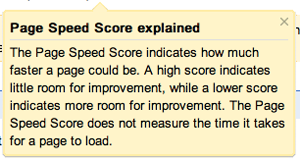
You can post any URL and see feedback for either desktop or mobile use. For example, this blog scored an 83 of 100, which does not mean it loads quicker than 81 percent of pages on the Web, but instead that the code could use almost 20 percent improvements. Page Speed then chunks the recommended improvements into low, medium and high priority, for example, suggesting I losslessly compress my images, leverage browser cashing, or reduce the amount of HTML and JavaScript code in the page.

Recommendations from Page Speed Online

In comparison, TechCrunch received a 70 out of 100, Google gave itself 100 out of 100, Apple scored a 78 and Digg received an 87.

Many of the suggestions referred to third party scripts for widgets and other trackers, which are largely out of my control, but there are some helpful tips that if followed could likely take seconds off every page load. To get your site a quick review, go to http://pagespeed.googlelabs.com.

Seesmic: My Go-To Twitter Client on Android (and #Wp7)

Seesmic: My Go-To Twitter Client on Android (and #Wp7)

Twitter's guidance earlier this month strongly suggested that developers working on their ecosystem bring additional value to the company, rather than trying to compete with them on a dedicated client. While assurances were made to entrenched players like TweetDeck, Seesmic and others that their products were safe, it's come with a subtle hint that Twitter's own applications are not only the market share leaders, but are also the best. But for me, I've not always agreed that's the case.

While I rely heavily on Twitter for Mac (originally Tweetie) on the desktop, my choice on mobile for Android (and Windows Phone 7) has been Seesmic - both due to its intuitive and lengthy feature set, but the constraints put on Twitter's own client.


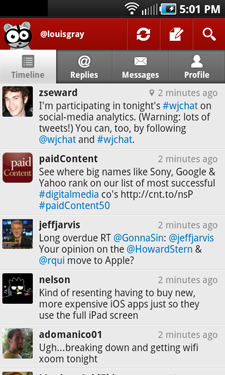
Many Supported Seesmic Accounts and the Twitter Timeline


Twitter has stated (and likely they've done so rightly) that they want to appeal to more of a mainstream audience - one just coming to grips to a 140-character world full of weird languages that contain hashtags, RTs, replies, lists and other oddities. They also have a business premise of promoting their service as the exclusive place for news and social discovery. This has left an opening, taken by both TweetDeck and Seesmic, to provide a client that supports both multiple services and multiple accounts - on both desktop and mobile. For the power user who needs to use multiple accounts, you simply cannot do that on the official Twitter client for Android today, full stop. And forget about using Facebook, Google Buzz, or any other service. It's not their interest. So I've had to shop around.


Facebook Streams and Google Buzz In Seesmic for Android


Since the company's pivot from video comments to major social media client, Seesmic has forged an interesting role of being available on practically every mobile platform and OS, adding Ping.fm for broadcast to multiple services simultaneously, and recently, doubling down on enterprise efforts with early support for Salesforce Chatter and keeping close ties to Microsoft with one-off deployments for the Windows platform.


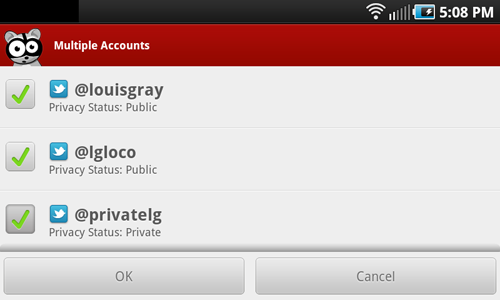
Updating Multiple Twitter Accounts Via Seesmic for Android

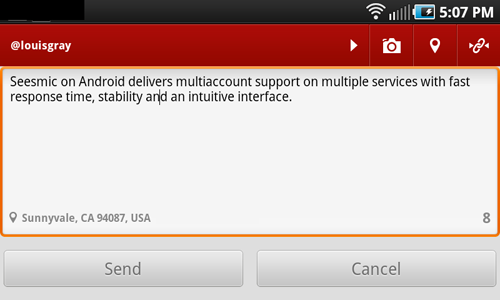
Posting an Update to Twitter on Seesmic With Geolocation


Seesmic first gained praise from me about 2 years ago with the launch of Seesmic Web, which was much more fully featured than the Twitter alternative. With Twitter having revamped to "#NewTwitter", the gap is less clear, but on mobile, Seesmic still reigns supreme. Having gotten frustrated with slowness, application timeouts and the inability to use more than one account on the official Twitter account, I turned to Seesmic, and the application not only did more, but was faster and extremely stable. No more failed searches and force quits.


Twitter Lists and Saved Searches Support In Seesmic


Beyond the standard Twitter functionality, from timelines, mentions, profile browsing, saved searches and list support, Seesmic's acquisition of Ping.fm means I can post to multiple accounts across services simultaneously, and the services are more than just "check the box" implementations. I was surprised to see how deeply you could monitor fan pages on Facebook, and the addition of Google Buzz support is welcome for me.

Amusingly, one of the boons of Android also turned out to be a detraction, for after Seesmic's installation, I would not only receive notifications from the native Twitter app that replies and messages were waiting, but the same activity would double down my alerts, coming from Seesmic as well. So I did the unthinkable and the official Twitter app is off my Android devices, which eliminates duplication. Meanwhile, on Windows 7, Seesmic was the first app I downloaded, comfortable the experience would be familiar and very useful.

To paraphrase the fun line of commercials from Dos Equis, I don't always tweet from my mobile device, but when I do, I use Seesmic. If you need multiaccount and multiservice support, it's the best dedicated client for the job. I even told them so myself for an article Wednesday on the company's blog, one of many folks who told Seesmic why they were the choice.

Disclosure: my6sense, where I am VP of Marketing, has an Android client, of course, and our app contains the ability to share updates to Twitter, Facebook and Google Buzz. If you're trying really hard, you could consider Seesmic a competitor. :)

March 30, 2011

The Social Graph Is Not Enough to Find a True Me

The Social Graph Is Not Enough to Find a True Me

Last week, I gave a presentation at the Kynetx Impact conference just outside of Salt Lake City, Utah, talking with the developer audience about the Third Wave of the Web, and my continued belief that true personalization in both the Web and in our mobile content consumption is what will drive the most dramatic changes to the future of the Internet, following on to the first wave (Information Retrieval and Search), and the second wave (Social Networking). Most directly, I believe that the current approach taken by many leading Web companies, to assume that your friends' recommendations and shares constitute personalization for you, is not enough. True personalization is about your own interests and preferences.


The most well known example of recommendation services that rely almost exclusively on your social graph is that of Facebook, where it's generally assumed that if many of your close friends like a topic, that you will as well. My common example is that if your friends like Mamma Mia, it's assumed you like Broadway plays and if many of your friends have given a like to one establishment or another that you would of course be more interested in that. This is extended with tools like Foursquare and others, who give the social connections a big push to bring you new stuff you might like.

There's no question that collaborative filtering brings value. But it's not enough. What's more accurate is that you are driven by your own preferences and just because your friends like something doesn't guarantee that you will. Only you have your unique makeup and interests, and the knowledge of how to rank those interests. For example, you may like both Katy Perry and Depeche Mode, and you might prefer Depeche Mode to Katy Perry, or specifically prefer one song of Depeche Mode or the entire album continuous. That's your preference, and what's needed is the ability to learn from your own behavior. The Web sites and applications that do this in the right way will start to separate themselves from the competition.

So look at the news just from the past few days. Google is now going to personalize your Ad experience based on your activity in Gmail. That's a good move, based on your own implicit history. But in parallel, we have more chances to tap social signals with +1 in the search results (for starters). At my6sense, we talk a lot about the best signals to watch for to deliver a real human experience that's personal. And it takes more than just collaborative filtering. See the embedded presentation to see just what I mean.

Disclosure: I am vice president of marketing at my6sense. I was not compensated by Kynetx for my presentation, but they did cover expenses for the trip.

Google's +1 Is For Much More than Just Search Results

Google's +1 Is For Much More than Just Search Results

This morning, Google is introducing a new feature within the company's search results aiming to provide social recommendations to one's extended connections. The +1 feature lets you tag results and Web sites you find valuable with the expectation that friends of yours see your +1 and can take that into account when making a follow-up decisions. At first glimpse, this doesn't appear to be too dramatically different than previous attempts to show intent, with starring results, social search and other methods, but one can see where +1 is landing to hint at the future of the program.

In the company's introductory blog post today, Google talks about sharing recommendations with the world. The idea is that if you find a result you like in search, just hit +1. Theoretically, follow-on searchers will see the right recommendations at the right time in the right format.

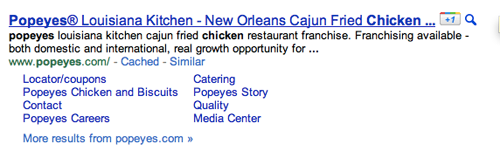
A +1 Next to Popeye's Fried Chicken

So who are your friends and how do they see your inputs? Well, for starters, they are looking at those people in your Google social graph, including chat friends and contacts. The company hints at using connections from Twitter as well, notably excluding Facebook, who hasn't historically wanted to play nice with Google in sharing data. The +1 data is also closely tied to your Google Profile, which is a sibling to Google Buzz, which also has following and friend-like attributes.

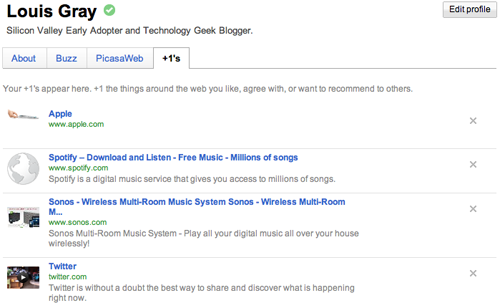
My +1s Are Displayed on My Google Profile

The introductory video for +1, almost a minute through says:
"Soon you'll be able to +1 more than just search results. You'll also find the +1 button on sites across the Web, making it easy to +1 pages after you've visited them. The Web's a big place. Sometimes it helps to have a tour guide."
This makes it sound more like a Delicious-style bookmarking tool (outwardly facing) than a RT-style Twitter endorsement. So where do these +1's go? Well, they're immediately posted to your Google profile, in a tab that you can make private or public. Says the dedicated site: "Your +1’s are stored in a new tab on your Google profile. You can show your +1’s tab to the world, or keep it private and just use it to personally manage the ever-expanding record of things you love around the web."

You can start seeing the +1 button on Google search results now by signing in to the search experiment in Google Labs. More detail on the +1 button is now available on a dedicated microsite. I would assume we might start seeing "+1" buttons all over sites that want to get more Google juice from social recommendations soon.

You can find all my +1s here: https://profiles.google.com/louisgray/plusones.

March 28, 2011

What iTunes Needs to Take on Spotify, Rdio & Google

What iTunes Needs to Take on Spotify, Rdio & Google

Ever since I gained early access to Spotify in late 2009, I've practically abandoned iTunes for purchasing music. A once-addicted iTunes user who racked up thousands of paid downloads, the only time I ever launch the multipurpose entertainment application these days is to synchronize iOS apps to the iPod Touch, or do a futile search of its TV library to see if Season 5 of Dexter has shown up (it hasn't). But with the widespread expectation that iTunes will eventually launch in the cloud alongside a streaming subscription option, the update has the potential to directly take on Spotify before the fledgling service gets its US land legs, leaping well ahead of Rdio in brand recognition, and doing battle with the still unavailable Google Music - whenever that arrives.

For digital music connoisseurs, the benefits to all these interesting players vying for our business is that we will have more sources for good content on practically every device, and for the most part, at prices that make sense. The availability of competition ensures market rates will be driven down to the point of affordability for most, especially the ardent fans who absolutely "must" have every new album from favorite artists. That the companies are taking different approaches to the market also ensures we'll have a choice of how we want to consume our music - mobile, desktop, a la carte, subscription, or any other way.

iTunes Previews a new Tiesto Album for Purchase (No Streaming)

iTunes' market weight is tremendous. It has been widely rumored they are using their muscle to scare labels away from joining forces with Spotify, withholding artists' positions on highly visible pages within the store that have significant impact. The service, once spartan in terms of catalog, has grown to carry both new releases from practically everyone to deep catalogs from those long since gone. But in the 8 years the store has been open, a few things have been consistent - including the idea that customers want to "own" their music, not rent it, and subscription plans are nowhere to be seen. This has led startups like Spotify and Rdio to become more fashionable alternatives to savvy listeners - and these listeners are both loud and loyal.

Rdio Also Previews the Same Tiesto Album for Streaming

Assuming that iTunes, Spotify, Rdio and Google Music all offer comparable pricing, around $9.99 a month for unlimited play, as both Spotify and Rdio do now, the question for which service makes the most sense hinges on a few major features, namely:

1) A deep catalog of artists and songs

One of the most impressive things about Spotify has been my ability to search for practically any song or artist and find the right answer, often along with a number of remixes for the specific track, or inclusions in compilations. Searching across Rdio shows that in most cases, the catalog is on par with that of Spotify, which makes sense if both firms have executed deals with the same music labels. Spotify seems to have more older albums from artists, and doesn't suffer from restrictions I often bumped into with Rdio regarding availability of full-length streaming in my region.

iTunes Displaying a Nirvana Box Set

In order for iTunes in the cloud to compete, they need to debut with their full catalog, not a trimmed version of options (like they did with the Apple TV 2).

2) Fast access to new releases

If I see a new album is out from my favorite artist, my first stop is to find it on Spotify. If it's there, I can be streaming the new album immediately, or saving it to my playlists. I even have a playlist just for new albums, so I can add entire albums and delete them after listening to the tracks enough times. iTunes will need to match or exceed the speed of competitors to make the service my first stop.

Spotify Showing the Same Nirvana Box Set

3) High quality integration on mobile

It sounds silly to mention this for the company that brought us the iPod, but for iTunes to be a win for me again, it needs to be cross-platform for mobile operating systems. Spotify is available on both iOS and Android, while Rdio is developing for iOS, Android, Blackberry and Windows Phone 7. What do you think the chance is of iTunes coming to Windows Phone 7 soon?

4) Zero buffering

Once a song is streaming on Spotify, it's almost magic to click at any point in the song and have it pick up. After so many different services lag after one moves within the song, the instant gratification is welcome. iTunes has always had high quality with the service being download-centric, and I would hope their cloud could keep up.

Playing Rihanna's S&M On Rdio

5) Social integration and Sharing

Ping is not the social network where I want to share my music, and it absolutely is not where I want to share my playlists with friends and discover their music. The smart thing would be to stick with what you know best, and pick the leaders for the rest. Spotify integrates with your Facebook social graph to show fellow users, while Rdio lets you find friends on Facebook, Twitter, and a host of email providers.

Of course, sharing songs, artists and playlists to social networks like Facebook and Twitter, or by email, would be a prerequisite for a service like this. Enter your social credentials once, and go.

Playing Rihanna's S&M on Spotify

6) Fantastic Discoverability

One weakness to the online music game is discovering new music and artists. If you've gone fully digital, related artists and music will be increasingly important, contrasted to the old days of trusted DJs and radio stations. Without strong discoverability from accurate related items and social clues, the digital music space becomes a broker of sorts, where users get what they look for, but little more. One concern with iTunes here is the division between discoverability and highlighting artists driven by business deals.

Deadmau5 on Rdio - Streaming

7) Portability of Real Music

If you are a paying subscriber to Spotify, you can download playlists so they are available to you in offline mode. While iTunes has long held to the download and own mantra, this should not change dramatically with streaming. I should be able to download songs to my PC or my phone with no problem, with appropriate DRM.

The Deadmau5 Catalog on iTunes

If iTunes can deliver feature-equal functionality to that of Rdio and Spotify, with the same catalogs and pricing, it's probable they will remain the market leader thanks to their massive headstart, software downloads, and access to users' credit cards. Even if they debut something that's almost as good, that would be good enough for most iTunes diehards. What concerns me about iTunes in the cloud, more than pricing issues or flexibility of devices, is them potentially using their market muscle for exclusives that hurt users. For as much trouble as the Beatles deal was, it's no surprise they're iTunes-only for now, but I don't want to start hearing more and more artists saying they are sticking to one digital music store.

For Spotify and Rdio, looking the giant in the face, they've got to go big quick, for streaming and a deep catalog alone cannot make them the number one player against somebody like Apple, who is bound to catch up. As for Google Music, like many of Google's products, they have to clearly communicate why cloud is better this time. Just because something is cloud-based doesn't always make it more desirable. Google will clearly have direct access to Chrome and Android users, which gives them a market, but they too will have to do more than hold serve.

I'm not an iTunes music customer right now. I pay for Spotify Premium, and have paid for Rdio the last few months, though I'm closing the pro account today thanks to its clear overlap with Spotify. If iTunes walks into this space like a bull in a china shop, tossing out new proprietary protocols, higher prices and exclusivity of artists, I'll stay away from iTunes, even on my Mac. But counting out the market giant is silly. I am rooting for Spotify and Rdio (and Google Music) to hurry up before the iTunes Cloud behemoth arrives, but rooting for quality music, fast access and great social links across all platforms, and we should all realize the unsung big player in this space is Facebook. If they choose Rdio or Spotify as their market partner, that would change the game - or they could be yet another player.

March 27, 2011

WB Expands Facebook Film Lineup With Inception, 4 More

WB Expands Facebook Film Lineup With Inception, 4 More

Earlier this month, Warner Brothers Entertainment pioneered an interesting entertainment experiment by making "The Dark Night" available to watch on Facebook, simply for a handful of credits. While the move was not Facebook-sponsored, the idea had many people thinking big about the plan, with some claiming it threatened Netflix and a host of other video on demand companies. While that seems unlikely, WB is back at it again, tonight, adding five more titles to the mix, including “Inception,” “Harry Potter and the Sorcerer’s Stone,” “Harry Potter and the Chamber of Secrets,” “Life as We Know It” and “Yogi Bear.”

WB explains the move as an expansion of a test, and in this array, the titles are expected to "appeal to a broad audience, said Thomas Gewecke, President of Warner Bros. Digital Distribution, in this evening's press release, highlighting the popular fan pages for Harry Potter and Inception in particular.

As with "The Dark Night", Facebook viewers who do purchase the movie rentals with credits can see the film for up to 48 hours after purchasing, with standard Facebook stream activity, such as comments and status updates, being available.

So far, the tie-in has yet do offer a movie I want to see that I can't already get from Apple TV or Netflix, but assuming these tests continue, just maybe we'll have another alternative in an interesting place. If you're Facebook, you just might put a "Like" button on it.

March 26, 2011

Facebook Notifications from Chrome, Using "What's Up!"

Facebook Notifications from Chrome, Using "What's Up!"

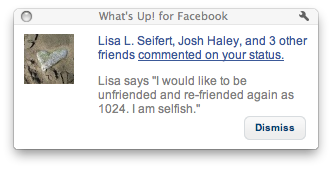
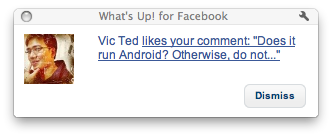
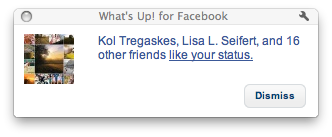
For many people using Facebook, the first thing we look for is whether activity has taken place on our wall, or if discussions we've participated in before have attracted new comments from our friends and our friends' friends. It's this Pavlovian need to get feedback and reinforcement for our updates, our shares and our photos, to be part of a continuing conversation. But there's no need to be visiting Facebook.com every couple minutes to see activity. A handy Chrome extension called "What's Up" watches Facebook so you don't have to, pushing notifications in a small window on top of your browser, where you can rejoin the conversation, or simply dismiss.

Notifications of activity on Facebook can travel to your e-mail or can be pushed to your mobile phone, but the latter doesn't contain a link to the source, simply saying action took place. With "What's Up" for Facebook, you get a link, who posted the update, and the item itself, such as the comment. It's a lightweight way to stay on top of activity on Facebook without having to contribute to the many minutes (or hours?) a day you already spend on the site, and still be in the loop.


The notifications are simple, and come to the front of your screen, no matter what app you are in. So long as you are logged into Facebook and Google Chrome is open, you're good to go. You can find the extension by visiting the Chrome Web store.

March 25, 2011

Texty: Texts From Google Chrome Via My Android Phone

Texty: Texts From Google Chrome Via My Android Phone

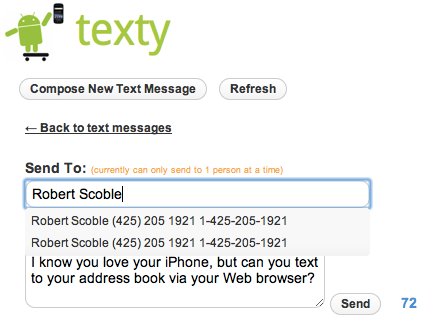
The past few weeks, I have been texting from my Android phone a lot more than usual, and I haven't even had to touch the device, thanks to a smart application that leverages the marriage between Google Chrome and my mobile OS to send messages directly from my browser to any phone number - making a text as simple as posting an instant message or a new entry in a chat window.

Texty, available in private beta, brings SMS text messages to and from your Chrome browser in real-time, immediately as they hit your Android device. Even more amazing is that texts you send from Chrome are synched to your phone, and the recipient doesn't have any clue - seeing your phone number as the originator.

Recent Texts Between My Wife and Me (In Texty)

If you are one of the early testers of Texty, getting started is very easy. Find the Texty Android app on Android market and install it on your phone. Then link it with your Google profile. After this is done, install the Texty Chrome extension, and login with your Google profile. If there is a match between the app on your phone and the extension and you are on the whitelist, you are good to go. The Texty extension is displayed as an add-on to Chrome, and you can head there to send and receive messages, or even monitor notifications from carriers, such as the arrival of a new voice mail.

Sending a New Text to Someone In My Google Address Book

Now, instead of having to stop what I am doing on the laptop to pick up the phone and text, leery of getting yet another text shortly afterward and getting interrupted again, I just manage all my SMS texts via Chrome and keep going. For power texters who are also power desktop jockeys, the arrival of this app is going to be very useful. Shouldn't be too long yet until the app comes out of beta. Until then, if you want to join early, head to http://textyapp.com/beta and tell them Louis Gray sent you.

March 24, 2011

Fast Society Says "No Magic" In Group Messaging Alone

Fast Society Says "No Magic" In Group Messaging Alone

To hear some people tell it, the hot new thing in 2011 is the battle for the hearts and minds of group texters everywhere. With the successful sale of Beluga to Facebook, news of Yobongo scoring more than a million in angel funding, and larger rounds by others including GroupMe and TextPlus, you can forgive people for skipping over the lean Fast Society, who has so far stayed away from VCs, gathering just over $200k in funding, and only counts four employees. But despite their being small, they talk a big game. I took a call with company cofounder Matthew Rosenberg earlier this week, and he, without so much as a filter, told me why he feels the industry is fragmented, how every other challenger is going at the problem wrong, and how greedy carriers (such as Sprint) are harming the entire industry.

Fast Society, from much of the coverage I've seen in other tech blogs, has often been characterized as being aimed at socialites, as much about the flashy lights and party-goers as the code - celebrating a good night out more than good syntax. Rosenberg certainly didn't disagree, not shying away from the label, explaining that the service at its foundation was aimed to "help people, when they are going out with their friends, to experience great things around fun events." For him, much of a shared event is not just the actual activity, but the buildup to the event, and the shared emotions associated with the location and experience.

"Everybody else is going for the dirty engineer feel," he said. "We are going for what everybody else wants. Fun and parties and nightlife. That's what normal people do. People don't sit around their computer blogging all night. We have tried to be focused on people who aren't necessarily early adopters who don't care about engineering."

Shrugging off the comment about nocturnal blogging being abnormal, which I obviously disagree with, I asked him how he thought so many different players could participate - and whether users were tired of seeing their social structures split, much like the early days of IM, where AOL users couldn't speak to those on ICQ, MSN or Yahoo!. Unsurprisingly, he had a response all queued up.

"At the end of the day, there's going to be a reckoning," he said. "The fact these things can't communicate hurts the industry. It's so fragmented. Nobody is going to own the communication layer. It's too crowded."

With the crowding comes a seemingly unending stream of news from one company or another. On the heels of SXSW, where many services, including Fast Society, stepped up their game in a war for visibility, Rosenberg said that particular aspect of the service was not groundbreaking. In fact, he practically dismissed it, calling it a "utility", adding there's "no magic behind it". Fast Society instead wants to offer not just group texting, but location sharing, instant conference calls, pictures and video - and unlike practically every other vendor, Fast Society does not use third party vendor Twilio as its back-end, saving the company significant charges on SMS, he explained.

In the group messaging space, TextPlus is both the pioneer and the alpha dog in the hunt, with practically every other service having sprung up in the last twelve months, some to more success than others. Fast Society was launched in September of 2009, focused on building the platform that would enable them to scale without drowning in a sea of red ink, Rosenberg said. "We're the only ones that I know of who don't pay per message," he explained. "We have a flat fee. What our competitors pay in half a day, we pay for a year's worth of messaging costs. It's a big competitive advantage for us".

In a build first make revenue second world, Fast Society seems odd in that they've actually executed real business, striking deals with MTV, and other small sponsorships - which Rosenberg attributed to delivering a compelling experience and providing value for a clearly-targeted audience of teens and 20-somethings out to have a good time. He railed against the industry's tradition of giving value away for free, and being drawn to in-stream advertising like a moth to flame. "It is not pleasant, and not something people want," he said.

The company's image of fast fashion party boys drinking and dancing the night away, augmented by the bright purple and sharp angles of the company's logo and product, may make it seem aloof or too focused on hipsters to be a real business. But Rosenberg almost claimed the opposite, saying "we have the most soul in this space," and railing against the relative dinosaur carriers, like Sprint, who is trying to charge for anybody sending SMS messages to their system, upward of a half cent more per message. "It's disturbing and harms the whole industry," he said. "It's just a nasty thing to do."

If there is a reckoning in the industry, with one or two names ending up winners, others pivoting and fading, Fast Society is going to make pushing to the finish line interesting. Maybe they're the black hat in the fight, or the white knight trying to save end users from a sea of boring apps. Rosenberg may have thought he caught me on a tired afternoon stuck in an airport terminal on the way to an event (which I was), but he still managed to make a good case for why Fast Society is in the game, and why their lean approach targeting real revenue could keep them ahead of others. You can find Fast Society on iOS or Android, and at FastSociety.com. The sign on the door says they're "Built to Party," so go have fun.

March 21, 2011

Cliqly in Alpha: Visual Interface, Filters for Top Tech News

Cliqly in Alpha: Visual Interface, Filters for Top Tech News

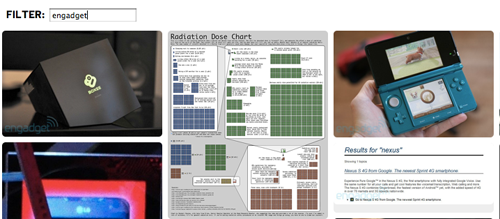
Curated news sites are so prevalent, it seems practically everybody has one. With simple tools like paper.li and others, you can even have them automatically generated from the social connections you have on Twitter and other networks. But there's still room for ingenious alternatives that play with highly visual layouts, filters, search and personalization. It looks like we're close to having a new one on our hands with the imminent launch of Cliq.ly, currently ruminating at the longer domain of http://gocliqly.com/, which rolls out top tech news in a tiled format, searchable by keyword.

While that in itself is interesting for fast browsing and article discovery, the service teases with a not yet active menubar for "Popular Scenes", "Views" and "Account", which theoretically lets you select your own keywords, sources or other tweaks that would let this potentially become your start page, providing an alternative to the more traditional RSS reader.

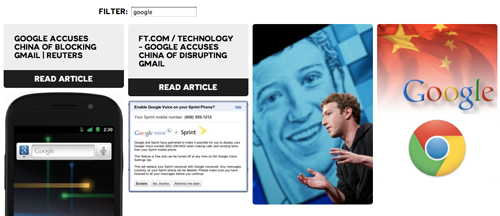
Cliqly Filtered With Google as a Keyword

If you visit the incubating http://gocliqly.com/ now, you'll see graphics from top news sources showing updates on Web services, browsers, and gadgets. A small textbox lets you filter by keyword, be it from the article's title, content or tags. I tried searches for many top tech terms, from "apple" to "google", "Android", "t-mobile" and blogs like Engadget and TechCrunch, all of which returned multiple results, clickable to the main original link.

Cliqly on "Tech"

One assumes that as Cliq.ly gets built, one get the opportunity to tweak views to be more graphical or less so, depending on one's preferences. Given the option for "Popular Scenes", it's possible you could create a personal scene with customized feeds and views and save it for others to view. But it's early days. In fact, DomainTools suggests Craig Condon, one of two behind the project, just snagged the URL yesterday. He mentions a designer, Tim, as a partner on the site, but he is providing the majority of the code.

Cliqly Showing Engadget Stories

What we're seeing from Cliqly on day one is a sneak peek tease of what's to come, no doubt, so bookmark this one, and watch the work develop.

Joint App Brings Instant Messaging, Group Chat to Twitter

Joint App Brings Instant Messaging, Group Chat to Twitter

Twitter's direct messaging system is an easy way for two people to engage in back and forth discussion through the site, but the serve and volley type of chat is a far cry from real-time, and doesn't allow for broader group chat. Today, Joint, brought to you from the team behind LazyFeed and LazyScope, is launching to bring the flow of instant messaging and semi-persistent chat topics to your existing Twitter social graph. You can get your exclusive invite by posting a comment or by following @imjoint on Twitter.

With group chat applications on mobile being all the rage, the desktop experience has been somewhat forgotten, but a dedicated app presents the best keyboard and CPU cycles to avoid any latency between updates, argues founder Ethan Gahng. And once you've tried Joint with a friend or two, you can see how fast you can go from the ping pong manner of DMs in Twitter to real, instant, conversation.

I Can Invite You to Joint Via a Personal URL

You first get connected with Joint through getting invited by a friend through a dedicated, personal, URL. (Such as this one) You are then asked to download a small Adobe AIR client that runs on multiple platforms, and near instantly discovers your Twitter social graph, letting you have real-time chats with people to whom you are bidirectionally connected. This way, all of those with whom you can send and receive DMs can also chat with you in Joint.

Joint In Action With Friends On Left, Chat Rooms Center, Discussion Right
(Click for Full Size Image)

If your friends are using Joint, public chat rooms they have created are displayed in the left sidebar, so you can pop into any chat room and start talking with those who are there. It's a lot like Convore, but on the desktop, and designed as much for 1-1 communication as for static topic chats. In fact, the chat rooms in Joint are set up so that new users who join a room don't see previous entries. Magically, if every user leaves a chat room, it too disappears, so don't be surprised if you set up a popular room more than once.

Adding A New Comment to An Existing Chat Room In Joint
(Click for Full Size Image)

What makes Joint even more like the well-known world of instant messaging (IM) is the idea of status indicators. A green status bubble means you are signed in, while a clock shows you are idle. Once in, you can create a room with any topic, or invite any of your friends to join you. You have the option to create the room with three types - Public, Protected, or Stealth. Clearly, public rooms are open to all, protected means the creator requires a password, and stealth rooms are not displayed at all - even to friends. To get into a protected room, you must be invited, or enter the known password. Stealth rooms even feature a cool stealth bomber icon.

Before you shrug off Joint as "yet another chatroom" service, think of using this first to replace those back and forth DM sessions you've no doubt had with friends, and then think about starting real group chat with your Twitter social graph. Want to get in? Leave me a comment, and follow @imjoint on Twitter. This one's a keeper.

March 19, 2011

How Twitter's @Reply Rules Expanded Conversations, Use

How Twitter's @Reply Rules Expanded Conversations, Use

Twitter's relationship with developers and users has been bumpy, to say the least. The users are fiercely loyal about the service, but like Facebook's fans, every little update is first dissected, then railed upon and is typically finally accepted by the community. For all the tumult over client changes, ad inserts, new retweet styles versus old and Web layouts, users have stuck with Twitter without leaving in mass numbers for an alternative. Among the most controversial choices was the company's move to hide tweets aimed at users that you were not mutually following - meaning @reply tweets sent to a third party you weren't already following were simply hidden outright.

While the initial outcry was strong, and continues to get mentioned as decreasing Twitter's potential for serendipity and discoverability for new voices, I have found the value of the tweak has enabled real conversations in the service that would be a challenge otherwise, and by making replies a major part of how I use Twitter, there has been no backlash in my own increased use, if one assumes follower counts are a valuable measure.

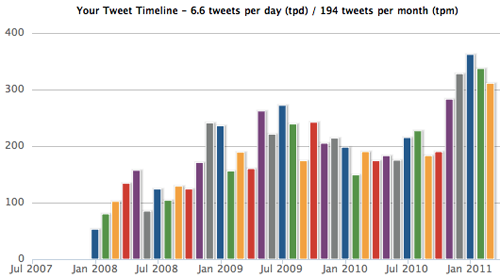
TweetStats Shows I Am Tweeting at a Record Pace

My initial usage of Twitter was extremely cautious, as I knew every single 140 character missive was distributed equally to every potential follower, not to mention redistributed to networks aggregating my content. If I wanted to reply to another user and comment on a subject, I was effectively CCing the entire world, who would have to attempt to piece together what I was replying to, and many more would often jump in mid conversation. It was a mess. While, yes, my connections could see new user names they hadn't previously encountered, plucking quality from the real-time stream in this mix of discussions was a challenge - and I didn't want to add to the noise.

Ev in 2009 Under Fire From the Vocal User Base

In May of 2009, Twitter made what they called a "Small Settings Update. Anticipating a response, the post said "Despite this update, you'll still see mentions or references linking to people you don't follow", assuming the users were mentioned mid-tweet. A follow-on post revealed one of the major issues was technical, that Twitter had to make changes due to continuing scale problems. Eventually the company had to do a mea culpa, not just around the issue itself but in terms of how it was communicated. Users were very frustrated, and the "#fixreplies" hashtag dominating most streams. But in the ensuing two years, as the dust has settled, users, myself included, have learned how to leverage the new environment.

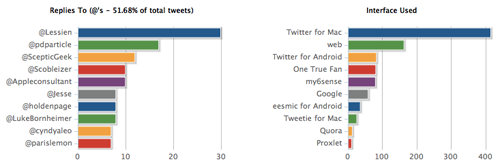
Replies In 2011 Make More than 50% of My Tweets

For every user out there who adds a stray character (usually a . or a *) before replies to extend the visibility of the update to the community, there are many more who use the system as it was intended. Now, conversations between users who are not mutually followed don't clutter up the streams, and there's a lot more freedom to reply without creating so much noise you have to be ignored or unfollowed. Meanwhile, if a third user has already elected to follow both of you, they can watch both sides of the conversation, and likely have an interest in the discussion.

TweetStats Shows Who I Reply To Most Often

In the last few months, I gave up on being overly concerned about flooding my stream with @replies. A cursory glance at TweetStats showed @replies had ballooned from single digit percentages of my updates to more than half in 2011, and leading to record quantity of updates, even at times approaching 40 tweets a day - which for me is fairly voluminous. And yet there's been no outcry or massive unfollowing. The numbers aren't accelerating, but we all know the numbers are immaterial and the time for exponential growth is past. But while in the past conversations were practically impossible in Twitter, moving to other platforms, the @reply change made the service a lot more capable to handle deeper exchanges.

While the initial reasons for the @replies change may have been steeped in scalability problems and strained architectures, users have adapted, and helped to morph the network into less of a simple status update repository and link bombing channel to one of real back and forth discussion. It's let me talk privately in public.

For Digg and Other Web Services, 5 Years Can Be a Lifetime

For Digg and Other Web Services, 5 Years Can Be a Lifetime

TechCrunch's Sarah Lacy practically writes an epitaph today for Digg following news that the company's cofounder Kevin Rose, the face of the company since its inception, had resigned to pursue a new and unannounced startup. The backdrop of her story is a detailed article she wrote on Rose and the Digg phenomenon back in 2006, when she, then writing for BusinessWeek, placed Kevin on the cover with a youthful grin and headline blaring how he was worth $60 million.

Almost five years later, Digg is an also ran in the Web news influence space, outpaced by real-time social media tools, and traffic was noted to be trending downward for years. The story, whether it has a happy ending or a crash, epitomizes the short-term paths to success or failure for many Web startups, who expect to launch loud, grow fast, and make it big - often in less time than a single presidential term.

That Kevin had shifted priorities away from Digg some time ago was no secret to those who watched. His investments in a wide array of leading Web companies, from Foursquare and Gowalla to Dailybooth, SimpleGeo, Square, Facebook, Twitter and more must have other angels salivating. His Twitter profile was recently reprioritized to read, "Tech angel investor. Founder of digg.com, wefollow.com." And one can't fault him. As any startup veteran can tell you, years of pushing at a breakneck pace with an insatiable audience can be draining. That he diversified is a smart personal business strategy.

So what of the five years between the $60 million cover and the similarly bold headline of "RIP Digg"? Same people. Same Web site. (Give or take) But a much different story.

Of note, this blog has been running for more than five years, so I can go back to my own reaction to the original story when it broke in August of 2006. At the time, in an article titled, "Digg The Man a Pit To Hide His $60 Million", I picked apart BusinessWeek's assumptions of Digg's valuation, Rose's liquidity and how Rose had become the posterboy for the Web 2.0 movement. I added, "Digg, scarcely known a year ago, in the shadows of Web giants like Slashdot and CNet, has developed organically to be a real kingmaker for all media... But Kevin's not worth $60 million yet. He has a lot of work to do yet to achieve what is a tremendous potential."

What happened after 2006? Twitter launched and Facebook opened up beyond colleges. With Digg seemingly run by an elite group of early adopters who could reach the front page with ease, the common Web user found faster venues to reach many at once, while stories reaching the front page of Digg would take hours. The site seemingly became as hyped for its ability to drive traffic downstream as to provide real value to Web visitors. By 2008, in an article titled "On the Web, If You're Not Growing, You're Dying", I showed how Digg was in a rut after hitting a peak in 2007, placing the site's traffic alongside other floaters, like Technorati and MySpace.

Reaction to the initial BusinessWeek piece was varied, of course. Jason Calacanis complained that the users of Digg would not share from the financial windfall. Om Malik called the headline "Vapor". Meanwhile Steve Rubel compared the cover story to one of Marc Andreesen in Web 1.0 days. Of note, it's interesting that Om, Steve and Jason also are continuing to be visible five years later.

So what else were we talking about back in August 2006? Issues with Microsoft Zune -- check. Topix -- practically invisible these days. The battle for Web privacy. Apple and Google shooting down rumors. Microsoft's Web strategy stumbling. Google launching Apps for your domain. The entrenched retailers trying to stop Apple from adding movies to iTunes. Much of that era sounds familiar, but also quaint.

Five years after the article, Slashdot scarcely comes up any more (though they can still push downstream traffic). Reddit and Hacker News are the hip news submission sites for geeks. Twitter and Facebook are dominant, worth billions. Topix and Technorati are floaters. The time for Digg to make it big seems to have passed, and the only great reason Kevin would have had to stay would be sheer loyalty or inertia. But the Web moves too fast to stay still, and it's obvious the future held more promise than the past, and it was time for him to move.

Five years down the road, I expect this blog to still be publishing. It's probable that Om and Jason and Steve will still be prominent commentators as well. But how we perceive Kevin could be dramatically changed - be it through the value of his next idea or wherever he may pivot next. But think about the other startups out there that have seen well more than their 5th birthday. Are they fading to black or are they ready to lead? Time takes its toll.

March 18, 2011

Finicky iOS Users Rebelling Over Rovio's Angry Birds "Ads"

Finicky iOS Users Rebelling Over Rovio's Angry Birds "Ads"

Mobile app downloaders have come to expect a lot from their apps. iOS reviewers on Apple's iPhone, iPod Touch and iPad platform are notorious for being among the harshest raters across the app store landscape - as likely to drop a single star rating as a glowing five start mark, and practically demanding that advertising be limited to free apps.

A point upgrade today to the seemingly invincible Angry Birds franchise from Rovio has iOS reviewers up in arms, thanks to in-game house ads that tout other extensions of the brand, from stuffed toys to begging for Facebook likes and YouTube views. The result, the practically permanent high flier has crashed down in a fluff of feathers with a deluge of one-star rants.

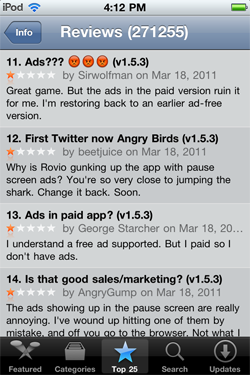
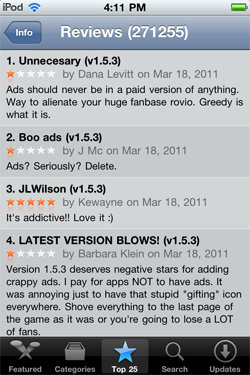
As Angry Birds all too excitedly notes in the latest revision of the game, the average rating on the iTunes Store for the app was 4.78 stars out of 5. Users love flicking birds at pigs. It's a given. But with version 1.5.3, the 99 cent app brought ads that appear when the game is paused - just as on the Android platform - and this alone has dropped the franchise into hater territory. The current version is bumping along at an average of 3 stars, rising with each upvote and dropping with each slam, and the stream of comments is mercilessly opposed to this new tactic.

   
A sea of 1 star ads for the latest Angry Birds Update

"Ads should never be in a paid version of anything. Way to alienate your huge fanbase rovio. Greedy is what it is", writes Dana Levitt in her one-star review. 
"Version 1.5.3 deserves negative stars for adding grappy adds. I pay for apps NOT to have ads." piles on Barbara Klein in her one-star missive. 
"... I (like others) am incensed at the barrage of ads when you pause the game," says MadDownpour.
There are many more just like this (as you can see on the iTunes page hosted by Apple).
The Hated Ads Show When the Game is Paused


The one-star ratings for the previously beloved game are plentiful, and the reasoning seems pretty straight forward. Users believe that if they have paid good money, even if it's 99 cents, they deserve to go ad-free, no matter what type of ads those are. Given Rovio is soaring right now, with talk of an IPO, the movie tie-in with Rio, and months in the spotlight, it'll be surprising to see if they are tarnished by ticking off this excitable user base.

As for us on Android? The banner ads are a pain, but you're not charging, so I think we can deal with it.

March 16, 2011

SXSW 2011 "Winners": Foursquare and Hashable

SXSW 2011 "Winners": Foursquare and Hashable


The crowds at the South by Southwest (SXSW) Interactive event in Austin this week were said to be 20-30 percent higher than the previous year, which led to longer lines, more crowded venues, less parking, and far-flung panels and events at hotels well beyond walking distance. Even bigger than the larger crowds were the expectations many people had for startups targeting the show for major visibility and possibly, stardom on the level much glorified with Twitter's rise to public awareness in 2007 and Foursquare's launch in 2009. But the reality of it was that of all the noise one heard before the show and during the show, the old brands seemed to hold serve, and most of the challengers made minor impact.

Two years removed from their buzzy debut, Foursquare doubled down ahead of the SXSW event with version 3.0 of their location app on both Android and iPhone, making the application much more fun than before, and introducing an "Explore" function which promoted trending venues, highlighted a running 7-day leaderboard for friend connections, and smartly added historical data to every checkin, letting you know the last time you were in a space, and marking the first time(s) you had checked in with other friends.

This, combined with a rollout of many challenging to obtain SXSW specific badges, and a large presence with shirts galore and a real foursquare court surrounded by easily approachable Foursquare employees, put the app in front of everyone. For all the talk of group chat, it was Foursquare I saw picked up time and again from venue to venue, leading people to the next destination, to watch as party attendance rose and fell, or to see what was swarming. I look forward to the post-SXSW update from Foursquare that gives the full rundown of statistics, but despite a big push from Google for Google Places and Hotpot, and some work by Gowalla, the LBS world was extremely one sided.

When people were group texting, the usage seemed pretty split, but from what I could tell, there were few converts. Those using GroupMe before the show kept using GroupMe, and those who liked Beluga kept using Beluga. Meanwhile, TextPlus' much larger audience, which I was told is pushing upwards of thirty five million messages a day to eight million accounts, is not the typical SXSW attendee. Yobongo got a fair amount of press for its unique iOS app as well, but lies tangential to the group text space.

The one new application I left SXSW using that I wasn't before, was Hashable. Though skeptical at first about its utility, I sat down with the company's CEO, Mike Yavonditte, and learned more about how the company's service has you checking into people instead of places, and how it could serve not just as your new business contacts database, but as a potential replacement for LinkedIn, acting not just as a repository for former business connections, but one for new links and intros from within your network. As I checked in from place to place with Foursquare, I was also tapping Hashable to say who I was with, who they were and what we were doing. Meanwhile, those in my "inner circle" were doing the same.

Now back home from SXSW, I expect the frenetic pace of checkins and connections to decrease. It's also possible that many of my most important meetings will be noted privately in Hashable, rather than broadcast to the world. Similarly, those confidential introductions I'll do between people might take place outside of the app and in email, until I get a full grasp on what's public and what's private with the world. But this said, Hashable has a place now that is not filled by any competitor, and they're now in my social repertoire.

No one service "blew up" at SXSW and captured the imagination. Beluga sold before the show. Fast Society tried to be visible and you couldn't go too far without tripping over a Chevy, Pepsi Max or some other corporate gimmick. But Hashable is in the vernacular now and may prove very useful, while Foursquare surprised many of us and smartly cemented its position as a major tech leader. They're still young, but they're the kings of their space and should keep it. For what it's worth, I didn't hear a single mention of Facebook Places. Could be the crowd, but I assume if you take something fun, take the personality out of it and flatten it out for the masses, nobody talks about it any more.

March 15, 2011

Your App Is Not Complete Until You Can Tweet from It

Your App Is Not Complete Until You Can Tweet from It

One of the famous mantras around Web services and communication apps is that no service or application is truly complete until it offers private messaging or email. Users practically expect they need to connect one to one or one to many if they are given unique IDs, part of why you can find, outside of your traditional mail systems, ways to email one another on places like LinkedIn, Quora, Twitter, Facebook, FriendFeed and countless other networks, creating a practically endless supply of in boxes that need to be checked.

In that vein, I'd venture that there's some truth to a new extension of that phrase for 2011 and beyond - that no application is complete until you can tweet from it.

Two years ago, as Twitter's ecosystem was finding its legs, the fact that a game would offer users the option to tweet a high score was in itself news. Unsurprisingly, one of the first comments on that post was simply, "Looks like a great way to get people to stop following you..." But since that time, it seems most iPhone and Android games offer the chance to share scores via Twitter. eReaders let you tweet what page you are in for the book you are reading, and music streaming services give you the option to tweet out tracks or artist pages.

With Twitter's update to the official Mac desktop app, a contextual menu option which comes up with every right-click or Control Click is "Tweet". Tweet the words you have highlighted on the screen. Tweet the Web page you are viewing. Tweet tweet tweet. Tweet the YouTube video you just watched. Tweet the Flickr photo you viewed. Tweet the blog post you just wrote. Tweet tweet tweet.

So how much is too much? So far, it doesn't seem like there's really a limit to what is tweetable and what's not. I told the developer of a business card indexing app that he should let users tweet when their jobs start and complete, for example saying, "I just indexed 200 business cards at businessURL.net!". After all, if customers want to share your message, you should make it easier.

Now we have inanimate objects tweeting. Scales tweet your weight. Shoes tweet how far you ran or how many calories you burned at the gym. Location apps tweet everything under the sun, including who you're with and where you are. If an application exists, it can tweet. Unsurprisingly, even this post will automatically get tweeted, and you can tweet it.

Fight the 140 character limit or not, but Twitter is an ecosystem for people, services and bots. If Twitter is to be a channel of your lifestream that shares what you're doing in your life, than all the services you interact with will get a piece of your profile and your stream. If you're developing an app, before you hit publish or ship, think... does it tweet? If it doesn't tweet, maybe you're not done.

March 12, 2011

Beluga Connects Japan Quake Survivor With Pregnant Wife

Beluga Connects Japan Quake Survivor With Pregnant Wife

With the horrific earthquake in Japan destroying lives and devastating communications lines, trying to connect survivors of the disaster was nearly impossible Friday and into Saturday with phone lines down and SMS unavailable throughout much of the country. One man, stranded 10 miles from home, found a way to connect with his wife, 8 months pregnant, using Beluga, the group texting application launched at the end of 2010, recently acquired by Facebook.

The user, who goes by the name of "Aaron", posted his story to Beluga's community support site, saying:
"Beluga kept me in touch during the massive Tokyo earthquake yesterday

I just wanted to give a huge thanks for making Beluga. I live in central Tokyo, and the earthquake yesterday overwhelmed all mobile lines. No SMS and no voice calls at all were possible for nearly 10 hours. But for some reason Beluga worked, and allowed me to stay in contact with my wife, who is 8 months pregnant, while we were apart. It took me 3 hours to walk the 10 miles home through Tokyo since all the trains were out, and I could have kissed my phone every time I got a message from my wife. Thanks for making Beluga free, even though after this I'd gladly pay for it!"
One can imagine the sheer terror of being separated from one's spouse after such a devastating quake (and all the related aftershocks and tsunami), and the utter relief the man felt with every single notification that hit his phone as he walked the 10 miles home from Tokyo. The headlines continue to be filled with amazing photos of devastation and continued concerns about safety, and we will no doubt hear many more stories of loss and, as with other world disasters, stories of hope, rescue and heroism.

The power to connect people and families is an incredible thing. Jon Perlow, cofounder of Beluga, posted it Facebook with a simple "Wow", adding on the support site, "We're glad to hear Beluga was able to help. Our thoughts are with you and all the people in Japan." A breath-taking story.

Chalk one up for the world of group texting, and the ability for new forms of communication to deliver experiences previously impossible.

Path Planning Photo Imports for Historical Memories

Path Planning Photo Imports for Historical Memories

On Friday, I participated in a panel at SXSW discussing the rising world of mobile photo sharing, specifically addressing two approaches - mass broadcast of photos through sites like Twitter and Facebook, or limited sharing, such as that espoused by Path, who famously has limited sharing to your self-selected network of 50 people. During our panel, Danny Trinh of Path let slip that the company is planning a feature that will let you tap existing photo sharing accounts you may have, and import them into your Path, making the service a better and more full account of your event history.

In our discussion, Trinh doubled down on the service's limited sharing approach, advocating the select network more accurately reflected human nature, best exemplified by the famous Dunbar's Number (150) which shows humans typically interact with a smaller number of close friends, rather than blasting out to thousands of loosely connected followers. For Path, the magic number isn't even 150 or 50, but 15 - fifteen amazing connections upon whom you could call to ask for help if you were in the hospital, for example, he said.

Trinh spoke to how sharing photos with a select group of people sets up memories - and how scrolling back even a few weeks of photos brings back the feelings of the event where the photos were taken. With this in mind, combined with the service's relative newness, he said the company was investigating the option to let users import photos from external photo sharing sites (assuming Flickr and Facebook are top of the list) to extend these memories within Path itself, even if Path was not the original source. The idea could possibly be like MemoLane, where one could scroll right to left to go back in time and see one's prior history.

During the panel, Trinh also spoke to the company's design philosophy, saying features often would make it to the very edge of code release only to be pulled at the last minute because they weren't quite perfect. He also promised Android support was planned in the near future, and speculated the company might eventually move into including video as part of one's Path. But if you're expecting Path to open up outright, don't hold your breath.

March 11, 2011

Going Cloud-Centric & Apple Free at SXSW, Thanks to CR-48

Going Cloud-Centric & Apple Free at SXSW, Thanks to CR-48

Here in Austin for SXSW for my third time at the conference, one thing has already been achieved which I never attempted before - a completely Apple free experience. After some thought, I opted to join this year's conference while leaving my MacBook Air at home, in its place taking the ChromeOS powered CR-48 notebook from Google's pilot program instead - not due to some ill will toward Cupertino, but as the device helps solve some of the major issues that plague industry events of this type - network access and power. Seeing my fellow Apple addicts clustered around power outlets with white cords draped to and fro today has already helped validate that decision. Meanwhile, Google has quietly been upgrading the ChromeOS experience, so we early beta testers can feel more confident using what's not intended to be the final user experience.

As noted in my initial feedback on the Cr-48 at the end of the year, the device sports an incredible battery life, approaching that of the exceptional span seen in tablets from Apple's iPad to Android tablets including the Samsung Galaxy Tab. Instead of the less than two hours of uptime I've come to expect from my MacBook Air during typical use, the CR-48 easily bests six hours of steady work, and probably can do eight if I'm not making it sweat.

Meanwhile, as regular event goers know, between 3G network access and WiFi, it's not uncommon for one or both to be down at a megaconference like SXSW, even with great planning and best intentions. The CR-48 gives me something of an escape hatch - coming with 100 MB of free 3G network traffic from Verizon, which I tapped into a couple times with WiFi going wonky. This isn't an option on the MacBook Air, of course, barring the laptop's tapping into my Android through a WiFi hotspot.

Planning ahead, I knew it made sense to overweight the convenience of power and WiFi with the CR-48. Since the December review, ChromeOS has been regularly updated over the air, including fixes to the much-maligned trackpad, and new in the last day or so, the addition of true windowing, going beyond a series of tabs in the Chrome browser to separate windows that act as separate screens, much like Mac OS X's Spaces functionality. Now, I just have to hit Control-N to spawn a new browser window, and click the new window icon in the top right of the screen to switch between panes. Considering the overwhelming majority of my own activity with my laptop is Web-based, with increasingly less being done through desktop software, my cloud centric life is very comfortable on the CR-48.

Barring an overwhelming tractor beam pull from the makeshift Apple store featuring new iPad 2s, I expect to leave Austin on Monday with the same number of devices I came here with - three. Between the CR-48, my Samsung Galaxy Tab and my Android-based Samsung Epic, I can do everything I need to, including schedule my SXSW itinerary with the show's dedicated app. My weapon of choice doesn't have any branding on it - it's a black monolith that simply executes. I don't expect to see a lot of other CR-48s here at the show, but maybe by 2012, there will be a greater ChromeOS contingent. If they keep the battery and wireless strengths a focus, I can't see why not.

March 10, 2011

Real Valley Stories: You Stay, Your Boss Has to Go

Real Valley Stories: You Stay, Your Boss Has to Go

Editor's Note: Part three in an irregular series of stories from my 12 years in Silicon Valley. The first discussed interviewing for my first job, while the second discussed the role.

Finishing School While Starting My Career

In early 1999, I was simply punching the clock at Berkeley, wrapping up my final semester before graduation, taking the minimum units needed to complete my double major. Most days, I would show up arguably as the best dressed guy in classes, wearing button down shirts and often slacks, preparing for my Valley job instead of the more laid-back style of my classmates, whose tastes were quite varied. For the most part, my classes were in the morning. Following their drudgery, I'd drive down 101 and reach Burlingame.

If lucky enough to get there in time for lunch, I'd drop off my bag and leave immediately with my colleague before doing a lick of work. If we timed it right, we could even go hit a bucket or two of golf balls at the local driving range and quickly grab a sandwich before returning to the office, still making it to our desks in time before our boss came in, having seen closing bell on CNBC. Some days we made up for it by working late into the evening and letting traffic settle, but other days, we didn't get much done at all.

Even in a time when other companies were seemingly filing to go public with no revenue, our particular lack of direction couldn't last long, and it didn't.

A No Revenue Company Doesn't Exactly Scale Well

About six months after joining the project, it was clear the company's lead investor was fatiguing from the lack of traction seen in our SEO product, and grew tired of being told, often loudly in Russian during more heated arguments, that he didn't share the same vision. After one flareup, one of his partners was assigned to work closely with us to get an idea of our tasks and goals to see if the company could be made valuable, and thus, the investment saved.

Even the partner seemed uncertain about what he was supposed to do. He had a hard time reconciling what the company said it did with what my colleague and I spent the most time doing - including our site rankings, IPO market predictions and the occasional interview with an industry luminary, like one I did with Scott Gannon, the then director of ecommerce at IBM. He seemed impressed with how we had managed to accomplish much in an odd work environment, and confided one saving grace for us both was that "we were cheap", which we knew.

The situation was coming to a head, but it wasn't exactly clear just what would be the result.

"You Two Are Laid Off. I am Fired."

By late April 1999, I came into the office one day and the bad news had come. My boss sat me down and said the lead investor had chosen to withdraw his money after all, and no additional funding was in sight. As a courtesy, my colleague and I would have two weeks to wind things down and then we would be done. I was told that it was through no fault of our own, that the mistakes were his, effectively adding that while we were laid off, he had been fired.

This was obviously disconcerting. I had enjoyed the work we had done, and liked being part of the Valley. But given our lack of traction, I was not surprised. My colleague and I surely took a longer lunch than usual that day, though I can't remember exactly what happened.

The next day, the first in my two weeks of continuing to wrap things up, I was standing by the office printer, and an employee from our sister company said there was somebody he would like me to meet who was going to join them soon and that it was especially important I come in the next day. The new hire, a VP of Marketing, had apparently heard I had done some successful things even though our venture had practically flat-lined. This was an interesting turn.

The following morning, I was introduced to the new VP and in our discussions found we had a shared interest in many things including the future of communications, a shared love for all things Apple, and with my graduation from Cal looming, he was eager to start his new job with someone already on board. In the space of 48 hours, I had gone from facing unemployment to quite possibly starting a new job before the last one was up, simultaneously drawing two paychecks.

The American Dream: Watching Your Boss Pack Up and Leave?

Having agreed to start my first role as a Web Marketing Manager for "Technology Workshop", a poorly named but well-intended motley crew of Russians looking to change the world of Web communication, the job transformation was indeed an odd one. Joining the sister company meant that I hardly had to change a thing. My desk stayed the same. My computer stayed the same. Even my email address and phone number stayed the same, while who I worked for shifted. Over the ensuing months, of course, I had to take calls about the last role, and they eventually stopped.

One day in my first full week of work at Technology Workshop, Greg (my old boss) came back into the office with boxes. While I tried to face my computer monitor and keep working, I couldn't help but notice as he took down his things, his books, notepads and other items and packed up to leave. There was little joy in it as his dream had been stopped. But there was some real awkwardness as the junior employee stuck around only to see his boss, boxes in hand, turn to shake hands for one last time. After some muffled goodbyes to some of my other new colleagues at the new company, he was gone.

My new job had started. Same desk. Same phone. Same e-mail address. Same office. New project.

March 9, 2011

Is The Web's Focus on "Now" Losing How to Find "When"?

Is The Web's Focus on "Now" Losing How to Find "When"?


Our attention spans are getting shorter. While being constantly interrupted or distracted by new toys, new sites, new things, new messages, new people, and new ideas, we're delivering a stream of consciousness into a void which quickly gobbles it up and waits for more. Scads of sites are helping us find out what is trending in real time, and deliver us the "now". What's hot now. What's peaking now. What's being said now. But the focus on the cutting edge of time, combined with reduced capability to search our history is making finding what happened "when" a lot harder.

Consider for a moment some simple questions that pertain to the social Web, blogging and lifestreaming - and our lack of great tools to discover the answers. I'll start with some real examples.
1. What was the first blog to cover the service backtype.com? 
2. When was the first time Denton Gentry left a comment on my blog?
3. When was the first time Robert Scoble mentioned the word Twitter in his blog?
4. Who mentioned FriendFeed on Twitter first? MG Siegler or me?
I use these specific questions with real people to help consider questions that may pop up from time to time. Substitute your own curiosities.

There are a few places we've trained ourselves to look for such answers, namely Google Web Search (and its competitors like Bing), Google Blog Search (and IceRocket, my favorite), and Twitter Search. For individual blogs, we have to hope they have integrated blog search tools, such as that from Lijit, or Google's Custom Search Engine (CSE), a subset of results from one domain. But each of these has some weaknesses.

First, Twitter Search. Two years ago, when I was a more grumpy person, I targeted the search engine for being quite broken, only going a few days deep and failing in more specific searches. The archive hasn't been built to go deep in the last two years, and the accelerated volume of posts isn't helping the issue.

Second, Google Blog Search. You can search by date, and even set custom ranges, but the archive of blogs is both incomplete, but overly full of low-quality content. So finding out a question like the first blog to mention BackType requires you to visit their own blog and hope they mentioned it, or to just know they were funded through Y! Combinator, and thus, got started with TechCrunch, back in August of 2008. Peeking at Crunchbase helps too in this regard. Icerocket offers search by date, but I didn't find any results in August of 2008, so that's a miss.

The Web has collectively accepted these sites inability to accurately deliver on archive search, with an expectation that questions such as this are only done by a small few.

For the second question, one I posed to Denton last night out of curiosity, I would have to hope one of two things - that Denton had used Disqus.com with my blog and that I could somehow see all of his comments on my domain through Disqus. But looking at his profile there only shows how many comments he's made on my blog, and that's not clickable. If Disqus has the data, it's not easy to find. In fact, the only way we arrived at the answer is that I'm enough of an information hoarder to have every comment he's ever made tucked away in my email and was able to search locally on my laptop to find his July 2008 comment on a guest post by Jesse Stay. He finally posted on an entry from me in August of that same year.

So what about Mr. Scoble mentioning Twitter? I tapped Google Blog Search, went to Advanced search, entered scobleizer.com as the domain and the keyword of Twitter and chose 2007 as the year. The results nicely omitted his URL as part of the query - so that had no value. I searched his own site, using Lijit, but there is no sort by date. One of the first results included mention of an earthquake on Twitter in 2007, but knowing Robert, there's no way that's the first mention. Just can't find it.

As for who mentioned FriendFeed on Twitter.com first, MG or me? That's something of a trick question. We already know Twitter search won't find it - nor will its realtime search partners Google or Bing. But I can guarantee that MG mentioned it first because I didn't even join Twitter until early 2008, several months after I had been using FriendFeed. By that point, MG was very active on Twitter and had no doubt mentioned FriendFeed several times. But this all requires knowledge outside of the search engines.

Wikipedia and Quora and Crunchbase are all human-powered knowledge bases that are being built to answer questions such as these that capture more than the "right now". That we have access to things like Google and Bing and Icerocket that find answers to so many things is fantastic. There are even archival sites like MemoLane (which is beautifully done) to capture your history, but the when is becoming a footnote in history. Will the big engines let the flow of social media and blogs outrun the ability to capture it?

March 7, 2011

Rent Movies on Facebook With Credits, Starting With WB

Rent Movies on Facebook With Credits, Starting With WB


Facebook is quite possibly readying the transition from a place for idle time to a place where real commerce transactions take place in the world's largest social network. Warner Brothers announced late tonight that the company is beginning testing of select movies for purchase or rental through the company's Facebook pages, payable with Facebook credits. The first movie title to be available? "The Dark Knight", available for rent for 30 Facebook Credits, or $3, to US customers.

While the movie distribution business has gradually moved from warehouse retailers like Blockbuster and Hollywood Video to iTunes, Netflix and Amazon, Facebook hasn't yet been seen as a player. But with hundreds of millions of people using the site as a daily destination (often multiple times daily), it may make sense to put this content in front of the screen where people are spending significant time.

Rent The Dark Knight for 30 Facebook Credits

Tonight's release says film viewers will have full control over the film for up to 48 hours after purchase, including the ability to watch the show in full screen, or to pause and resume the film upon login. Of course, being on Facebook enables users to comment on the film and update their status, so expect a lot of "I'm Watching the Dark Knight!" to be in your feed stream coming up.

LiquidSpace Connects Mobile Employees With Fluid Offices

LiquidSpace Connects Mobile Employees With Fluid Offices

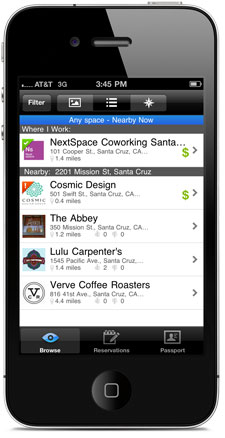
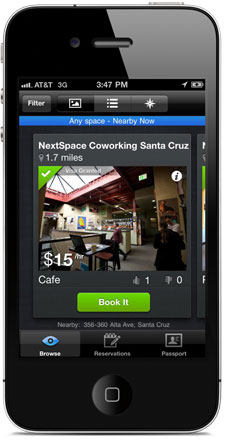
Just in time for SXSW 2011, LiquidSpace is opening its doors to mobile workers looking for flexible meeting and office space on demand through an innovative application for iOS that lets you track down and book available meeting spaces, based on location, availability and features. But which doors exactly? Well, any of them - for LiquidSpace is leveraging advances in technology, such as location awareness and the ubiquity of mobile applications, with trends in real estate that see employees working "all over the place" in a world where many buildings are significantly underutilized. The combination has delivered an opportunity for someone to step in with a solution for both - putting people to work in buildings that could spare it. LiquidSpace smoothly offers a real solution.

The founders, Mark Gilbreath and Doug Marinaro, over the last decade became familiar with how traditional real estate models with fixed leases were "completely at odds" with dynamic and growing companies. With commercial real estate responsible for 60% of our carbon footprint and money being inefficiently spent on holding space for people who might not be using it enough or would demand it too much, the pair determined there had to be a better way to get things done.

LiquidSpace Shows Available Venues In Your Area

Enter LiquidSpace. The concept is two-way, like Foursquare, for users to check into a location that offers a space, and for owners to claim a venue to set up description, hours of availability, and pricing. Venues can be slugged in one of three ways, namely:
  • Public Venues (such as a cafe)
  • Paid Venues (such as a shared work space)
  • Private Venues (such as a incubator or VC office)
In the Bay Area alone, we've seen incubators rise with notable hotspots such as the Founders' Den and Dogpatch Labs, which have helped to move the market in LiquidSpace's favor, delivering private venues withs hared work spaces, often including conference rooms and kitchens. LiquidSpace essentially tries to deliver a location-aware search with a unique piece of real estate that matches the scenario you are working to.

Booking a Workspace on LiquidSpace

The application is quite robust for not having yet officially hit the App Store. You can find meeting places by location, sorted by private workspaces, public venues or meeting rooms, see their free/busy schedules, and can book well in advance if you like. Venues can set criteria for you to book the spot, and you can even use your confirmation from LiquidSpace as your identification at the front desk when you show up unannounced.

For the home office worker, an app like LiquidSpace comes none too soon. Are partners from out of town looking to meet face to face over PowerPoint? Forget about Starbucks or your living room. Fire up LiquidSpace, find a private meeting room in your area and book it. Get a call from your boss when on the freeway that you need to be on a Webcast in 20 minutes? Pull over, open up your iPhone and book the nearest LiquidSpace location. The more you think about the possibilities, the more an application like this makes sense.

I won't hold it against LiquidSpace that they're iOS only right now. In my discussions with them last week, it was clear they were thinking big on how to crack the Blackberry-carrying mobile worker, and the growing Android population. We even talked about whether their next step should be to make a Web app available in HTML5, which I'd strongly recommend. But before all that, if you happen to have an iOS-capable device, and you want a meeting place on demand, and are in a supported area, LiquidSpace sounds like a great idea. If you're attending SXSW this upcoming weekend, you can even book a space in Austin now. So do it before all the meeting rooms fill up.

Spotify Reaches 1M Paid Subscribers, Features Exclusives

Spotify Reaches 1M Paid Subscribers, Features Exclusives

With Apple's iTunes subscription service remaining a mere rumor, and Google Music still not released, Spotify is marching forward, racking up paying subscribers and significant revenue, even if almost none of the revenue is stateside. The service, which I joined as a paying subscriber a bit over a month ago, following the completion of a free trial, not only offers the deepest on-demand music library on the Web, but also extended Facebook integration for social connections, and lately, big name bands like R.E.M. have chosen to debut on Spotify, hallowed ground previously held for iTunes or big box retailers. Today the company announced the achievement of one million paid accounts (per MediaMemo).

While there remains some skepticism from cynical industry pundits about Spotify and its delayed entry to the US, feedback from all its users I know has been unhesitatingly enthusiastic, and paying for the service has been a no-brainer. I'm currently signed up to pay $9.99 a month automatically from PayPal to Spotify, and have considered closing other paid music accounts, including Sirius XM and the competitive Rdio, who coincidentally introduced its Mac OS X application earlier today.

Daniel Ek, founder of Spotify, commemorated the milestone today in a quick blog post, saying "It’s a testament to our fantastic users who continue to support us and spread the Spotify word." Early access to albums like R.E.M.'s "Collapse Into Now" doesn't hurt either.

Recent news has discussed Spotify's ongoing discussions with US record labels about entering the states, negotiations which don't sound fun, fast, or cheap, but are clearly happening. It's also probable that Apple's controversial subscription battle was designed with Spotify in mind, though they have opted to stay out of that particular PR thicket.

March 6, 2011

Quora Reduces Inbox Impact With Daily Follow Notifications

Quora Reduces Inbox Impact With Daily Follow Notifications

It's probable that a good number of the most-followed users on Quora have disabled or filtered many of the notifications from the site, including new followers and replies to posted content. With the site activity spiking in the last 60 days or so, follower notifications were fast and furious into the in box. Today, Quora appears to have reduced their tax on both users' in box and on their servers, in terms of delivering the messages, by capping the update at a single roundup per day.
Minor update you say? Not worth a blog post? Fine. Skip this one. But it's a trend I'd like to see other services adopt or offer as an option.

Most social networks, including LinkedIn, Facebook, Twitter, Foursquare and practically everyone, send you individual notices when a single user connects to you. In theory, you should have the time to scan the user's information and choose to follow them back - or just to ignore them. Quora's daily summary is welcome, and is very similar to the SocialToo daily follow/unfollow notifications that Jesse Stay has been offering paid users for the last few years. (Of note, I am an advisor to SocialToo)

My daily followers update from Quora

For me, after 3,000 or so follower notifications on Quora, it was nice to have absolutely zero updates between the morning of March 4th, and the wrap-up in the evening of March 5th. Now, if I get a minute or two, I can scan the incoming message for interesting people and dedicate time to this, rather than multiple interruptions per day.

If you've previously turned off notifications from Quora, or want to tweak the settings you have now, they've got extremely granular options you can access on your settings page. And if you want to be added to my following list in tomorrow's message, we can get connected here: http://www.quora.com/Louis-Gray.

March 5, 2011

The iPad 2 Dilemma: Nice Upgrade But Without Risk

The iPad 2 Dilemma: Nice Upgrade But Without Risk

Apple is at its best when it takes giant leaps forward and risks its reputation on a new product or idea that could change the industry. Arguably its biggest successes in the last decade have been of this variety - from the original iPod and iPhone to the iTunes Music Store, the iPad and the MacBook Air, each of which is iconic, and unquestionably a success. At a time when competition is moving faster and more intelligently than ever before, we've all collectively come to expect the amazing from Apple from every announcement, and simple upgrades with anticipated features don't change the game. The iPad 2 delivered what we expected - faster processors, dual cameras, and a thinner body, great upgrades, but not really much of a stretch. Now we're in a waiting game again, about 9 months to a year from their next announcement (maybe), giving the competition a new target.

When the iPad was introduced in January of 2010, I said no other company could pull off what Apple had, adding "they are going to sell a ton of these machines, and you'll see them in places you never expected." Apple's sales numbers prove that to be true. They've sold excellently, and we've got a pair of them in our home (the original WiFi only version, purchased on day one). The company's focus on interesting markets, such as health care, and gaming, at the iPad 2 unveiling backed up the belief that the iPad would be in a new place for Apple, and the wide range of apps are extending this even further. So as Mac people, Apple people, we get spoiled.

Leaving aside personal preference for one OS or another right now, I've grown somewhat fatigued about iOS in general. Between my iPod Touch and two iPads, the design doesn't seem to have been dramatically upgraded since launch. A little faster here, a little multitasking there, some folders in another area, and the product incrementally proceeds. So too feels the upgrade from iPad (the original) to iPad 2. For existing iPad owners, like myself, the push to upgrade from version one to two is not a big one - unless you can get a sucker to buy the previous rev for a good price on eBay.

What we've come to expect Apple to do - not just the first time, but every time - is to take a big leap, and put themselves on the line for all mankind, with Steve Jobs, the immortal one (we would hope), playing the role of superhero. The floppy disk? Consider it slain. Proprietary networking? Dead. The optical drive? Rolling in the grave. Maybe the next step is to walk away from boxed software altogether? Maybe it's to do away with all wires? What I wouldn't give for a real device with true wireless power...

In the iPad 2, Apple didn't take any risks with the size of the product. No 7-inch model. No small/medium/large, with the exception being the amount of Flash memory and 3G option. And if you were blown away by SmartCovers, then I believe as an industry we're focused on the wrong things. As a long-time Mac viewer, I remember Steve Jobs introducing the Flower Power and Dalmation-colored iMacs, and the iPod Socks (for real) that could protect your iPod while simultaneously confirming you as a doofus.

As Apple pushes forward with the iPad 2, which we can safely say now will be both the volume leader and revenue leader in tablets for the foreseeable future, competitors from all corners, from HP to Blackberry to LG to Samsung to Motorola are preparing alternatives with platforms that quite possibly are more innovative than iOS today. The HP WebOS is worth peeking at. Honeycomb (Android 3.0) is compelling. The PlayBook remains to be seen, but maybe there's a niche out there for it.

I'm all for buying the latest and greatest stuff. It's fun and it's got serious geek bragging rights. If I didn't already have iPads, I would take a serious look at the iPad 2. But I believe I already have the very best product from Apple that is on the market today - the MacBook Air. The Air is a major reason I haven't fallen in love with the iPad. The light portability and thinness of the Air, plus a real keyboard and a real non-mobile OS. While Apple held serve with the iPad 2, it didn't take the risks that we love from Cupertino. It may have the app numbers now, but I can get practically all the apps I want on Android, and the aspects of that OS seem more comfortable and more designed for a cloud-centric era. If this is the Post-PC era, the OS has to be there too, not just the hardware. So Apple, great job, nice work, but I want more. Take a risk with us, so we can do the same with you.

March 3, 2011

Yobongo Goes Live In San Francisco, Austin, New York

Yobongo Goes Live In San Francisco, Austin, New York

Yobongo, the location-based open chat room for the iPhone and iPod Touch, officially opened its doors this morning, in select cities including San Francisco, Austin and New York City, while in parallel opening the opportunity for desiring cities to vote their way up the priority chart. The idea, as outlined in previous coverage, is putting a forum for discussion in your pocket for your local community to discuss anything in the world.

The service is following Foursquare's roots in starting slow geographically, which will no doubt draw some irritation from expectant users outside the covered geographies, but there's a method to the madness. San Francisco and New York are well-known social media hubs, central to the success of Twitter and Foursquare, and Austin is home to the SXSW event starting next week, which could be a high-profile beginning for Yobongo.

The launch also comes only days after the announcement of Facebook's acquisition of Beluga, a well-received group chat application also expected to make waves at the show. Caleb Elston, cofounder and CEO of Yobongo, says, "If we are not in your city, don't fret! You can vote to bring it to your city next :)" The app is now live on the iTunes Store.

March 2, 2011

Google Profiles Upgrades, PM Klau Heads to YouTube

Google Profiles Upgrades, PM Klau Heads to YouTube

Nearly a year after former Blogger product manager Rick Klau took on the important, if not glamorous, role of heading Google Profiles, the product of his efforts debuted today, letting users make their profiles much more personal than before, with greater customization, improved layout and photo options, presenting an alternative to the Facebook profile or AOL's About.me, for the open Web. The new profiles put the users in control, are more fun, and keep Google Buzz front and center.

Interestingly, as the new profiles debut (mine's here), Rick has simultaneously announced he is moving elsewhere within Google, to act as a new product manager at YouTube, where he's responsible for the video service's home page and social strategy. I know Rick well and consider him a friend, so I hope we see more launches out of YouTube with his fingerprints on it that just might take less than 11 months.

My New Google Profile With a Scrapbook, Info and Introduction

In April of last year, following Rick's move, I suggested ten ideas to redesign the profile and postulated the tie-in with Profiles and Buzz would help the company compete more directly with Facebook. That Buzz remains a center of the new Profiles shows the company may continue this hope, despite some skepticism from the greater tech Web, and as I count down those items I suggested versus what was delivered, it's clear there is still more work to do, which Rick hints at on his blog, where he says there's "a lot more to come in the weeks and months ahead."

The Buzz Tab Remains Key to Google Profiles

Without speculating on the future of Buzz or Google's greater social strategy, the addition of the new Profiles is absolutely welcome. You can see the new profiles bear a profiles.google.com subdomain, while for now at least, the old ones remain at the google.com/profiles subdirectory. (New vs. Old)

Having learned from the Buzz privacy flareups last Spring, sensitive data on the Profile is only shared at your behest, so you can share as much or as little about yourself online as you like. So go check out your new profile, upload some great pics, and take ownership of the way Google presents you.

March 1, 2011

Facebook Acquires Beluga With SXSW Weeks Away

Facebook Acquires Beluga With SXSW Weeks Away

The best mobile group chat application I've ever tried just got paired up with the world's biggest social network. While details are light right now, TechCrunch accurately has reported that Beluga, the group messaging service founded by former Googlers, has been acquired by Facebook. This buy comes at a time when discussion of group texting services is practically at an all time high, with SXSW 2011 looming on the horizon. The purchase is a big win for Facebook who gets an incredibly innovative team and service, and gives an amazingly fast exit for the small group, who launched the app (on this blog first) prior to Christmas 2010.

In late January, I predicted Beluga would be one of the biggest hits at the upcoming SXSW event. It's incredibly easy to use, fun, cross-platform, and provides real value to event goers. Facebook doesn't have the best track record of supporting apps when they are acquired, but TechCrunch says Beluga will "function as it does today." That sounds a lot like how FriendFeed has stayed open without change for almost two years, but who knows how this one will play out?

Other players in the group messaging space include GroupMe, TextPlus, FastSociety and tangentially, Yobongo, who should also be interesting to watch at SXSW.

The company's fast exit shouldn't come as much of a surprise to ardent Valley watchers. Om Malik, in one of our Beluga chats, said "it is a great team and this company is going to be snapped up in months if not in a year," on February 18th. When I saw Facebook CTO Bret Taylor join the service on February 23rd, that should have been my first clue something was up.

When FriendFeed was purchased by Facebook, it didn't mean much for the initial service, but many of the features of FriendFeed have made it into the social network. If Beluga goes the same route, we should expect dramatically improved mobile messaging, location integration and smart groups. Can't wait.

From Beluga's Site: (Beluga is now friends with Facebook)
"Beluga and Facebook are committed to create new and better ways to communicate and share group experiences. For now, Beluga will continue to function as it does today. Your Beluga account and data will not be lost."

Advisory News: MyLikes Raises $5.5M, Adds Mobile Apps

Advisory News: MyLikes Raises $5.5M, Adds Mobile Apps

Today, MyLikes unveiled a bundle of strong announcements that show the company continues to get significant traction, becoming the go to word of mouth recommendation service that lets people get paid through their streams, videos and blogs. About 10 months after the company gained seed funding from former Googlers and an advisory board (myself included), they have announced the raise of $5.5 million in Series A funding, led by Khosla Ventures. In addition, Gmail and FriendFeed founder Paul Buchheit is joining the company's board of directors. In parallel, the company has debuted its first apps for Android and iPhone. Big day.

Unlike traditional advertising platforms which are run of site or based contextual data, such as the page being viewed or the search executed, MyLikes is centered around personal recommendations from friends. If there is a good match of potential advertisers to one's interests, sharing a "like" becomes easy. The service has gained high visibility, not just in the Silicon Valley bubble, but even with A-list celebrities like the Khardasians - kid you not. Advertisers on MyLikes include Coca Cola, Microsoft, Sony Music, Axe Hair products and more.

Paul Buchheit's joining the board of MyLikes is especially intriguing due to his history at Google, where he is credited not just for launching Gmail, but AdSense as well. So this guy knows a ton about advertising success and should provide valuable feedback to MyLikes. He's also been in the trenches at Facebook before joining Y! Combinator earlier this year. I believe the role is Paul's first board of directors position.

For MyLikes, going mobile makes sense as well. The MyLikes On the Go app is now available on iPhone and Twitter, so active participants can get notifications for relevant campaigns on their smartphones, where they can instantly post likes to their streams, be it Twitter, YouTube or Facebook. Where the company can win and get even more visible is through true personal recommendations. There are two things wrong with ads today - that they are interruptive or irrelevant. MyLikes is solving for relevance, and the ads never get in the way of what you want to see.

Also joining the board of directors today is Alex Kinnier, partner at Khosla Ventures, who led the round. Existing investors including Lightseed Partners and Metamorphic Ventures, contributed.

DISCLOSURE: I am an unpaid advisor to MyLikes. I hold a small equity stake in the company.