Silicon Valley Technology Commentary & Archives · Est. 2006 3,045 Posts · 2006–2026
Showing posts with label Last.fm (10 posts). Show all posts

August 12, 2011

August 12, 2011 · 2 MIN READ · BY LOUIS GRAY

Spotify's Artist Radio is Music Discovery, Pandora Style

Spotify's Artist Radio is Music Discovery, Pandora Style

While I've been head over heels for Spotify going back two years now thanks to its increasingly deep music library on demand to my laptop and mobile devices, integrated social sharing with friends and high quality sound with practically no buffering, I have seen some pushback from people who, seeing it for the first time, found it great for playing music you found, but not great for finding new music, in the same way that Pandora and Last.fm are known.

But there is a solution. It's called Artist Radio, and the company quietly pushed it out at the end of July without much fanfare. The combination means you can get the musical serendipity you like about Pandora and Last.fm, the social recommendations from friends, and yes, all the music you can eat on your own.

Here's how it works:

1. Search for any artist in Spotify (Examples: Underworld, The Cars, Blink 182)

Searching for Underworld Gives me a Track List

2. Click the artist name in search results.
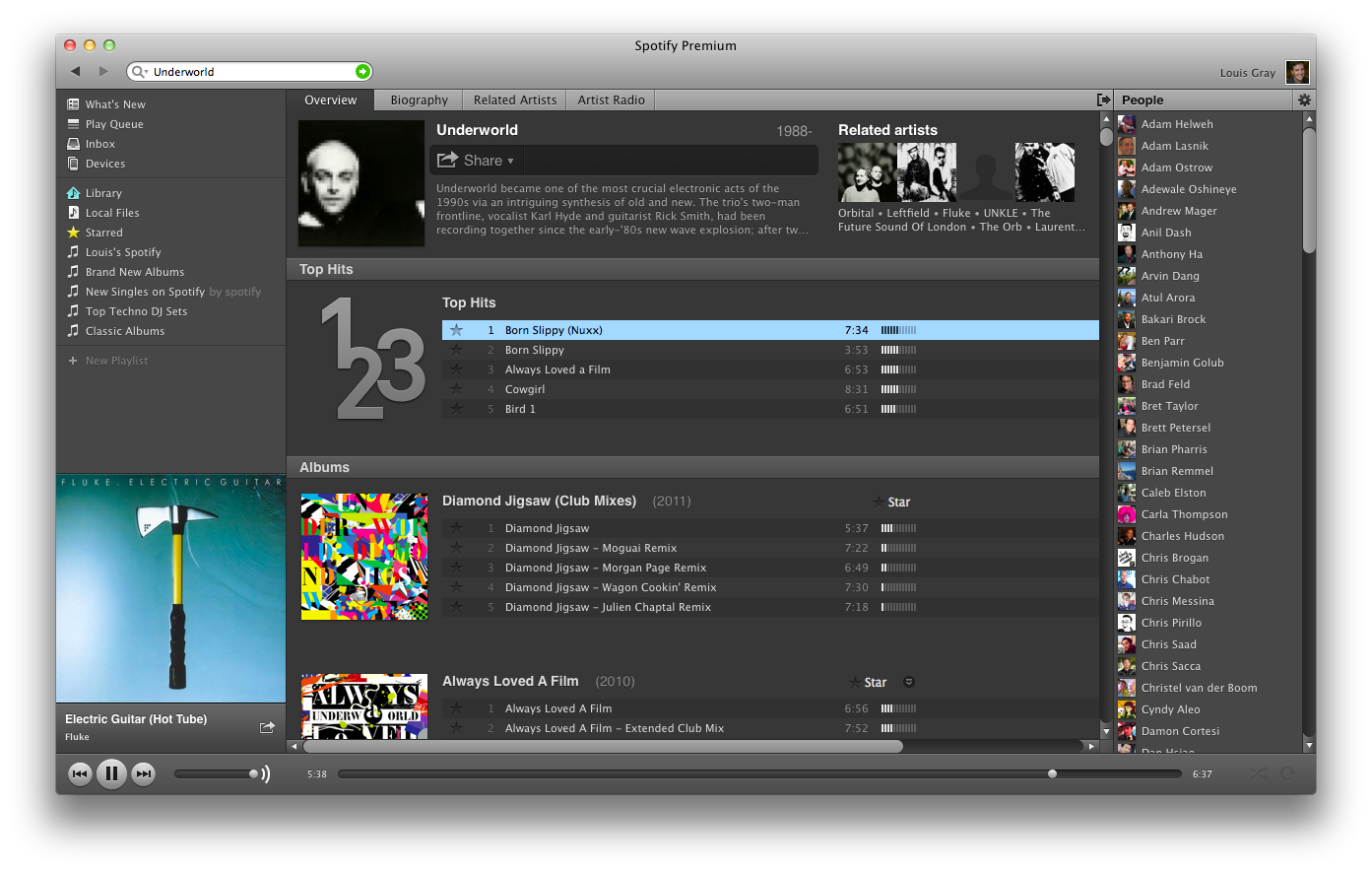
The Underworld Artist page shows hits, albums... and see that at the top?

This brings you to the dedicated artist page, complete with their Top Hits, Albums, and even lower, compilations where their music appeared. Almost all artists have a short bio, as well as a list of "Related Artists", one fast way to find similar music. But there's more.

Underworld Artist Radio Plays More than Just Underworld...

3. At the top is a tab called "Artist Radio". Artist Radio performs the same way as an artist's channel plays out in Last.fm or Pandora. If you select Underworld as your artist, Spotify will play songs not just by Underworld, but by bands including Orbital, Fluke, DJ Shadow and more. Dr. Dre sets up Snoop Dog, Eminem and N.W.A. Tori Amos plays music from Kate Bush, Bjork, Suzanne Vega and others. You get the idea. Without having to go find more music yourself, Artist Radio streams a set of new tracks to you until you hit the stop button.

As longtime Pandora and Last.fm fans will attest, finding new music from artists that are similar to music you already like is a great way to find new bands, new albums, and keep your music library fresh. Spotify hasn't talked a lot about this for its new US audience, but the combination of related artists, artist radio, and social recommendations probably puts the service ahead of all the others in terms of total offerings. So for me, someone who hasn't paid any money to iTunes music for years (aside from upgrading to iTunes Plus for Google Music) and who just disconnected Sirius XM Radio to save a few bucks, I enjoy letting Spotify play DJ. So if you tried Spotify at first and missed this feature, come back and check it out.

May 27, 2011

May 27, 2011 · 1 MIN READ · BY LOUIS GRAY

How to Scrobble Your Google Music Plays to Last.fm

How to Scrobble Your Google Music Plays to Last.fm

Google Music is very much a beta product, but one that is going to get a lot of attention as it becomes more widely available, competing in the online music world with Apple's forthcoming cloud music player, Amazon's cloud player, and Spotify, which thus far has focused on desktop or mobile applications to play on-demand tunes.

After taking a few days to upload my music to the cloud, I'm enjoying getting access to my tunes on any computer I want, from practically anywhere. But the service doesn't do a few things that are practically a must for me - first, update Last.fm with my listening history, and second, play to my Sonos S5 setup at home, leaving me to listen through my laptop or phone's speakers.

Last.fm integrated into my Google Music Player

After politely venting about these product holes on Twitter this morning, the first of these two holes was solved. Daniel Slaughter, a Web Developer at Grand Valley State University in Michigan alerted me to a project of his that brings Last.fm scrobbling to Google Music, letting the OCD side of me enjoy the music again, while keeping my statistics up to date.

Google Music Player updating Last.fm

His project, simply titled Google Music With Last.fm, is a script that runs on FireFox 3 or 4 with Greasemonkey installed, or of course, Google Chrome. To get it running, I downloaded and ran the script, and a new Last.fm section showed up in my Google Music. Once I had authenticated the application to update my personal Last.fm account, the song plays and history started to rack up.

If you're one of the early folks to gain access to Google Music Beta, and you miss the Last.fm integration that practically every other music player (including Spotify and iTunes) offers, you'll want to get this script going. Very easy to add and very clear to see the benefit. Nice work, Daniel.

February 18, 2010

February 18, 2010 · 4 MIN READ · BY LOUIS GRAY

Quality Music by Cloud, Managed by iPhone, at Home

Quality Music by Cloud, Managed by iPhone, at Home

The new musical centerpiece in our home doesn't have an LCD display to tell me the music playing. It doesn't have preset stations, or an antenna. It doesn't have a slot for one or more CDs, and it doesn't even have a dock to hold my iPhone. It just looks like a fashionable speaker , and the only buttons it has are small and simple. Volume up and down or Mute. Why? Because this new device, the Sonos S5, pulls all of its music from the Web, and is fully controlled by my iPhone or desktop application, without suffering any of the tinny, lower quality audio I've come to accept through computer speakers and other devices. And if I had a bigger house, I could play the same music throughout the house simply by getting another unit. Someday...


The Sonos S5 Unit Has No Face, But Lots of Good Sound


On Saturday, the doorbell rang with a somewhat surprising delivery package. Sonos' PR team, which contacted me late last year, which I hadn't been thinking about, had sent me the stereo, and a hub to connect to my home network to try. Within 15 minutes, I had the hub connected to my Airport network, the stereo sitting in our living room, and was tapping in to my Last.fm account, Sirius Radio account and could even get local radio stations of all sorts.

The stereo's arrival couldn't have come at a better time for two reasons. The first reason is that the Bose soundsystem with iPhone dock I got a little over a year ago recently stopped working, for who knows what reason, and we have had to take it out of commission for repair. Second, the Sonos extends my continued efforts to be less reliant on local media, and more reliant on data stored elsewhere - best exemplified by my purchase of the MacBook Air and recent avoidance of iTunes, iPhoto, PhotoShop and other "heavy apps".


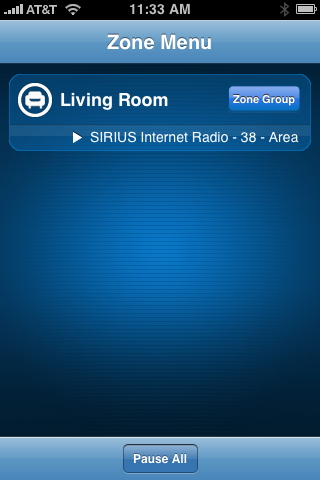
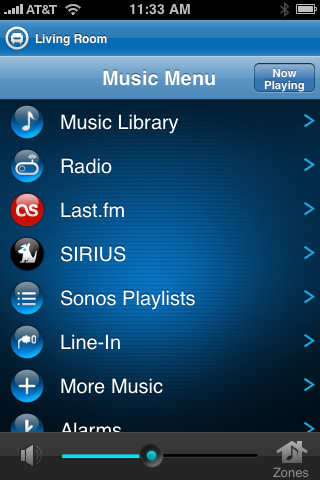
Sonos' iPhone App Controls the Stereo's Music
And Where It Is Played In the House


I am no audiophile, but I do listen to music a ton, and enjoy having good songs on when I am at home - especially as the twins both enjoy dancing to tunes with any kind of rhythm. With the Sonos, I've played with getting one of the kids to be dancing in front of the unit, only to pause it remotely with my iPhone, which stops them in mid-shake, only to look back at me with curiosity and disdain.

Managing the Sonos via iPhone has been a huge plus to a home already covered in a fine layer of remote controls. Instead of yet another remote to chase down when lost, or moved by a toddler, I just use the Sonos Desktop controller or the free iPhone app. From the iPhone app, I can navigate between different music sources, and see which song is currently playing. If I had multiple units, I could see what song is playing on each unit, and possibly even play different songs in different places. The absence of setup is also a solid benefit to the Sonos. The first step was to configure a small hub, to sit atop my Airport Extreme, looking like its younger brother, and the second step was to connect the Sonos to power. It pulls down the music wirelessly from the hub, and no other wires had to be configured - as it should be.


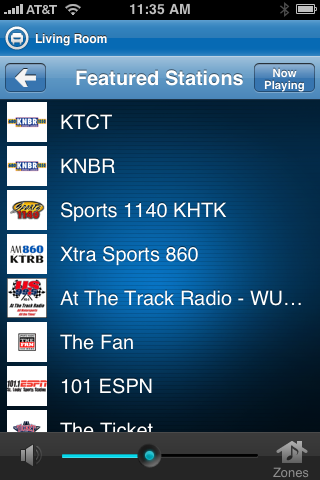
Sonos Shows Local Radio Stations
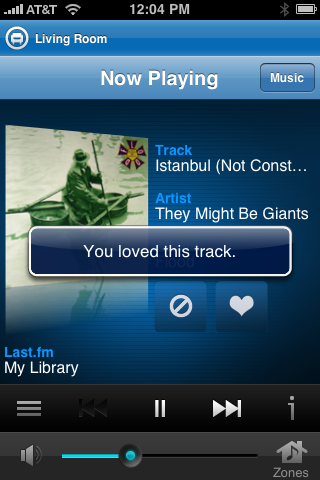
And Lets Me "Love" Last.fm Tracks


If there is anything to complain about with the Sonos, it's that it doesn't feature Spotify support right away. But considering that Spotify is not truly out in the US yet, I can't make too much of a fuss. If the music is available on a hard drive from your network, Sonos can find it, and Sonos also supports Pandora and Rhapsody in addition to Last.fm and Sirius, which I use.


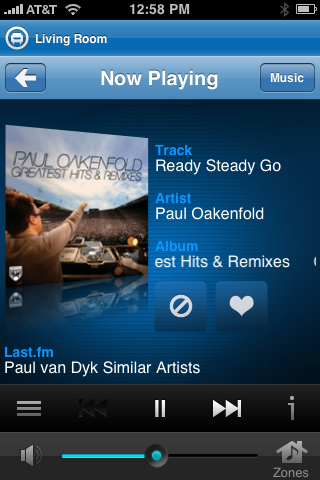
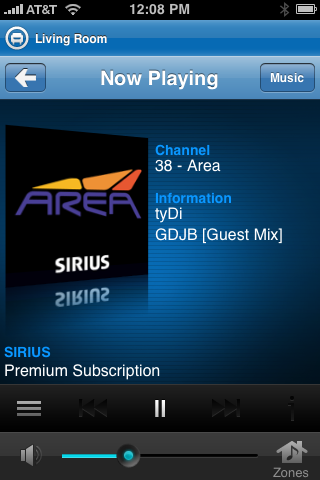
Cranking Tunes from Sirius and Last.fm
Brings Paul van Dyk to the Home Stereo


If you were curious, and in the interest of full disclosure, as always, yes, the device was initially shipped to me free of cost, but in the interest of being fair, and not seeming biased, I have already contacted the Sonos PR rep to make sure I can purchase the unit. As for that old broken Bose, if we ever do get it fixed, maybe we can let it be handed off to someone else in the family who needs one, because it looks like we have a real replacement.

For another review of the Sonos S5, which is making its way around many tech blogs this month, see Rick Klau's extensive writeup. He has been a loyal customer for three years.

June 18, 2009

June 18, 2009 · 3 MIN READ · BY LOUIS GRAY

Sirius for iPhone Solves a Problem I Don't Have

Sirius for iPhone Solves a Problem I Don't Have


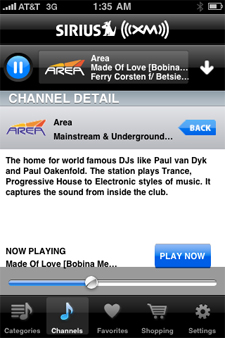
Ever since I rented an Audi in 2007 while traveling that came with satellite radio preinstalled, I have been smitten with the idea of Sirius Radio, and specifically, the station Area, a great Dance and Electronic station featuring some of my favorite DJs, including Paul van Dyk and Paul Oakenfold. As my last car started to die, I always imagined my next upgrade would include Sirius Radio, letting me get crystal-clear music no matter where I drove.

As you already know, I got my next car after all, and it didn't come with Sirius Radio. So I've been holding out for the company's iPhone application to debut. I now had this fantasy of using the line-in feature to my car, streaming satellite radio through the iPhone and essentially reproducing the experience. That I already have thousands and thousands of songs in my iTunes library was really not an issue - for the geek in me wanted it anyway.


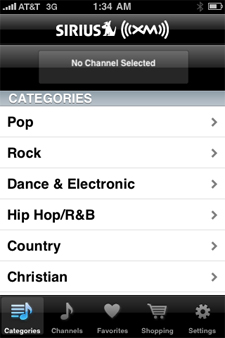
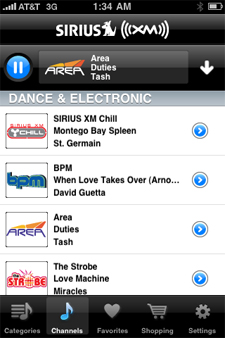
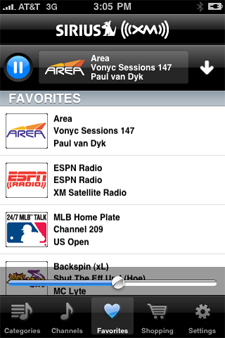
Browsing Sirius Radio on my iPhone

Last night, following the release of the iPhone's 3.0 software, I picked up the Sirius Radio application, registered for a seven day trial, and practically ever since, I've been hooked into the station Area. No commercials and outstanding music. I've had my headphones cranked up when at home, and I even hooked up Area when I have been at the office, preferring good music to being on the phone or engaging with co-workers.

But, surprisingly, I couldn't get Sirius to connect when I was driving, as I toggled back from Edge or 3G on AT&T's network. The one place I thought I could really use Sirius radio, so far, has been a complete zero, saying it was unable to connect.


If Only I Could Pay for Just This Station...

Given I already have days and days and days of music to catch up on, which is already at my fingertips at home or at the office, with my laptop, and also given that I can play this music in the car whenever I want, Sirius' offer fits a very small niche that I would have to work very hard to justify. And while others are complaining that Sirius has not preloaded the app with shock jock Howard Stern or some of its sports coverage, I don't care for Stern, and can get all my MLB games, in audio, using the MLB application for the iPhone.

I admit I love the station Area. Part of me wants to close my eyes and hand over the credit card, paying $12 or so a month to get that station alone - and just maybe I will, if I can get it to connect to the car consistently. But realistically, the debut of Sirius radio for a platform that already has formidable competitors in Last.fm and Pandora, not to mention my own bloated music library, is a tough one. Only if I feel a nagging itch to throw away more money on my music will this happen, and if I ever get too loopy, there's always the option provided to me by Apple of updating my entire library to iTunes Plus for about $400.

So for the next 6 or so days, I will crank up Area. And when that free trial ends, something dramatic will have to have happened to get me to do more than just uninstall. (See Also: Sirius Radio Now Looks Like an Outer Space WebVan)

March 16, 2009

March 16, 2009 · 4 MIN READ · BY LOUIS GRAY

The Clash of Editorial Recommendations and Community Suggestions

The Clash of Editorial Recommendations and Community Suggestions

On Saturday, Charlene Li discussed how social networks are to be "like air", integrated into all the Web sites we visit. She painted a future whereby your friends and who you are as an individual would dictate the content and delivery of your Web experience. Just how to make that Web experience social, but in the right way, is a dilemma services are encountering, including executives at Pandora, Strands and Blip.TV, who talked at length today at the SXSW Interactive conference about how much power the community, and recommendations, should weigh on their products' experience. They also debated whether editorial recommendations had a place, and could be trusted.

When an application or service becomes social, the recommendations one gains from the community and your fellow friends hold significant weight. On Amazon, you might be told to purchase a book or DVD. On Pandora, you might start hearing music from a new artist. And Blip.tv? Well, they're still looking for the right solution, before they start tossing out videos of dogs on skateboards, due simply to popularity, as CEO Mike Hudack said today.

When done well, algorithmically generated recommendations can promote user action, including purchases, which then in turn makes it tempting to integrate social recommendations in practically every element of the eCommerce engine, the panelists agreed.

"Amazon is the quintessential recommender of the influential purchase," said Alex Hillman of Independents Hall. "If I am logged in and it knows what I bought before, it starts recommending things. I do trust it, and it is surprisingly accurate."

But Trevor Legwinski, who runs Marketing and Business Development for Strands, cautioned against showing too many options throughout a service.

"On the eCommerce side of things, (we are challenged) with how we increase our revenue, and what could provide a better consumer experience. But from an eCommerce perspective, if you give them (users) too many options, they will leave the site," he said.

Sites like Amazon.com, Netflix, Pandora, Last.fm and many others rely on the wisdom of crowds to try and figure out your own interests. And sites of all types have been asking you for more and more information for decades, harkening back to some of the most invasive registration regiments out there, around Web dating sites. And even if you put "a crapload" of data in, as Hillman called it, you probably should just save the time and go out on a date instead.

But these products are each working on finding the right mix of input from the community, and that of those hired by the company. Tom Conrad, CTO of Pandora, called it blending expert influence with community filtering.

"Collaborative filtering comes from purchase behavior and community behavior," Conrad said. "But it does have a self-reinforcing characteristic to it. If you tell it people that buy Nine Inch Nails also buy Ministry, it is reinforcing and it is hard to break out of that pattern, and it is even harder with the long tail where there is not enough data to build recommendations, so you have to build systems around factual information around the product."

One of the more visible recent developments in the world of recommendations came from Twitter, who seemingly hand-selected a small number of people to be recommended accounts. The move, which has seen total followers to these accounts skyrocket as the service dramatically grew in visibility, has had many influential users questioning the practice, and others begging to be included.

Today's panel questioned if the uproar was justifiable, considering there was no science behind the recommended list. And while they questioned if those selected offered new users a representative view of the microblogging service, the concept of an "editorial recommendation" was not dismissed outright - even while some panelists had avoided editorial selection in their own products.

"We don't publish top ten lists," said Conrad. "There is no way to find out what songs get the most thumbs up. We never say there are interesting bands to check out, as it's about you, not us. It's about what you think is cool."

Comments around the Twitter signup process generally recommended the service would be better served to ask for more questions up front, and try to leverage their search engine to show experts on topics the new users claimed interest in.

"Twitter could solve that problem if you could pull up other Twitterers who match those terms," Hillman said.

The panel concluded in agreement that the human experience, and recommendations from machines that start with human input were considered "the richest", and it was agreed that the human element would never "go away", but that engines needed to continue to improve to offer a smoother experience for services that relied on the wisdom of others.

"Any time you have a problem with a multiplicity of potential solutions, you have an opportunity as a developer for a recommendation solution to bring an answer to that problem," said Conrad. "Anywhere you have lots of potential solutions, you can narrow it down to one solution that is an answer."

January 12, 2009

January 12, 2009 · 1 MIN READ · BY LOUIS GRAY

Early Adoption Can Stem to Music As Well

Early Adoption Can Stem to Music As Well

This photo, unearthed from the archives in 1978, shows me rocking out to the tunes, bottle in hand, just like many other more aged musicians. But while some of these musicians used the bottle as a gateway to more recreational drugs, I never quite made that step. Instead, I continue to focus... on the music.
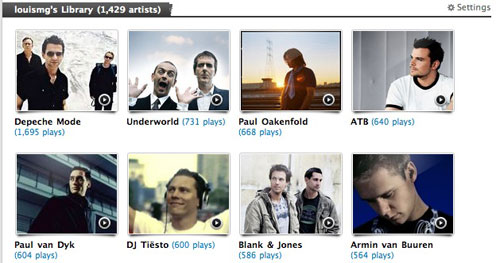
Anybody who follows my Last.fm activity, either through the site, or through my FriendFeed stream, knows I have an "early adopter" approach to music as well. I can hardly stand most contemporary pop, dabble only a tad in R&B, but have been a huge fan of electronic/trance music and techno practically since my first encountering of these unique sounds. Graduating from Depeche Mode, the Cure and REM in junior high school, I added on Information Society and the Smiths in high school before going head-long into beats from Underworld, Chemical Brothers, Orbital, the Crystal Method, and all matter of electronic DJs, including Paul Oakenfold, Paul Van Dyk, DJ Tiesto, and many others.

Yesterday, my partner in crime, Mike Fruchter, alerted me to an unexpected source for more down-tempo tunes, which I've had playing ever since, and plan to start again when I'm done. Adam Singer, of The Future Buzz, happens to be an excellent musician in his own right. I knew he was already a great blogger, but to do both at the same time? Outstanding.

If you share my musical interests, or just want to listen in, go check out www.adamsinger.org for a preview, where you can download his full albums in Zip form, which expand to MP3 and a perfect addition to your iTunes library. I particularly recommend "Lifeforce", "Drifting" and his remix of Depeche Mode's "I Feel You".

Rock on.

September 23, 2008

September 23, 2008 · 2 MIN READ · BY LOUIS GRAY

Is There a Long Tail to My iTunes Library? The Stats Tell All.

Is There a Long Tail to My iTunes Library? The Stats Tell All.

Having long ago passed the point where I could realistically listen to all my music on my iTunes library in a matter of days or weeks, I set up a number of smart playlists that help me to rediscover old music, sorted by the most recent time I played the song. (See: iTunes: Old Music Is New Again from March of 2006) By solely listening to this constantly re-generating playlist, I find myself avoiding repeated songs, and am constantly finding great music that's fallen by the wayside.

But as this playist has continued to expand, and I can't keep up, despite avoiding new purchases, for the most part, we now can further break down the list to see if there is a long tail to iTunes. Am I getting to every song, and what percentage of my songs have been listened to over specific time periods? Also, given I only have a finite amount of time, how many of the songs have been listened to only once?

Let's find out.

First: As of Midnight PDT on Tuesday, September 23rd, 2008:
There are 5,773 items, representing 23.7 days and 35.42 GB.


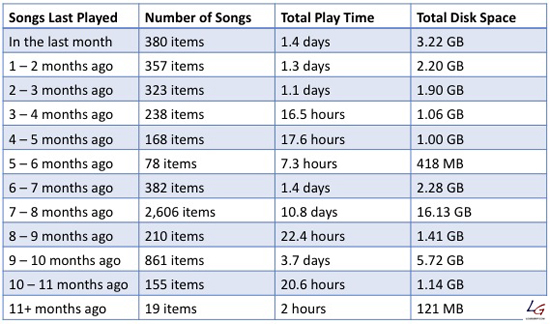
My iTunes Library, Songs Sorted by Last Played

Of these nearly 6,000 songs, I've managed to get to over 1,000 of them in the last three months, and an additional 500 or so in the prior three months (with no overlaps). But that means more than 4,000 songs have not been touched in the last six months, representing more than two and a half weeks of solid music.

While I've tried to get to every song with some regularity, there's still almost a day's worth of music that hasn't been listened to in more than 10 months.


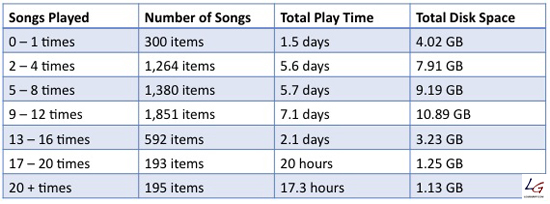
My iTunes Library, Songs Sorted by Play Count

Additionally, of the almost 6,000 songs in my iTunes library, about 1,000 songs have been listened to greater than 12 times each since iTunes started counting. This compares with about 3,200 songs that have been listened to between 5 and 12 times apiece, and more than 1,500 that have been listened to between 1 and 4 times.


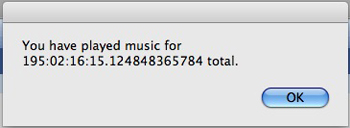
Using a small utility called iTunes Timer, the accumulative play totals for the songs in my library suggest that I've listened to iTunes for more than 195 days and 2 hours. Surely, if I stay connected to the laptop or my iPhone with some good regularity, I can power through those songs I haven't heard in more than six months, or listen to those tracks that haven't gotten enough airplay. But realistically, I shouldn't be letting the statistics drive my listening habits. It's common for people to find their favorite songs and play them a whole lot more than those that don't quite strike their fancy. But with iTunes, and the power of Smart Playlists, I can actually dive in and find out. And to watch me try and catch up, check out my Last.fm page.

What do your iTunes stats show?

September 20, 2008

September 20, 2008 · 2 MIN READ · BY LOUIS GRAY

Strands Targets the Mainstream by Going One On One

Strands Targets the Mainstream by Going One On One

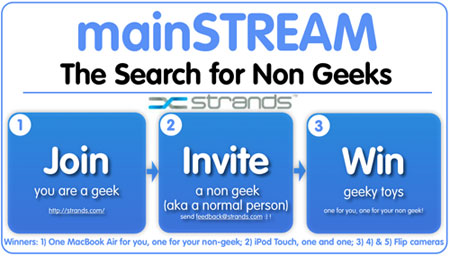
One of the most common themes in the blogosphere, and here at the Blog World Expo in Las Vegas, is questioning how Web applications many of us are using will ever reach the mainstream. Will people's parents, relatives and co-workers ever get Twitter the way they finally get e-mail? Will FriendFeed ever get the kind of name recognition that Facebook and MySpace have? Strands, a nascent lifestreaming and content discovery service, is launching a new initiative, starting today, to take the service mainstream, to the masses themselves in a project they call oOo: One on One, or Operation mainSTREAM.
(See their blog for more).

Drew Olanoff, community manager for Strands, says "A lot of what we create is meant to make our lives easier and more entertaining," and that "companies like Pandora deserve to be known outside of our circles," so what the team at Strands is looking to do is to give its users many invites, and will incentive them to invite non-geeks to the service. Those who recruit "nongeek friends" can win geeky prizes, including an Apple MacBook Air for you and your friend, an iPod Touch for you and your friend, or miniature Flip video cameras.


Strands: Operation mainSTREAM

But Strands isn't going to be sitting around, waiting for you to do all the hard work of recruiting by yourself. The team is going one one one (oOo), traveling state to state, to take the story of all these cool Web applications to the masses. As Drew writes, "I'm going to be visiting old folks homes, hanging out with some soccer moms, and hey...maybe some lawyers, to let them know why technology and your personal presence online is important."

Will this work? Will taking something that's considered an edge technology even for those of us in the Silicon Valley, and introducing it to technophobes in North Dakota and South Carolina give services like Pandora, Last.fm, and Twitter that push they need to get into the mainstream? Probably not all by itself. But as part of the micromedia panel I participated in yesterday, we discussed a new rule of marketing. You tell 10, who tell 100, who tell 1,000. If Drew and the Strands team can find the right 10 people in each of these locations around the country, they may be on to something. And just maybe, Web 2.0 applications have found their new evangelist.
DISCLOSURE: Drew Olanoff, the Community Manager at Strands, is also the CTO of ReadBurner, where I am an advisor, and hold a small equity position.

September 10, 2008

September 10, 2008 · 2 MIN READ · BY LOUIS GRAY

The Real Genius in iTunes 8? Apple Will Make More Money.

The Real Genius in iTunes 8? Apple Will Make More Money.

At times, it seems like the mainstream press hasn't yet figured out how to preview Apple events. That Apple periodically updates its iPods or iPhones or computers and software is really no surprise. The home runs are typically saved for MacWorld San Francisco, with big announcements sprinkled in at the company's WorldWide Developers' Conference (WWDC) and the occasional one-off event. But even when the company makes largely expected announcements, some go into severe hype in advance, and severe lows following. And like the illegal drug users who share the same spike and eventual crash, they're usually left looking for more. But behind the acid trip rainbow iPod Nanos and and upgraded iPod Touch, there was an element of real genius - as iTunes was upgraded with a new tool making it even easier to spend even more money on the popular online music store.
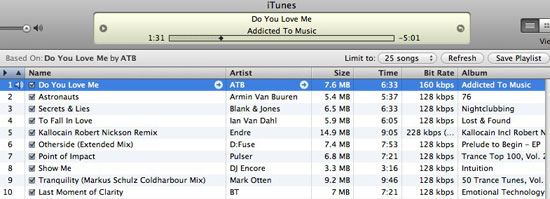

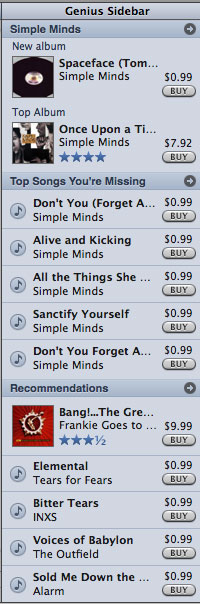
An iTunes Genius playlist, based on ATB's "Do You Love Me"


One of the major new features of iTunes 8 is called "Genius", which will leverage your own iTunes listening history, as well as that of other iTunes users, and try to create a playlist of songs similar to that which you are listening to. Like "Party Shuffle", it will get some mixes right, and some wrong, but it's following along the path of Pandora and Last.fm to use a crowd's information to provide recommendations and guess what other songs or artists you would like.
(See also: ReadWriteWeb: iTunes 8: The Genius in the Box and Mark Evans: Is Apple’s Genius Good or Evil?)

The breakthrough for Genius isn't so much that you can rediscover old music that you've neglected, although for some that is no doubt true. The real value is in the Genius sidebar, which is plastered with "Buy" buttons linking to the iTunes Music Store. In a time when so many Web services are hoping ad clicks will provide them with a way to the promised land, the simplicity of how Apple rolls out new services that enable a larger revenue stream is impressive.

For me, Apple iTunes long ago became my default source for new music. Even if I found a song on the radio or through Last.fm or another source, the first step is to head to iTunes to get it and download it. If iTunes doesn't have the song or album, it might as well no longer exist. I won't be heading to another service to find the song, but I may buy something else instead. That Apple has now made a mainline to my credit card every single time I fire up iTunes is a great way for me to continue making regular donations to my favorite for-profit Cupertino-based charity.

Of course, given I already have 4,342 songs totaling 18.3 days worth of music which hasn't been listened to in the last six months, according to my "Neglected" playlist, maybe I should be satisfied with what I have. Now that would be true genius.

August 8, 2008

August 8, 2008 · 2 MIN READ · BY LOUIS GRAY

Hitting Last.fm's 'Love' Button Is Getting Me Back In Tune

Hitting Last.fm's 'Love' Button Is Getting Me Back In Tune

I'm an unrepentant music-ophile. Through a combination of CD purchases and burns and iTunes downloads, my music library is a swollen 35 Gigabytes, featuring almost 6,000 songs, which would take more than three weeks to listen to straight through. As a result, it's no surprise there are a ton of great tunes that I haven't gotten to in a while, as I'm not constantly listening, as unfortunate as that is. But recently, I've been using Last.fm a lot more frequently, letting me broadcast my playlist to friends who follow me, and letting them know what I'm listening to, making it a more social, and fun, experience.


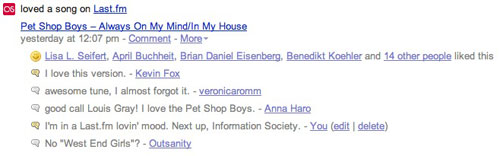
A Pet Shop Boys discussion from Thursday on FriendFeed

I have been a longtime Last.fm user, having first sent my data to the service back in 2005. Prior to that, I was also a happy user of MusicMobs, starting in 2004, which merged into Last.fm in November of last year. Both sites collectively offered a great way for me to catalog my listening history, find out which artists and songs I hit up most frequently, and discover new, similar, artists.


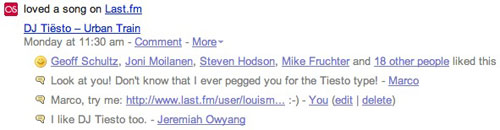
Another discussion on FriendFeed re: DJ Tiesto

But as fun as statistics are, it's just a new form of navel gazing, and I never really delved into finding "friends" and seeing who my "neighbors" were on the site. But now that Last.fm is integrated into the various lifestreaming applications out there, like MyBlogLog, and especially FriendFeed, I'm having a good time going through artists I've neglected, and hitting the "Love" button on Last.fm's desktop application, which tells people which songs I'm particularly enjoying.

What I've found is that you never know just who might share the same interests. For some reason, I've had people say they're surprised I listen to such electronic music and techno as DJ Tiesto, Underworld, Depeche Mode, Paul Van Dyk and Armin Van Buuren. I've also taken people back a decade or two by listening to classics from the Pet Shop Boys, and Information Society.


Last.fm tells me my top artists

Through Last.fm, I've found that Jeremiah Owyang is a Tiesto fan, that Steven Hodson has fantastic musical tastes, introducing me to Mind In a Box, which led me to Edge of Dawn, and that Kevin Fox likes Pet Shop Boys. Although I have to admit that in the last few months, I haven't had the laptop pumping out iTunes as much as it used to, largely due to not wanting to unnecessarily wake up the twins, sharing my tastes via Last.fm is getting me back into the music in a big way.

You can find me on Last.fm here:
http://www.last.fm/user/louismg

You can see my "Loved" tracks on FriendFeed here:
http://friendfeed.com/louisgray?service=lastfm