Silicon Valley Technology Commentary & Archives · Est. 2006 3,045 Posts · 2006–2026

July 10, 2010

July 10, 2010 · 7 MIN READ · BY LOUIS GRAY

Why I Turned In My iPhone and Went Android

Why I Turned In My iPhone and Went Android

For such a long-time Apple believer and Mac/iPhone customer, the idea of turning my back on Steve Jobs and crew, stopping my app store and media buying preferences almost entirely and choosing a divergent path is not one taken lightly. In the two months following Google I/O, I've talked about my looking at Android and how I think the mobile operating system is a real challenger to the iPhone's place on the pedestal in the world of smartphones, but I didn't make a lot of noise about my taking the final step and switching to Android. It turns out that on the very day the iPhone 4 hit Apple Stores and AT&T Stores around the country, I was trading mine in and converting the family (including my wife) to Google's OS. Given many of the comments I have seen around the Web comparing the two platforms, I thought I would explain my choice - especially as news articles are hitting seemingly every day that back up my hypotheses.

For me, more than the over-used phrase of "open", the promise of true multitasking, and the platform's integration with Google Apps, was one word - "Choice". Choice of handsets. Choice of carriers. Choice of manufacturers. Second behind the word choice has to be "Momentum". I can see that Android has momentum in terms of improved quality, in terms of the number of devices sold and users, and yes, applications, which are growing in quantity, soon to be followed by quality. I really do believe that if Android does not already have a market share lead over Apple yet in this discussion, they soon will. It is inevitable. The growth in the number of handsets, carriers and users will drive more developers to the platform, and the holdouts who are not there will eventually make the move. And yes, third is "Cloud" - the idea that I don't need to be tied to my desktop computer to manage data on the phone, but instead, the phone is built to tap into data stored on the Web. Fourth is "Capability". The Android platform, as the Droid commercials offer, simply does more. The power of the mobile hotspot cannot be understated, and the iPhone is a zero there.

Unfortunately, I am pretty sure I hadn't previously made that decision process clear. Most, thanks to my derogatory comments against AT&T (rightly deserved, I may add), thought I switched from my AT&T-fed iPhone to my Sprint contract on the HTC EVO and new HTC Hero because of the many frequent issues with the carrier. This is not true. Yes, AT&T has been dramatically underdelivering in terms of quality and functionality, but this did not drive me away from Apple as much as the lack of choice did. Not even the announcement of an imminent offering of a Verizon iPhone could have kept me on Apple.

I have been publicly and openly thinking about moving off iPhone for more than six months. At the time of the December post, none of us knew what the iPhone 4 would look like. We didn't know if Apple would open up to new carriers. We didn't know what the Nexus One would offer. We didn't know about the HTC EVO or the HTC Hero or the HTC Aria or the Droid Incredible. But the writing was on the wall that change was afoot, and we would have to be in wait and see mode. I waited, and what I saw told me that the speed at which Android has improved and the speed at which new models are developed and released is far outpacing Apple. In my personal experience of using the HTC EVO after receiving a free unit from Google I/O, the gaps in the platform were very few, and were more than outweighed by the device's capabilities. I kept running into ways to use my EVO where my previous generation iPhone could not keep up, and even my handling of the new iPhone 4 was not enough to make me feel I had chosen wrong.

This isn't to say that it's impossible the iPhone 4 is the best mobile phone in the world. Maybe it is. Apple's sense of design and integration is impeccable. They do fantastic work and I do not think they have an equal in hardware. I would never say the HTC EVO is a better hardware device than the iPhone 4, so that discussion is moot. But it is a fantastically capable, flexible device, and I had the choice - yes that word again - to get my wife a different model with a different physical appearance and a different set of capabilities, in the Hero. With Apple, my choice (if you can call it that) is to buy this year's model or last year's model, and black versus white (assuming white ever ships).

I also will never tell you that Android is perfect - in software or in hardware. I have seen bugs on the EVO that have impacted button sensitivity, which at times are baffling and directly impact my ability to use the device for minutes at a time. There are background app crashes, and yes, you do have to be smart about how you use apps to avoid draining the battery faster than would be optimal. But I don't feel that any of these bugs are permanent, nor are they reason to switch back and call it a public loss. It's certainly not as if I have been blind to iPhones traded in or sent back to the Genius Bar on the other side of the aisle. In my view, I feel that Android is today equally capable to Apple in almost all ways, is more capable in several ways, and is less capable or polished in others.

When I first discussed my thoughts on Android, I made comments saying that if I were a software developer looking to deploy a mobile app, I would look to code for Android first and iPhone and iPad second, to gain highly visible mindshare in a fast growing marketplace. In a piece in the San Jose Mercury News last week, that theory was validated by developers who said the once small pond was turning into an ocean. The article said "early bets on Android and Google are paying off."

On Thursday, news from ComScore said Android gained market share while Apple, BlackBerry and pretty much everybody else lost share. On Saturday, Barron's also reported on the growth, saying Android "could eat Apple's lunch." This momentum is real on the market share side, no doubt driven by a swath of partners pushing Android-capable devices, while Apple, a personal favorite mind you, is practically going it alone.
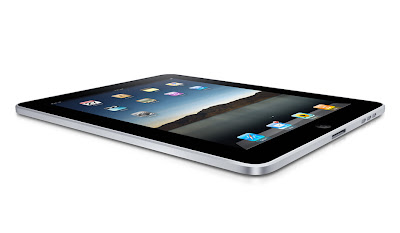
Earlier on Saturday, news broke that HTC was not going to "jump into the tablet market" any time soon, as the company looked for a compelling form factor and use case. We've seen how Apple launched the iPad and has done tremendously well by it, but the great thing about the Android ecosystem is that HTC's saying no is not a deathknell for the platform or its customers (including me). If HTC won't make it, then somebody else will. As we saw with the iPad, rumors of tablets stirred for years until Apple finally launched one. That's what can happen when only one manufacturer has access to a system. Seeing HTC is not doing a tablet now caused me to shrug, not to writhe in pain. But if they had an exclusive agreement with Google, that would be another story altogether.

The momentum is clear and the option of multiple choices is clear. If I like Android and hate my new carrier, Sprint, I can switch to Verizon and get the Incredible. If I have an aneurysm and love AT&T, I can get the Aria. If I want a small screen, I can do that. If I want a physical keyboard, I can find a device that does that. But for iPhone, I simply would have to take whatever Apple offers and believe that their choices are right for me. I've chosen Apple many times and will again in the future, but I don't think I should buy into a system that restricts my choices when another one is out there that enables my choices.

I switched to Android because I am extending my move away from the desktop and more to the cloud. iTunes does not deserve to be the core of my device any more, as it is simply a utility to rent films and get new apps for the iPad. I do believe the Web to be my future hub, and Google is preparing for that world, while Apple is not. Their devices do great work to get to the Web easily, but once there, I have almost always been pointed to other providers, so now, with Android, for the most part, I can just go to the source.

A bet on iPhone 4 today may be a vote for the best phone of today. But a bet on Android is a bet on the future. I am betting on an ecosystem and an application environment that encourages best of breed developers to move their product to a growing population of smartphones, and I expect to reap the benefits. I have the utmost respect for Steve Jobs, Apple and all the work Cupertino has done to make my family's lives better, but I think the baton has been passed. I won't be hanging around hoping they will get reinvigorated, to win on their own against a flotilla of partners on the opposing side. Our family is on the side that is going to win the next five years of mobile.
July 10, 2010 · 5 MIN READ · BY LOUIS GRAY

The Role of a Company Advisor, and How to Spot Bad Ones

The Role of a Company Advisor, and How to Spot Bad Ones

Parallel to my public activity on the blog and in various social networks, piled on top of my real-world work with Paladin Advisors Group and the home life of raising twins, I have added a number of advisory roles to startups in the last two years. The first to come my way was BuzzGain (since sold to the Meltwater Group), and current positions include, in order of chronology, SocialToo, TeensInTech, MyLikes and QwoteBook. I've been approached for other roles, but for various reasons opted out. My activity with these companies, their founders, engineers and others, as well as seeing other activities from fellow advisors, has put me in a position to recognize the good and the bad, so I thought I would share.

First things first, an advisor to a company, especially a startup that is pre-revenue or in the early stages of revenue recognition, is not lucrative in any way. Most companies tag four or so advisors, offering 1-2% of the company, and in some cases much less, for their work, and no money changes hands. It's not an official position in the company, like an employee, and there is no fiduciary responsibility, as would be the case with board of director seats in a public company.

The role of an active and engaged advisor is to provide guidance and assistance to the company, using all their resources available, and to find opportunities for the company to find new partnerships, users or visibility where appropriate. This can mean sitting in conference calls with engineers where the service's roadmap is discussed, and offering feedback on direction or lobbing suggestions yourself. This can mean acting as an early adopter and finding holes in the product, sending them by e-mail and offering an alternative. It can mean introducing people at the company to people within your own network, who may be interested in the product themselves, or can bring the product more awareness. It can even mean sitting down with PowerPoint and cranking out a VC deck if fundraising is in the cards.

But in almost all cases, advisors don't write a single line of code, and the capabilities and direction of the company still comes from the CEO/founder and the engineers themselves who are turning ideas into reality. No matter of advice and enthusiasm can help when milestones are missed or priorities of the individuals impacting the company go astray.

What an advisor is absolutely not is an unabashed fanboy and overly enthusiastic booster of the product. Any time it is clear that an advisor has slipped from a partner of a company to an aggressive spammer who can't fail to mention the company or its products all over the Web, a line has been crossed. But it can be helpful for the person to have the company in mind when opportunities arise throughout the extended network, and to occasionally message on their behalf - with tact.

I initially worked with BuzzGain because I believed PR companies were doing a very poor job of targeting the blogosphere. That turned out to be true and I think still is. I teamed up with ReadBurner because I believe strongly in the act of highlighting popular shared items on the Web and enabling discovery. Unfortunately, that project didn't meet all my hopes and was closed at the end of last year. I worked with SocialToo because Jesse Stay had introduced some top tools to manage Twitter streams and followers, and to block spam. Twitter continues to evolve as does his product, and it is essential for me. I added my name to TeensInTech because I want to help the next generation of geeks to have a central place to communicate and share ideas. This project is still ongoing. I joined up to MyLikes because I detest unfocused advertising and want to see people benefit from trusted recommendations. And most recently, I am working with Qwotebook to help bring a permanent repository for the amazing things so many people are saying which are often floating into the ether.

I have seen some of my peers sign on as advisors to companies even if they privately don't like the product, simply because they think they might make money in the end. This is not an advisor you want. I have attended advisory board meetings only to have the same people not show up who didn't show up last time. They are not advisors you want. And I know you don't want advisors who are unwilling to risk their own "personal brand" to do work on your behalf.

Two months ago, one company approached me with an option to be on their advisory board. I said no. Not because I didn't like them or because I was too busy or because I didn't think they had a future. It was because I just wasn't familiar enough with their product and didn't want to be disingenuous. Since that time, I have started using their product and think it's great. And in that time, an announcement already went out with their new advisory board, without my name on it. Do I consider that a missed opportunity? Not really. Even if I miss out on some great engagement and a few dollars some day, it was not the right time, and my intentions would have been wrong.

Entrepreneurs are already stretched with their resources and their time. It is critical that when the time comes to find partners who are going to have blood and sweat equity with you, who can help build your product and find you new outlets, that you pick the right people who are entrepreneurial themselves, who are willing to take calls at odd hours, and who truly care about helping you achieve your vision. If you choose wrong, all you have done is given up equity to people who are along for the ride, and you may have to work even harder to chase them down. So do choose well.

I told you before, I am not a fanboy, not even to the companies I am working with where I do get deep insight into their plans. But I do care, and I will keep fighting on behalf of users from the inside, and then fighting for them when the time is right.

Disclosure: I am an unpaid advisor to SocialToo, TeensInTech, MyLikes and Qwotebook.

July 9, 2010

July 9, 2010 · 2 MIN READ · BY LOUIS GRAY

Kosmix Extends Real-Time Tweets to All Web Pages

Kosmix Extends Real-Time Tweets to All Web Pages

As Twitter usage has essentially become pervasive, from the digerati to celebrities and politicians, the site has moved to bring Twitter content and functionality downstream, bringing the world of @replies and 140 characters to new Web sites and clients. One of the major introductions from the company was a tool called @Anywhere, which when used, lets you follow people from third party sites, all with a few lines of JavaScript code. Now, Kosmix, the lesser-known, but innovative, Mountain View search company, has taken this functionality a step further by automatically detecting names and IDs of Twitter users around the Web, and displaying their recent updates from Twitter, with no work needed on behalf of the Web site owner.

The way Kosmix makes this happen is through a lightweight Web browser plugin called Tweetbeat Firsthand, available for both Mozilla FireFox and Google's Chrome browser. Upon installation, you will start to see small blue Twitter icons next to names as you surf the Web. Hovering over the blue icons shows their Tweet stream, and encourages you to learn more about the person from Kosmix's rich topic summaries.

Kosmix FirstHand At Work On My Posts

For example, a standard Yahoo! Sports article on Lance Armstrong's Tour de France effort also contains an update from actor Ben Stiller. The blue Twitter icon next to Stiller gives his real-time updates on the Tour, and links out to his Kosmix page, here: http://www.kosmix.com/topic/Ben%20Stiller.

Surfing the Web with the "Tweetbeat Firsthand" extension adds a new layer of real-time to all pages. If you install the plugin and visit my blog, for instance, you can see names like Paul Buchheit and Jason Shellen sporting the blue T's, while brands similarly are highlighted, including Twitter, FriendFeed and Facebook.

The Tweetbeat Firsthand extension follows on to Kosmix's highly visible World Cup efforts during the last month, which also carries the Tweetbeat name. You can grab the extension here: http://www.kosmix.com/labs/firsthand/.

Disclosure: Kosmix.com has previously done business as a client of Paladin Advisors Group.

July 8, 2010

July 8, 2010 · 2 MIN READ · BY LOUIS GRAY

Who Cares About LeBron? Drew Is Cancer Free!

Who Cares About LeBron? Drew Is Cancer Free!

Drew Wins Again. Eat It, Cancer.

Tonight, as former Cleveland Cavalier LeBron James was making his announcement on ESPN that he was headed to play hoops for the Miami Heat, I like many other people, had the TV on to see what he would say. But I had the set on mute, as I was on the phone with my good friend Drew Olanoff, who got better news today than any Miami Heat fan. After a serious scare that had his friends and family worried he was setting up for a second round to fight cancer, he got a call today giving him the all clear, meaning instead of months of chemo, nausea, fatigue and worry, he gained a reprieve.

This is pretty much the best news of the year for me. (With the potential exception of our announcing baby #3 of course)

While I may at times seem detached and automated, and focused on tech, and while many people aren't seeing the real, true, social connections that can happen from the more virtual concepts of networks, "friends" and connections, I can verify they are real, with Drew being among the most clear connections I have gained from this Web experience. Despite our differences, Drew makes sense to me, and he is a close friend of my entire family, and hopefully, I am to his.

I've talked to you about his challenge with Hodgkin's Lymphoma that consumed much of his 2009. I told you about his starting a new phenomenon called BlameDrew'sCancer, which later morphed to BlameCancer, when he first kicked cancer to the curb. And in recent weeks, we morbidly talked about having to start a new domain name of blamedrewscanceragain.com and preparing for a much tougher fight. I had mentally resigned myself to the expectation that cancer was going to challenge him again, and that a fight was inevitable. I know he did too.

But today, on top of all the other news out there, from global issues, to jury verdicts and choices of well-paid basketball icons, there was really only one piece of news that mattered. A friend of mine and to the tech community at large is going to be with us, at full strength. The Web needs Drew, and so does my family. So cancer, please go away and don't come back. We're done with you.