Silicon Valley Technology Commentary & Archives · Est. 2006 3,045 Posts · 2006–2026

July 6, 2010

July 6, 2010 · 3 MIN READ · BY LOUIS GRAY

False Positives? I Blame Reverse Scientific Method.

False Positives? I Blame Reverse Scientific Method.

I guess one of the best times to make a public mistake on the blog is at 2 a.m. on a 3-day weekend. Or, in theory, given the absence of hard news, it could instead be one of the worst times, guaranteeing the blunder will fill the vacuum. I got to test the theory this Monday, when I pieced together a number of theoretically unrelated updates and manufactured speculation that two of my favorite and most-watched Web companies, Foursquare and Brizzly, were hooking up.

By morning, both companies denied it outright, but other news outlets wrote it up as a clear miss - which was their right, considering how high profile it could have been if I had been correct.

Fellow blogger Denton Gentry saw my new age sleuthing as registering a false positive, as I made something out of nothing. I've got a history of watching corners of the Web and referral logs for story ideas or new applications, so this route wasn't too much of a change - even if the outcome left much to be desired.

As I see it, the fault for this story had as much to do with reverse scientific method as anything. If you remember scientific method from your grade school science fair projects, the right way to prove a theory is to set up a hypothesis, collect data, analyze it and interpret the results, forming a conclusion. But many a time, once a hypothesis is made, one can see clues everywhere, in fact self-selecting the data. Once I had a buzz in my brain about Brizzly and Foursquare being more than "just friends", I kept digging until I found enough clues to tip it from theoretical to probable.

The combination of @VCMike's update about one startup receiving an offer and that of @cw signing legal papers tipped me over the edge - as at 2 a.m. I was looking for the "one more thing" that could morph a fever dream into a serious scoop. And we still don't know what Mike was referring to - or Chris for that matter, though it could be leftover work from the Plinky sale to Auttomatic.

I tend not to post speculation here. Most of the time, you see my analysis of what I am using and hearing, product news or observations. But to explain the motives behind this, for those who aren't part-time geek tech bloggers, you need only look back at how the news that FriendFeed was acquired by Facebook snuck up on us. I had had my own inklings something major was up when co-founder Paul Buchheit rolled in happy after a late night. Instead of the site's loyalists getting a fair shake at the news, the story debuted on a blog that had been very negative to the site in the past. Similarly, news of Brizzly's own Picnics feature (which I like a lot) had muted response, thanks to what I saw as a half-hearted outreach plan.

Those two contributing pieces, in addition to my unanswered hypotheses (at the time) thrown to @shellen and @cw, made me feel I could take the risk of getting ahead of a story even if I didn't have all the data signed and sealed. I've seen worse conjecture with fewer clues on other sites before, and had anecdotal data from third parties that helped me feel I had the story right - late at night when most people were turning in after an evening of fireworks.

So, yes, I got the story wrong - and many people couldn't see how I thought the two teams might leverage one another. I could see it ... with a new Web and iPhone client dedicated to Foursquare... a tie-in of Foursquare tips to the Brizzly guide, and somehow... Picnics to talk about venues. It could happen. I've seen worse fits. So for this round, I was wrong, but I'm not totally repentant. I don't mind being wrong every once in a while, having tried and missed, than having not tried at all.

See some of the ensuing fallout:
The Next Web: Could Foursquare be looking to acquire Brizzly? [Updated: No]
VentureBeat:  Thing Labs CEO: No Brizzly buy for Foursquare
Business Insider: Brizzly CEO Shoots Down Foursquare Acq-Hire Speculation
GigaOM: No! Foursquare Isn’t Buying Brizzly

July 5, 2010

July 5, 2010 · 3 MIN READ · BY LOUIS GRAY

Updated: Foursquare and Brizzly "Just Friends" For Now

Updated: Foursquare and Brizzly "Just Friends" For Now

Update: Following last night's post, Jason Shellen of Thing Labs, as well as Alex Rainert of Foursquare both said there was more smoke than fire to this and that the two companies are merely friends. I still think it'd be great if they tied the knot, so consider this a trial run.


Around noon on Sunday, Mike Hirshland of Polaris Venture Partners tweeted that it was "truly ironic" a startup would receive a buyout offer on "Independence Day". But what startup, what offer, and from where? Reading the tea leaves and looking at various updates, I am cautiously speculating there could be a bid for Thing Labs, the makers of Brizzly, from the red-hot geolocation startup, Foursquare.

Which Company Saw Fireworks This July 4?

Hirshland is a backer of Thing Labs, as is SoftTech VC's Jeff Clavier and Michael Jones, an angel investor. Polaris is also invested in a number of other tech firms, including Formspring, but a recent trip to Manhattan to Foursquare HQ by Thing Labs' founders Chris Wetherell (@CW) and Jason Shellen (@Shellen) suggests where there is smoke there is fire.

Signing Papers. For What?

This trip, which could have been as little as a social visit or a deeper partnership to integrate Foursquare data into Brizzly's client, was followed up by a tweet from Chris on the 4th, who said his Independence day was "filled with legalese and lawyers." While yes, this could be for anything, business or personal, one can connect the rumor dots and reach a tentative conclusion that something is afoot at Thing Labs, who recently launched Picnics, and has looked to differentiate itself from other Twitter clients, especially following Twitter's acquisition of Tweetie and parallel launch of a dedicated Android client, which sent aftershocks into the developer community.

Jason and Chris flew to New York on June 28th to meet with Foursquare on the 29th, and returned on the 30th, if their updates on Twitter are any indication. The visit on the 29th just so happened to coincide with the day Foursquare announced their raise of $20 million in a series B investment, giving them plenty of cash (or stock equivalent at a new valuation) to pick up Thing Labs. The company most recently picked up $600k in funding in November of 2009 bringing total funding to just over $2 million.

Jason and Chris Set off to NYC to See Foursquare

Chris Reports It's A Nice Place!

The talent behind Brizzly, without question, is world class. Jason and Chris specifically have years of experience ranging from Blogger to Google Reader, and they sport a supporting staff with a pedigree including more ex-Googlers, including Ben Darnell, who briefly spent time at FriendFeed and later, Facebook. The idea of pointing that talent at Foursquare and its mountain of check-in data, assuming my speculation has any merit, is intriguing, and could lead to new clients and new ways to rank the world of real-time geo-location.

Looks Like the Trip to Manhattan Was Fruitful?

Ben Horowitz of Andreessen Horowitz, in explaining their investment in Foursquare, cited a leading CEO with Dennis Crowley (@dens), a killer product, and a gigantic market. They didn't say anything about the potential to use the money toward acquisitions, and Dennis has been spending time at the World Cup in South Africa this week, while Jason has taken a few days off on vacation himself, if photos from the lake with his sons are any indication. So it could be this speculation is dead on arrival. But it is clear the Foursquare team and Brizzly are close, and Mike's got an acquisition potentially on his hands somewhere.

Why not let it be two amazing companies combining to crown the winner in geolocation? Of note, I did e-mail Chris on the subject earlier Sunday and did not receive a response. A direct message to Jason about the possibility of the two companies joining forces sent earlier in the week went unanswered. I have not yet reached out to Foursquare or the VCs behind the company.

July 4, 2010

July 4, 2010 · 4 MIN READ · BY LOUIS GRAY

A Day to Call for Data Independence

A Day to Call for Data Independence

I Want My Data Independent of Companies and Services

We don't live in a data democracy. Every day, we give over more of our data to people we don't know, whose motives we may not fully understand, and the possibility of our getting it back is very slim. Unlike in a democracy, we don't get to vote in the leaders of companies who build the programs and sites that harness and manipulate our data. We don't get to set term limits on CEOs or throw the bums out of corporate offices if our data is used in ways that are unsavory. And just like our tax dollars, we keep creating more and don't always know where our data is going to end up.

In today's world, as much of the data we create transitions from offline to online, and from our personal computer hard drives to the cloud, we are being forced to make choices in terms of what companies we trust, what services we believe will have a future, and what applications or Web sites can do what with our data. If we choose wrongly, we stand in danger of losing data, losing access to that data, losing historical data or metadata. Our data could be compromised by ill-meaning people, or simply cannot be moved, written once and made to lack true portability.

As I said in January, I think the time has come to deliver personal clouds with OS and application-neutral data. I don't want to be forced to accurately guess the right programs and providers, and I want anytime instant access to my own personal data, including contacts, relationships, rich media, e-mail, documents and more from any device.

We have not yet scratched the surface of data interoperability and portability between services and devices. While work on standards continues, there remain significant challenges, and often, as they do in government today, politics play a big role, between and often inside companies. Is what is in your best interest also in the best interest of those storing your content? And should they be one and the same?

I am calling for:
  • The ability to export one's social profile from network to network.
  • The ability to export one's shares and postings from network to network.
  • The ability to change blog software back-ends quickly, without losing content.
  • The ability to change blog comment providers quickly, without losing data.
  • The ability to change e-mail providers without long and tricky transfers.
  • The ability to purchase applications once even if you change operating systems on mobile or desktop.
  • The ability to access one's purchased media from any device if you provide your identity.
  • The ability to access one's bookmarks and history from any browser if you provide your identity.
  • The ability to access one's contacts and messages from any browser or e-mail client.
  • The ability to export one's social graph and reconnect it in a new place.
  • The ability to purchase media once even if you change media sources.
  • The ability to switch carriers without penalty.
  • The ability to collaborate with people across geographies, OS and Web browsers.
  • The ability to add actions to entries (such as likes or comments) and have them flow to all entry points.
  • The ability to migrate from one RSS reader or shared link blog and not lose subscribers.
  • The ability to download all videos and images in one's network rapidly.
These are just a few ideas off the top of my head, and the list could no doubt grow dozens long with your input and more hours spent trying to learn just where our data goes when we hit publish or submit. I am trusting an increasing amount of my data to the cloud with every post I write, every status update, every photo I upload, or every video I add to YouTube. With more than a decade and a half of activity on the Web, the legacy of my choices often impacts what I can do in the future, or the speed at which I can make change. I have had to walk away from created data before, and I have had to make compromises on choice or accept things as less than ideal much more often.

There are people out there working on very real standards to let our data move from place to place without hiccups - such as those hammering away on the DataPortability Project. Some of these issues are being solved in front of our eyes, while others are getting much worse. On a day when one nation is celebrating with big words like Freedom and Independence, it's worth knowing just who owns our data now, and striving to one day see a time when it can truly be moveable and independent - not beholden to any company, service, software or environment.

That would be a day worth celebrating.
July 4, 2010 · 4 MIN READ · BY LOUIS GRAY

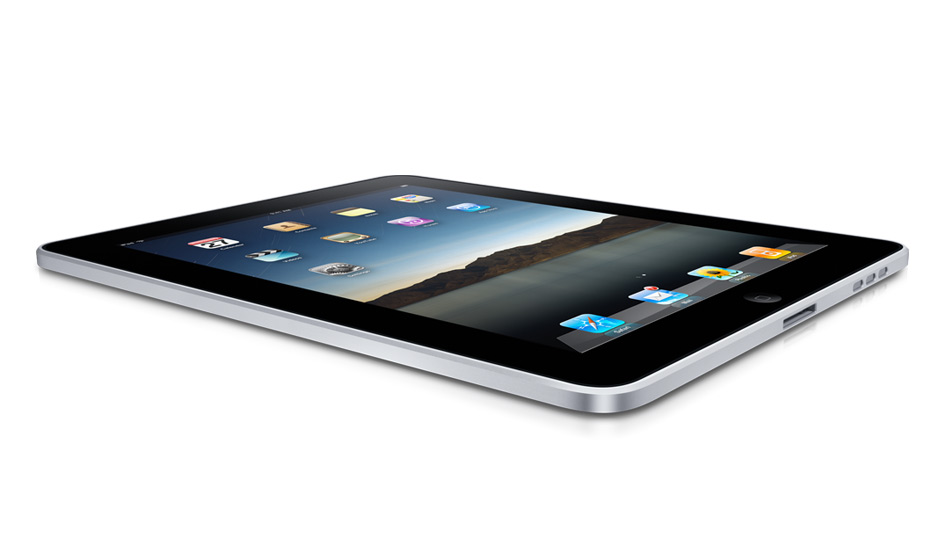
The iPad is the New Electronic Babysitter 2.0

The iPad is the New Electronic Babysitter 2.0


The television has long been referred to as an electronic babysitter for busy parents, or their lazy, less-involved counterparts. Rather than designing interactive projects for their children, it's far easier to flip a switch to the tube and see the kids' faces go blank, but planted in one spot, for hours at a time. Be it children's cartoons, Disney movies or PBS, it's practically a time-honored tradition. In our home, the TV stays off, and the iPads come on, performing a similar function, but with an added twist, where the kids are interacting with the device, selecting programs, or browsing YouTube with their short attention spans and curious minds.

When I purchased the two iPads in our home, the theory was that one of the devices was for me, and the other was for my wife, to be shared with Matthew and Sarah, our twins who turned two years old near the end of June. But the truth is that I am almost exclusively still on the MacBook Air (or the HTC EVO) and use the iPad sporadically. But for my kids, it's practically an obsession. Both kids know how to say "Apple" and can ask for the iPads by name. They will even point to the door to our room, where they know they are stored (and charging) and ask us to go get them.


Matthew Shows His Sports Acumen on the iPad


As my kids have grown up around iPhones, they have practically been raised around touch screen interfaces, and they took to the iPads almost immediately. Matthew and Sarah both play the many sports games on the devices, including an array from Skyworks, ranging from bowling, soccer, baseball, and basketball, to the time-honored Skee-ball. If the game has a ball and consists of you flicking from one side of the screen to the other, they've pretty much got it nailed. And over time, I have seen them learn their favorite applications, and watch them navigate dialog boxes and go from screen to screen to start new parts of the app, or exit to a new one.

In addition to the simple games, Matthew and Sarah both enjoy an application called Doodle Buddy, which lets them essentially fingerpaint on the device, use stamps for frequently-used graphics, from dogs and cats to trees and emoticons.


Matthew and Sarah Get Early Access to iPads


Also, I can't underestimate the pervasiveness of YouTube in our home, now that the iPads have brought the world's amateur video network to be one click away on the iPads. Now it's a common scene to see Sarah in her PJs, sippy cup to one side and snack trap to the other, filled with Cheerios, intently choosing from her YouTube history to watch animals and people in all manner of antics. Sure enough, we get our fair share of annoying theme songs stuck in our head, but unlike the TV, the videos don't last 30 minutes and aren't interrupted by blatant advertising.

As a parent, there are a few changes I would like to make to the iPad in terms of how my kids have access to the device. I would like to have a setting which requires a password to delete applications from the device, or to move them off the dock or around the screen. I've come home to find my Dock empty, and apps in new places, or apps vanish, requiring me to download them again. And I would also like to set a volume maximum so even if Sarah swipes from left to right on her favorite YouTube video, that it's not blaring. I'd love to disable the home button to make the iPad more of a kiosk. And yes, if either of them bump into content that's not my favorite, it would be good to add a specific video or video publisher to a "Don't show again" list, so they don't get rediscovered.

Unlike televisions, the iPads are also light and portable, and can go from room to room or place to place. So while we haven't exercised this option too frequently, we could have the kids watching YouTube in their car seats while tapping into my WiFi hotspot from the front seat. We can even hand each kid an iPad and send them to different rooms if conflicts arrive. And while the Internet is a big place indeed, the kids' ability to point and click keeps them much further away from the darker corners than once they learn the ability to type and search for keywords, so we're in a pretty safe place today, one filled with silly songs, sports, animals and video after video of giggling babies.

I guess that in our home it was pretty much guaranteed our kids would be gadget freaks at a young age. I promise they're getting their share of traditional learning with real hardbound books, blocks, and the usual array of cars, trucks and balls of all kinds, but you throw iPads into the mix, and it opens up a new world that has our TV remaining off. It's a fantastic market segment for Apple that no other manufacturer can match for a combination of ease of use and realm of possibility.