Silicon Valley Technology Commentary & Archives · Est. 2006 3,045 Posts · 2006–2026
Showing posts with label Redfin (6 posts). Show all posts

January 2, 2018

January 2, 2018 · 5 MIN READ · BY LOUIS GRAY

Why Silicon Valley's Real Estate Crisis Is a Present Danger

Why Silicon Valley's Real Estate Crisis Is a Present Danger

This nice home would probably go for $2 million in some Bay Area cities.

That Silicon Valley housing is very expensive is no surprise to anyone who is paying attention.

Fueled by a bullish tech market for the better part of a decade, with inventory dramatically constrained, each new home entering the market can be flooded with aspiring buyers who are eager to pony up millions of dollars for uninspiring homes, with the desirable promise of reduced commute times to big tech companies or startups, or access to high quality schools.

As a homeowner who bought our place in 2010, I could be doing victory laps about perceived value increases each time I view Zillow or Redfin to see how our long-term investment is doing, but the harsh reality is that the daunting financial demand needed just to find a place to live is having a dramatic impact - not just on the Bay Area as a region, but in markets far from our tech epicenter.

Prices in secondary markets outside the Bay Area are skyrocketing as distressed Californians seek alternatives. Working class families are being priced out of the most desirable cities, forced to endure hours of commute times from far-flung outlying towns, or losing their homes outright. Some small businesses are closing because they can't afford the lease, or can't find enough help to keep their business running. Help wanted ads for service workers are visible practically everywhere, and few answers are clear, aside from pushing for more housing, which in itself finds opposition from the slow to no growth community.


The topic of Silicon Valley real estate is ever present. The high entry point presents a barrier to tech workers looking to start their careers. It presents a challenge to new families in high priced rentals who may once have expected to save for a home, but see that opportunity get further out of reach each month, as savings never catch up with price inflation. Others living outside the Bay Area may turn down career opportunities because the promised salary and benefits can't deliver an expected standard of comfort. It's happening, and it's very likely to get worse.

About two and a half years ago, I read the tea leaves and talked about how I saw Sunnyvale as being in an enviable position, flanked by Google and Apple, both of whom are aggressively growing and are significantly profitable, helping to drive up demand for homes and attracting well-paid tenants. That post, "Tech Company Shifts Position Sunnyvale as Major Hub for Next Decade", helpfully marked some median home prices at the time of the article and allows us to compare what's happened since.

While Bay Area prices have increased, Sunnyvale and Mountain View lead.

As I had expected, not only have home values continued to spike on the San Francisco peninsula, but pressure from Apple's new campus, built on the Sunnyvale border with Cupertino, and increased growth from Google and LinkedIn, etc, have pushed Sunnyvale prices higher at a rate that dwarfed even its pricier neighbors, and driven average home values to nearly $2 million. You also saw a similar rise in Mountain View homes, where Google is based, but Sunnyvale has practically caught up.

What this means in real-world impact is that homes purchased just a few years apart, on the same street, can have wildly different purchase prices, monthly mortgage payments, and property taxes. Our neighbors, two doors down from us, recently paid more than twice the price for their home than we did in 2010, even though theirs is smaller. And they'll get nailed with twice the property tax to boot - their gift from the state of California.
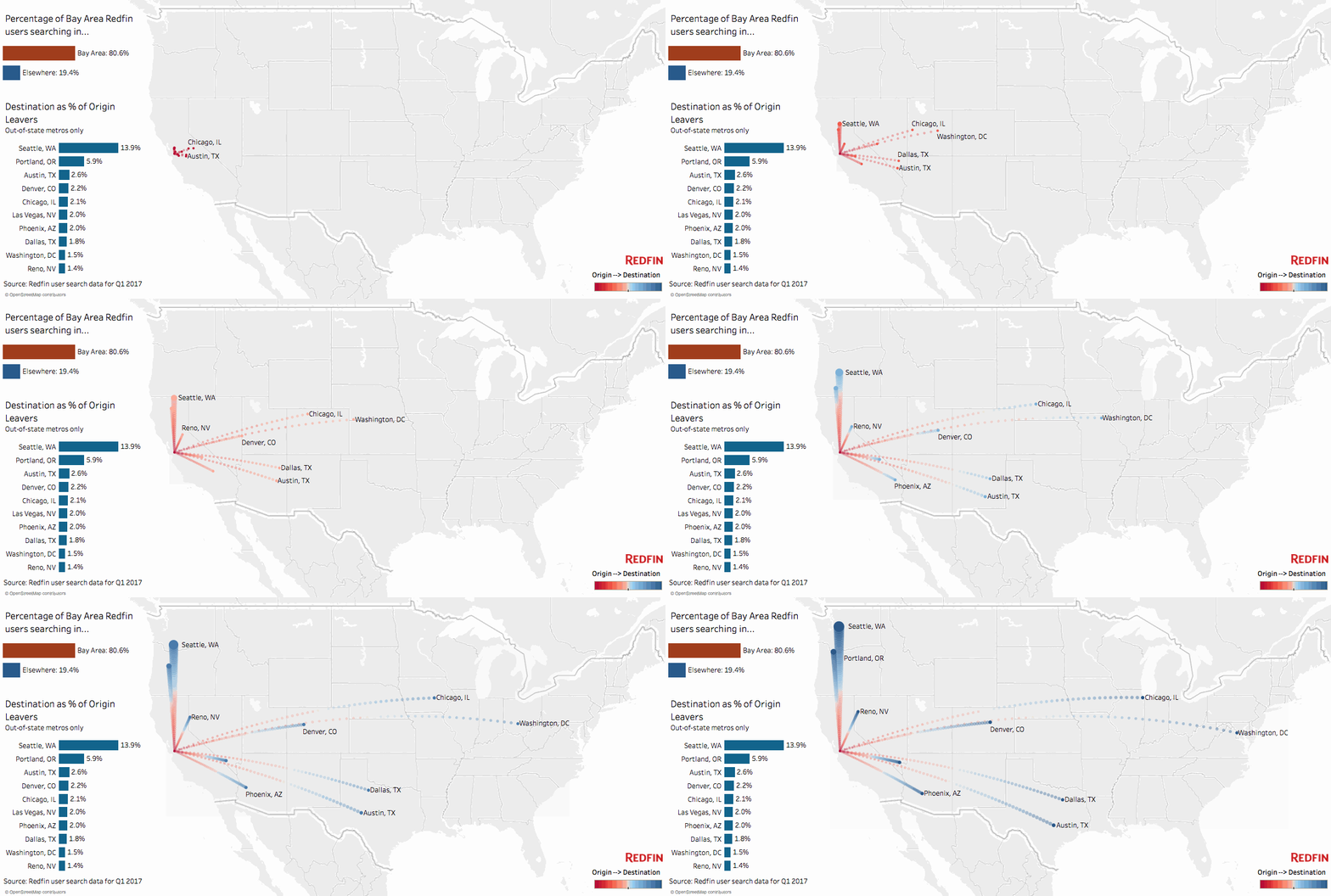
Redfin highlights migration patterns out of California. (Source)

For those who can't stomach a $2 million price or higher (and that includes us, by the way), buyers are looking elsewhere - to Seattle, Boulder, Austin, Portland, or even Washington DC, for alternatives. Seattle's home prices were up 16% in the last year alone, largely driven by migration out of California, which impacted the entire country. And while prices went up, more people were sent to the street - which has led to a spike in homeless deaths in the highest priced cities. (Source)

As I mentioned yesterday, the majority of children in school districts near Facebook headquarters are homeless. This is a new and growing crisis. Low to middle wage earners who can't afford to buy homes here are living in their cars and RVs. I see many of them when I walk the dog at night and recognize familiar faces who are just trying to make it to the next day. Even as Sunnyvale and other cities nearby are raising our minimum wages to $15 an hour, that is not a sustainable wage that can cover high rents that continue to grow. And there is always resistance from NIMBY (Not In My Backyard) neighbors who enjoy the high home values, but want to avoid rising traffic, taller buildings and crowds that come with job demand. Add on to these issues competition from foreign money like China, where many area buyers come from, and you have a recipe for disaster.

Silicon Valley's successes have had incredible impact on the world and the region. Some people have gotten obscenely rich from company successes and acquisitions, and have the option to buy these multi-million dollar homes for cash, or dual income couples with big bank accounts can float enough to solicit high bank loans to get there. But traffic on area streets is consistently thick as people drive further to daily routines. Highways are jammed as badly as Los Angeles - and commutes are worse.

California is where you look to see the future, from our inventions, to our forward thinking governments and social acceptances. The Bay Area is where you look to see what is coming to metropolitan areas throughout the country, and perhaps, the world.

Our high prices today are yours tomorrow, and we're erecting a massive "No Vacancy" sign to those who aren't here yet. Good luck to us all.

June 25, 2011

June 25, 2011 · 2 MIN READ · BY LOUIS GRAY

Zillow Rewrites Home Price History, Invalidates Old Data

Zillow Rewrites Home Price History, Invalidates Old Data

Many people look to Zillow for third party estimates of property values, whether homes are on the market or not. One can turn to Zillow to gain property information on homes, including home features, property tax data, and previous sales. The more data-hungry or curious may even watch their own homes or target properties to see fluctuations, due to a number of factors, and get a good idea of whether homes' prices are rising or declining.

Two weeks ago, the company recalibrated its systems, and has pretty much thrown all previous years' data out the window, replacing it with new histories. So if you were using the site to get a good picture of your neighborhood, they're hoping you'll ignore what you already know and start fresh.

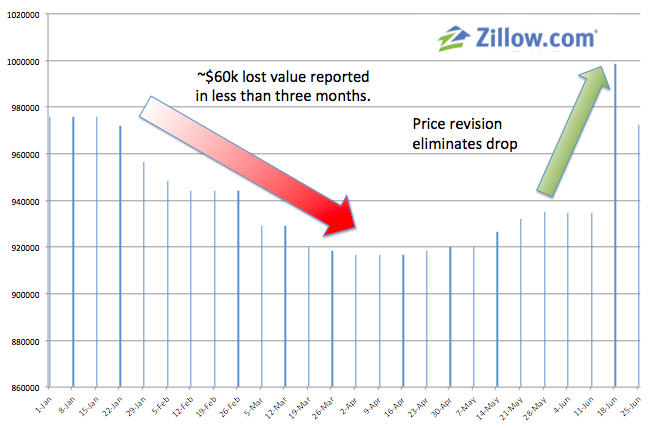
Coming up on the one year mark in our home which we purchased last summer, I've kept an eye on the surrounding market, both on Zillow and Redfin, to not only watch our own home's data, but seeing new sales come and go. In an economy which is by no means perfect, the weekly data coming from Zillow from its frequent "Zestimates", and tagged on my weekly Mint.com emails was pretty bad all Spring. My email archive shows eight separate consecutive downward revisions of our own home value, shaving off sixty thousand dollars in equity. While I have no intention of moving again any time soon, it was hardly reassuring.

Zillow Told Us Our Home Price Was Crashing, Then Changed Its Data

Zillow's New Data Is Smoother, Doesn't Show Crash

I even complained about the continued drops and negative feedback I saw through Zillow on one of my less-trafficked Twitter accounts, citing the $67k drop of almost 10 percent in just under three months.

Clearly the Reported Price Drops Were Weighing On Me

But on June 13th, Zillow wiped the slate clean and the year's data doesn't show such a steep decline after all, showing a comparatively straight line with a near-static value and a minimum of variance. Instead of a sharp downfall I had assumed was true this Spring, the gap between highest Zestimate and lowest is only about $20k, less than a third of the bloodbath I was seeing.

Pricing one's home for sale or financing is a delicate one, a dance of recent area sales, market trends, and all manner of comparables. But Zillow's move has me questioning not just our own home's value, and the year's graph, but all estimates I bump into, and of course, their own projections for values in years' past.

In an FAQ on Zillow's site related to "Zestimate Improvements", they mention that you "Possibly" could see changes in history, thanks to algorithm edits going back to 2006, arguing for improved "current accuracy" and "historical accuracy" - adding "We are now working on re-doing all the history."

An Excerpt from Zillow's FAQ

It's likely they know what they are doing, and with more data, they were losing confidence in both their current and historical values. But it sure didn't seem like the company was unsure about its competence before the move, and I'm not sure they're confident about their current data any more.

February 20, 2011

February 20, 2011 · 2 MIN READ · BY LOUIS GRAY

Redfin Captures Real Estate Cold Snap With Local Stats

Redfin Captures Real Estate Cold Snap With Local Stats

I've long praised the value of Redfin for tracking the ups and downs of the real estate market. I named the site my number one Web service of 2010, after telling you how it did so well for us that we practically single-sourced our home search last Spring and Summer on the site. Even after our home purchase, I've kept frequent watch on Redfin, and they're showing home sales dropping and prices falling in a cold winter market.

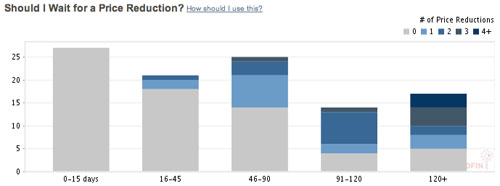
But they take the trend beyond that of a gut feeling, now offering users the option to dive deep into local trends, by zip code, to see trends, recent sales, and even give tips on whether you should wait a few months for the price to drop.

Redfin Shows Weak Winter Market for Local Sales

Watching my own home, just in the last month, the price has dropped by about $30k (according to Zillow). For the 30-year mortgage owner, this shouldn't be a big deal, but it's indicative of what's happened in our particular part of the Bay Area. Redfin said January was chilly for both sellers and buyers, as activity was on pause before the usual seasonal ramp-up for spring and a busy summer. But they insightfully noted price drops on the West Coast with other parts of the country being "mixed." It's no wonder my nightly emails from Redfin on sales haven't filled me with good thoughts of late.

Browsing Redfin By Zip Code Provides Significant Detail

As a new feature to their standard map search, Redfin now offers statistics by zip code, anywhere they operate. For example, if you try Mountain View (94303) or Belmont (94002), you can scan market activity for the area, including:
  • New Homes for Sale
  • Upcoming Open Houses
  • Price Reduced
  • Recently Sold
  • Most Expensive
  • Least Expensive
  • Most Popular
Just below this array of information, one finds graphs of market trends, including price per square foot, sale to list percentage (indicating whether a neighborhood is hot or cold), the number for sale and the number sold, by zip code. Unsurprisingly, given the chilling winter market, data in my area shows sales below list across the board, combined with a lower number of sales than any other point in the year.

Redfin Shows Data on Price Reductions Over Time

As more communities become supported by Redfin and the company starts to follow and aggregate more statistics, there becomes real potential for the site to act as a data-rich barometer for a critical part of the economy. For every Web wonk professing a "bubble" and an imminent crash, it's clear that the financial world has a lot more work to do. Redfin's seeing the way it really is, down to your zip code. Try yours.

December 26, 2010

December 26, 2010 · 8 MIN READ · BY LOUIS GRAY

2010 In Web Services: My Top Ten Sites

2010 In Web Services: My Top Ten Sites


As with my top gadgets list for 2010, this year's list is personal. It's what I use, and what I found had the most impact for me in 2010, which I found myself using every day. The services themselves are limited to being Web-based, so I am not talking about those which are primarily iOS or Android apps, but if they do have a mobile equivalent it helps. What I've found in the way I use the many Web services and sites that take my time is that I may find things first, and I don't always enjoy those which are most popular, but once I do find real value, I am as loyal as they come.

That said, here are the sites that had significant impact on me and my family in 2010. Your mileage may vary.

1) Redfin

2010 saw the arrival of baby #3 in our family. Braden, who joined us in late August, made his potential known at the beginning of the year, and this forced us to start planning a process to move up and out of our condo. With Bay Area housing prices a volatile, yet always expensive, thing, we had to use the best resources available to help navigate the housing search.

Without any hesitation, I can say Redfin saved us. We set the required criteria for potential homes to fit our growing brood, and started getting alerts in the Spring as we set favorites, getting to learn the trends in each sale and seeing the macroeconomics of the market in a microscope. Needless to say, if a home wasn't listed on Redfin.com, we didn't find it, and it's their loss. Even after buying our home in July and moving across town, I frequently use it to follow home sales in the area, and keep sure that we got the best deal for the best place we could afford.

Redfin quite possibly saved us hundreds to a thousand or more a month, or could even have meant another bedroom afforded or a shorter commute. The value is unmistakable.

2) Mint.com

Planning for both the sale of our condo and purchase of our home simultaneously, while navigating the growth of Paladin and transition to my6sense this year, has required an eagle eye into our finances, seeing how our spending has trended, up and down, and managing money flow. Mint.com has become an essential stop for keeping tabs on our home value, 401k status, bank and credit accounts to show us whether we broke even each month, or if we didn't, what the root causes were.

Planning ahead and our focus on the specifics led to our loan operators' excitement when they found we actually had already paid the 20% down on our new home, and I heavily leveraged Mint.com to balance the process, even as we had to close our purchase before the sale of our condo had closed. Doing it without Mint.com would have been a complete pain.

3) Google Reader

Even with the rise of real-time news, Google Reader's ability to catch all my RSS subscriptions in one place is unmatched. Though I have actively scaled back some of the busier or more redundant sites of late to get more time back, Reader is a cornerstone for my information consumption. It, of course, is also a major player in feeding my6sense. That I had encouraged comments and sharing of content from my Google Reader shares led to an easy transition to Google Buzz when it arrived earlier this year as well.

4) Spotify

Thanks to early tech blogger access, I have enjoyed the mainlining of music Spotify has offered for the entirety of 2010, and I've been enjoying Spotify for about 16 months by this point, without the service making US support official. Spotify is practically a music nirvana, with all the best stuff just a search away, on my Mac, our iPads or any of my Android devices. The tie-in with Sonos doubles down on the brilliance as well, delivering all the world's music anywhere in my house. For anybody in love with Last.fm, Pandora, Napster, Rhapsody, Rdio or the rest, Spotify is like getting called up to the big leagues from the minors. Practically the only time I ever visit iTunes now is to download application updates for our iPads.

When I hear new albums from my favorite artists have debuted, I don't go to Amazon.com like I once did, or iTunes. I just go to Spotify, and it seems they are always there. The fact I can call up any song and choose any point in that song and never suffer buffering or sound quality issues is seemingly magic.

5) Twitter

Twitter became even more useful in 2010 than in early years after I dramatically scaled back who I followed, set up customized lists, and gained the ability to sort the service's many updates by relevance, or show only those with links, in my6sense. Removing the link-free updates from Twitter practically put the service on the same pedestal as Google Reader RSS. On the desktop, I continue to use Tweetie for Mac, with its integrated multi-account support, tracking Paladin clients and my6sense, including keyword searches, @replies and any other discussions that could flare at any time.

To use Twitter in isolation from the rest of the Web would starve you of oxygen. But at this point, using the rest of the Web and avoiding Twitter could be similarly bad. News breaks on Twitter and your brand and products can win or lose 140 characters at a time.

6) OneTrueFan

I am gaga over OneTrueFan, not because of the gamesmanship, or even due to its top news feature just launched, but instead due to the potential for discovery from peers of mine to new sites and sources for news. OneTrueFan helps me find out where established folks who I respect are getting their news, or what services they find critical. OneTrueFan manages to be incredibly useful while also being fun. When on the desktop, I use OneTrueFan's browser bar to share articles to Twitter and Facebook, knowing I'll be rewarded for bringing new readers to the story, and to see just how effective my shares were - much like Bit.ly analytics for the entire Web.

This is the second go-round for this team, who spawned and sold MyBlogLog to Yahoo! years ago, who promptly put it through their "How to Botch an Acquisition 101" course. The band is back together and you should wait for some sweet sweet music as they build a horizontal social network that spans all the sites you visit.

7) Google Buzz

For a long-time FriendFeed devotee, the debut of Google Buzz earlier this year, delivering smart aggregation by a company promising to support it, was like manna from heaven. Pad on linking with Google Reader shares, and you could see serious potential. I wasn't as big a fan of it being locked down into a Gmail experience, but believed in its open standards pedigree and corporate promises for fast innovation. I also was one of the few who heard their caution about not taking Facebook and Twitter head-on, but looking to foster a community within Gmail.

Public bumps stalled the service's potential growth out of the gate, and while I enjoy the community a great deal there, and visit every day, it is not as big as it could be, never having launched a dedicated site, where I would spend much more time, and quietly working on its innovations, not making good news when it was available. Without having any detailed insight, I think it is safe to assume that Buzz and the Buzz experience will play a strong role in whatever Google's future social plans for 2011 will be.

8) Blippy

Speaking of amazing services with public privacy bumps that didn't get the press eating out of their hand, Blippy has evolved to play a much bigger role in my online experience than I had first anticipated. Blippy in my mind is the next step after you've first told us you "like" something, and then "checked in" on Foursquare. Blippy shows you what you did when you got there, with your own money. The company is making a real product graph to help connect consumers and bring intelligent reviews to your purchase streams.

Blippy now has pulled in about $100 million in purchases through its site. That's a good chunk of consumer data. Aren't you intrigued by what brands would want to know about these folks? Don't you want to know how Blippy will leverage this gold mine? I do.

9) Zillow

The companion piece to Redfin, Zillow helps provide value estimates for homes practically anywhere - even if they are not on the market, with trends showing if the prices are rising, falling or stable, with 1 year and 5 year histories being especially useful. As someone who just bought a home, I get a lot of fun out of keeping Zillow open on my phone as we walk the kids around the neighborhood to get an idea of the homes we are passing, and their history, or simply getting incremental updates to see if the value of our home has increased since we bought it five months ago. (It has)

10) IceRocket

Yes, Icerocket. Icerocket is the best blog search and Twitter search tool on the planet, period. That you're not using it every day means you haven't figured out why you should. I check IceRocket to watch for mentions of my activity and content in Facebook, Twitter, Blogs, Video and Photo sites daily, as well as those for companies I interact with.

Missing the Buzz? Check out http://louisgray.icerocket.com/ to see what IceRocket has on me or http://my6sense.icerocket.com/ for my6sense, for example. Technorati has changed its focus. Google Blog Search seems neglected at best. IceRocket may not have the brand pizazz, but it's the best.

So who didn't I mention? Quora? Quora's cool, and maybe in 2011, it will play a bigger role, but it hasn't yet made a major impact for me in how I use the Web. Foursquare? That's a mobile experience for me. In June, I wrote up 50 startups worth watching, and that included many of these as well as others. So for a broader scope of companies I am seeing, that's not bad (from 6 months ago). Why isn't Facebook here and Twitter is? Good question. I do use Facebook a lot, but that's like telling the world I use e-mail. Duh. I didn't feel a need to tell you I use Blogger either. That's obvious. So where are you spending the most time, and am I crazy to put sites like Blippy, IceRocket and OneTrueFan so high?

August 14, 2010

August 14, 2010 · 2 MIN READ · BY LOUIS GRAY

Redfin Highlights Schools Alongside Real Estate Search

Redfin Highlights Schools Alongside Real Estate Search

Two months ago, I told you about how my wife and I used Redfin for practically the entire process of searching for and buying a home. If there were properties not listed on the site, we simply didn't see them, as we leveraged the company to track our favorites and discover new options. Even after finally picking one and moving in at the end of July, I haven't stopped window shopping - partly to ensure we made the right choice and to watch macro changes in the area - and I was pleased to see the service has added a new wrinkle to the site, displaying area schools with every single query - making area education options as important as any other facet when choosing a home.

Now, when you search for properties, not only due you see which properties are on the market, and which have upcoming open houses, but you also see school locations, as well as how they rank relative to their peers on a 1-10 scale, based on standardized test scores. Obviously, for a family with children, the higher an area school's ranking, the more appealing the property, and the lower the school's quality, the more likely it is that one's neighbors and neighborhood will have some issues.

Redfin Adds Schools to Real Estate Searches

The integration of education data in Redfin's real estate service is more than skin deep, as each school is now profiled on the site, with basic facts and even parent's reviews. According to Redfin's blog, the service will even soon let you search for homes within a specific district, a big deal for some families.


In the areas of the country served by Redin, the product has eclipsed Zillow and others in many ways, and it looks like it could deliver the same level of detail for schools as it has for new properties. You can even start with a school's description and find homes for sale in the neighborhood, effectively turning the real estate search process on its head. If you're looking for a home and want to find data on schools in the area, Redfin looks to be leading the pack.

June 14, 2010

June 14, 2010 · 3 MIN READ · BY LOUIS GRAY

Redfin Rocks for Relevant Real Estate on Web, iDevices

Redfin Rocks for Relevant Real Estate on Web, iDevices

A truly brilliant Web service is one that impacts your life offline, and can change your life for the better. While there are many different Web sites considered must-visits practically every day, there are other vertical apps which can be especially important for a brief period of your life - such as those, for example, based around health issues, graduate test prep, or prenatal planning. In our home in the last few months, in companion with Mint.com, no single service has been more important, nor more heavily utilized and debated, than Redfin.com (and its associated iPhone app). As we anticipate our third child in a few months, we've known we need to move to a bigger place, and we have done almost all our research and comparisons through Redfin. Essentially, if the activity isn't displayed on Redfin, we assume it doesn't exist.

While there are no doubt many different real estate search sites on the Web, Redfin came well recommended by peers, and in my own comparisons, I often found that Redfin data was more recent and more accurate than others, such as Zillow.com, despite the fact that both services (and many others) pull from the same sources.

Searching for homes on Redfin by price, size and bedrooms...

As a family looking to get a better home, but not being uber-rich, which would come in handy here in the high-priced Bay Area, my wife and I had to determine several things, including those factors which we determined were important to us, including location, size of the home, number of bedrooms, the type of backyard, size of the yard, and quality of nearby schools. Meanwhile, as I played with Excel to try and figure out just how much we could afford, I started dabbling with Redfin to find potential homes and stow them away in my favorites.

Results of Homes that Match Criteria - All Clickable

This dabbling soon became a full-time hobby. For the last three months, I've scoured the Peninsula for homes that made sense for us. If I thought they were a candidate, I hit favorite. I could sort by price, sort by the size of the home, eliminate those that didn't meet criteria, and find which ones had upcoming open houses. Meanwhile, Redin.com has been sending me updates by e-mail overnight to catch me up in case prices change, those on my watchlist saw sales pending, or if open houses were planned or canceled.

One Update from Redfin via E-mail.


Redfin has become my hub for the entire search, and has been so effective that my wife and I haven't looked anywhere else. Every home we have looked at, we previously previewed on Redfin and had the specs memorized before we went through the front door. And after every visit, we went back to Redfin to make changes to our list.

Redfin Pulls From a Wide Variety of Listings (As You Can See)

Knock on wood, this search looks to be soon coming to an end, hopefully. As my wife's not getting any less pregnant, and the buyer of our condo is entering the homestretch on his approvals and paperwork, I hope we start planning the moving phase, and dealing with that major headache.

Redfin.com is not available in all areas, focusing on a number of select metropolitan areas - which, obviously, the San Francisco Bay Area is one. As somebody who prefers to leverage the Web for practically everything I possibly can, it's been awesome to have a strong silent partner like Redfin.com doing all the hard work of looking around for me and letting me know exactly how much I would have to pay each month, or in property taxes, or even how the price of potential homes has changed over the last few years. I love playing with data, and Redfin has a ton of it. If you are thinking of moving or selling your place, and Redfin.com is in your area, I can't see why you would go it alone.