A little over two weeks ago, I told you the Social.com domain was going up for bid to any company looking to obtain the premium URL. The auction was set to take place today, along with other premium domains, including Fares.com, SUV.com and Data.com, but has been postponed, due to technical issues with the domain sellers themselves. So while many are curious if Social.com will go for less than seven figures, or if its high $5 million reserve will be hit, that answer will have to wait until another day - tentatively scheduled for next Wednesday, June 15th.
In the meantime, the Data.com URL actually did sell, ahead of the auction, to Salesforce.com, for more than the $1.5 million reserve set at the auction house. Scott Carter, owner of Social.com, said the deal closed Friday, and that "domains are sold prior to the start of a live auction if the buyer is willing to pay a premium over the reserve."
As Erick Schonfeld of TechCrunch noted in his coverage of the Social.com sale last week, Scott put the domain up for sale in 1997 for $50,000, but for two years, nobody bid and he pulled it off the table. By late 2004, Scott again was asking around to the value of the domain, with domain watchers quoting high five figures to low six figures.
In that September 2004 thread, Scott wrote, "I appreciate all the replies. The range was anywhere from $x,xxx to $xx,xxx. I must admit that I had expected it would be valued closer to the 7 figure range but of course I'm a little biased. I'm going to hold onto the name for now..."
Following 2004, we saw the social media and social networking explosion, so much of the world assumes Scott will get much more than the estimates from seven years ago, even if reactions to today's canceled auction brought out skeptics, claiming today's "technical issues" were a cover for buyers not meeting the high reserves. The world loves a conspiracy.
"I'm still waiting for details on why their systems went down today," Scott wrote me in an e-mail this afternoon, adding, "Not a great day."
With Data.com selling above its reserve, it shows there is interest at the 7-figure level for premium names. We're going to have to wait another week to see if Social.com is one of those companies, or if it ends up going for a lower amount.
June 8, 2011
Cliqset Cofounder Preps Distributed Social Platform Glow
As he describes it, federated protocols and standards often get in the way of building a pleasant user experience, which makes supporting important features like global people discovery, global content search and anti-spam practically impossible, as no information exists in a single place that's easily analyzed. The goal of Glow is to deliver a distributed alternative to Twitter or Facebook, while still delivering full support of their feature set, with no sacrifice to the user experience, while still keeping data ownership in their hands.
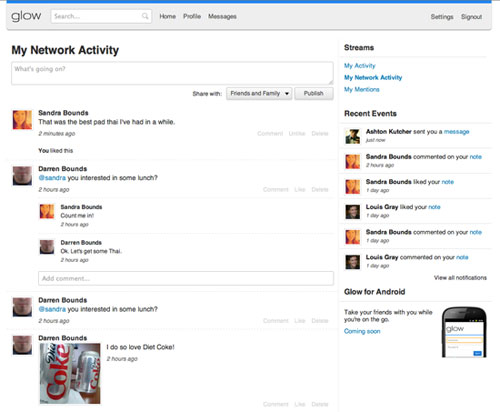
An Early Glow Instance With Sharing, Photos, Comments
Glow looks much like existing platforms, from FriendFeed to Facebook and Twitter, consisting of aggregate network activity, status updates, and nested comments. When creating content, users are able to organize their followers into a number of predefined groups, and you can dictate which group will receive it, keeping the content private to only those on the intended recipient list, unlike Twitter's all public or all private approach, and more similar to Facebook's select distribution and lists, which have proven difficult for most users.
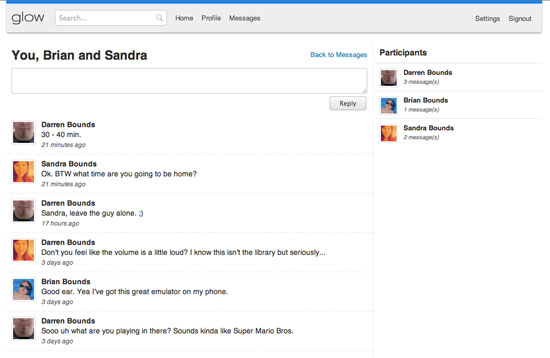
A Private Group Message on Glow With 3 People
At launch, Glow will offer a centralized option, as well as the opportunity for you to launch your own dedicated node, the equivalent of running your own single user copy of Twitter that looked and felt just like it does on Twitter.com, with the same users and experience.
From a feature perspective, Glow will support all the features of a modern social network, with the usual status updates, photo and video sharing, implementing the "follow" model, along with likes, mentions and comments. Additionally, the service is location-aware, which brings forward its own opportunities. What it does not do is aggregate content, a hallmark of Cliqset and other sites, like FriendFeed.
"Glow is an attempt get us a few steps closer by created a system that behaves as users have come to expect while increasing privacy and user control in the process," Darren wrote me in an e-mail. "Glow itself is not a federated system, it is a hybrid architecture combining aspects of centralization with that of decentralization."
True to Darren's background, which featured early implementation of Web standards like Pubsubhubbub and Salmon with his Cliqset effort, Glow will come with a robust API for developers to create applications on to, assuming user authorization. One example Darren gives is the option for users to provide access to their data in exchange for more personalized advertisements (which we've discussed often).
While Darren says Glow itself is not a federated system, those looking to set up their own Glow nodes can do so - much like Status.net, giving them full and complete control over the content. Glow is heavily tied to the Amazon cloud, helping keep costs free to users and low to Darren.
"Basically, if Twitter and Facebook had a great looking and highly intelligent child together who grew up to solve world hunger, it would be Glow," jokes Darren, who says that the product is still in the realm of personal experiment, more than an actual business. The project is being completely self-built, and Bounds hasn't yet taken any funding.
While Status.net and Diaspora have made new in the past for their approach, most federated systems have put technology ahead of the user experience, and have suffered in adoption. Glow is hoping to achieve the benefits of federation without sacrifice of technology features or user experience.
"I've taken many of the best features of Facebook and Twitter and combined them with some of my own special sauce," Darren says, "The result is a reinvention of social network architecture with none of the user complexity of systems that have come before."
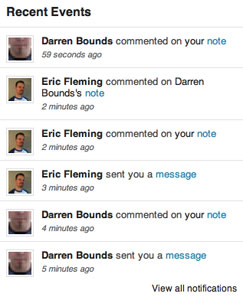
A Simple Nested Comment Stream With Option to Like or Delete
In future enhancements, after initial launch, Glow content will be organized into two types - user content and publisher content. Its architecture ensures that user content is created by people and not bots, and a publisher marketplace is being designed so organizations can push content and build community. Publishers will be organized much like Apple's App store, with categories and featured communities.
Darren is nothing if not ambitious. Cliqset, while it didn't attract massive the massive user base it deserved for all the work put into it and pioneering of leading-edge technologies, was always well respected for its forward thinking. Glow, marinating at http://glow.io, should be just as forward thinking, but instead of pushing people into a single domain, it's allows people to create their own instance, run it anywhere and own their own data. It's all about putting the power of social networking back in the users' hands, with real privacy controls and simplicity.

June 7, 2011
Steve Jobs Proposes Spaceship-like Future Apple Campus
Sitting where I do in Sunnyvale, driving ten minutes South can have me on the Apple campus, and driving ten minutes North lands me at Google in Mountain View. With both companies hiring like mad and buying up the surrounding real estate in their respective communities, it's likely that I'll be surrounded by Goople in just a few years. As far as I'm concerned, that's great. More money for the area, more jobs, and more innovation, even if the two companies are occasionally not the biggest fans of one another.
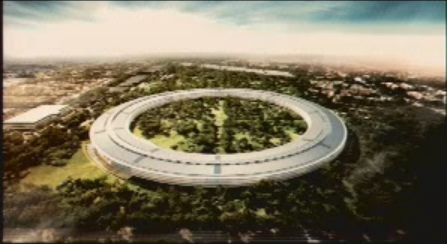
Tonight, Steve Jobs stepped down from the lofty pedestal most of us hold in our heads for him and presented at Cupertino's City Council meeting to offer his vision for a much-needed second Apple Campus, a futuristic flying saucer like building which he said could hold upwards of 12,000 employees, up from the less than 4,000 who inhabit the company's headquarters at 1 Infinite Loop. As he told the council tonight, Apple has been buying or renting all the surrounding office space they can in the city, and some of it just isn't good.
Like Apple's hardware and software, this proposal has a distinct design - one that borrows from the company's experience in building its hundreds of retail stores. Job says there is no straight piece of glass in the entire building, which makes a continuous circle, with its innermost part being a central courtyard. "We know how to make the biggest pieces of glass in the world for architectural use, and we want to make the glass, specifically for this building, curve all the way around the building."
Much like the beautiful, if not commercially successful, G4 Cube, Jobs' says this design "is pretty cool." His approach to the council is humble, one of storytelling, a position where he says Apple is "growing like a weed", and wants very much to continue being part of the city. It's an incredibly human presentation from a man who does this better than pretty much anyone - taking his story to the people he needs to help. I can't imagine Larry Ellison of Oracle or Steve Ballmer of Microsoft not only doing this, but doing so in such a compelling way that makes you want to help.
No matter your computer or mobile preferences, or thoughts on Apple's approaches in other markets, you can learn a lot from the way Steve Jobs does business. Even this presentation to the council is worth watching. I hope that we see this campus built practically in our backyard.
Tonight, Steve Jobs stepped down from the lofty pedestal most of us hold in our heads for him and presented at Cupertino's City Council meeting to offer his vision for a much-needed second Apple Campus, a futuristic flying saucer like building which he said could hold upwards of 12,000 employees, up from the less than 4,000 who inhabit the company's headquarters at 1 Infinite Loop. As he told the council tonight, Apple has been buying or renting all the surrounding office space they can in the city, and some of it just isn't good.
The Proposed New Apple Campus (via Video Still)
Like Apple's hardware and software, this proposal has a distinct design - one that borrows from the company's experience in building its hundreds of retail stores. Job says there is no straight piece of glass in the entire building, which makes a continuous circle, with its innermost part being a central courtyard. "We know how to make the biggest pieces of glass in the world for architectural use, and we want to make the glass, specifically for this building, curve all the way around the building."
Much like the beautiful, if not commercially successful, G4 Cube, Jobs' says this design "is pretty cool." His approach to the council is humble, one of storytelling, a position where he says Apple is "growing like a weed", and wants very much to continue being part of the city. It's an incredibly human presentation from a man who does this better than pretty much anyone - taking his story to the people he needs to help. I can't imagine Larry Ellison of Oracle or Steve Ballmer of Microsoft not only doing this, but doing so in such a compelling way that makes you want to help.
No matter your computer or mobile preferences, or thoughts on Apple's approaches in other markets, you can learn a lot from the way Steve Jobs does business. Even this presentation to the council is worth watching. I hope that we see this campus built practically in our backyard.
The Split Definition of Cloud Suits Those Speaking
Like any good Mac user and tech fan, I absorbed yesterday's announcements with Apple with great interest - knowing the OS updates will be hitting my laptop in a few months' time, and the iOS feature bumps will reach our array of iPod Touch and iPads at home - eventually seeing the best of these new features trickle out to non-Apple systems (including our Androids) thanks to the continued leapfrogging we see in this closely followed industry. But where Apple struck was where one would expect them to - in a manner that suited their interests. It's not necessarily always best for the future, but what's best for them. All money-driven companies would love to shape the future to meet their needs.
The most heavily anticipated updates from Steve Jobs and crew yesterday pertained to their introduction of iCloud, the next generation of MobileMe and iTunes. With Google and Amazon having announced music lockers, and streaming services like Spotify, MOG and Rdio in the mix, Apple's big move into the cloud was much-discussed, as news items followed each label, signature by signature, and watched the tea leaves to try and anticipate what Apple would deliver.
Apple used the term iCloud to represent the near-synchronization of digital media between a host of devices, from music to movies, books and photos. Buy once and play anywhere was the idea. No more moving of data back and forth. That's good stuff - and much was made of the $25 a year iTunes Match, which would push all your music, purchased on iTunes or not, to your other devices. Very clean, but oddly misrepresented, I believe. Apple says that iCloud stores your music, and its description page strictly states "your music is stored in iCloud", while the music automatically appears on your registered devices. But it's not streaming, and it's not as if when you are playing your music that you are doing so from their cloud. You're still doing it from your local device.
In contrast, we have seen two major business models from more acceptably-labeled cloud music services. The first, like Google Music, has you upload all your tracks (which can take a while) and then you can play them in a Web browser, any Web browser with your Google credentials, and play any time you like. The music is hosted in the cloud and streamed to you. The second, like Spotify and others, lets you tap into their available tracks, including playlists you've made from that library, and stream it to you.
Apple did not announce either of those approaches yesterday. They kept with their device-centric model which is making them billions of dollars and quite honestly, simplifying the Web and applications for millions of people. As I joked with one ardent Apple fan yesterday, Apple makes other people's inventions beautiful. They do quite a bit of innovation on their own, of course, but they sure do know how to take other people's ideas and make them look fantastic. But they didn't turn their back on their devices, despite talk of making them second-class citizens.
Google's approach on being truly Web-centric, and not tied down to specific devices, supports their business model, of course. They are making money from Web services (and associated advertising) while commoditizing hardware, which we will see with a big kickoff in a few weeks with the launch of the first ChromeBooks. The ChromeBooks, including the CR-48 which I've been using since December, bring you the Web and nothing but the Web. Sign in with your ID and get your content. Sign in with somebody else's ID and get their content. It's a fantastic idea and one that clearly supports their own business strategy. Their cloud interpretation supports what makes sense for them.
The divergence between these two players' strategies was in clear display yesterday. As a Mac user who has multiple Apple devices and a host of iTunes files, having them everywhere is cool. But I did also make the move to put them in the cloud (Google's version) and love the fact I can get to them from anywhere. Having used the CR-48 a ton lately, it's eye-opening to think of how the hardware is practically disposable. Assume you're logged out and it gets stolen. So what? Go buy a new one. For the price of a high-end iPod, you get everything back. No lost data or preferences. Google's interpretation of the cloud, which matches their interests, has some kind of real value to the user, and so does that with Apple.
If I was looking for a big announcement from Apple yesterday to keep me on iTunes instead of Spotify, it didn't come yesterday. I didn't see a major reason to stick with MobileMe/iCloud instead of Gmail and Google Docs either. But I absolutely see real value in their introductions, and anytime you see major companies slugging it out on quality for their users, everybody wins. But don't expect them to tell you what the future holds, unless you know that their projections are directly in line with what they can sell you today.
The most heavily anticipated updates from Steve Jobs and crew yesterday pertained to their introduction of iCloud, the next generation of MobileMe and iTunes. With Google and Amazon having announced music lockers, and streaming services like Spotify, MOG and Rdio in the mix, Apple's big move into the cloud was much-discussed, as news items followed each label, signature by signature, and watched the tea leaves to try and anticipate what Apple would deliver.
Apple used the term iCloud to represent the near-synchronization of digital media between a host of devices, from music to movies, books and photos. Buy once and play anywhere was the idea. No more moving of data back and forth. That's good stuff - and much was made of the $25 a year iTunes Match, which would push all your music, purchased on iTunes or not, to your other devices. Very clean, but oddly misrepresented, I believe. Apple says that iCloud stores your music, and its description page strictly states "your music is stored in iCloud", while the music automatically appears on your registered devices. But it's not streaming, and it's not as if when you are playing your music that you are doing so from their cloud. You're still doing it from your local device.
In contrast, we have seen two major business models from more acceptably-labeled cloud music services. The first, like Google Music, has you upload all your tracks (which can take a while) and then you can play them in a Web browser, any Web browser with your Google credentials, and play any time you like. The music is hosted in the cloud and streamed to you. The second, like Spotify and others, lets you tap into their available tracks, including playlists you've made from that library, and stream it to you.
Apple did not announce either of those approaches yesterday. They kept with their device-centric model which is making them billions of dollars and quite honestly, simplifying the Web and applications for millions of people. As I joked with one ardent Apple fan yesterday, Apple makes other people's inventions beautiful. They do quite a bit of innovation on their own, of course, but they sure do know how to take other people's ideas and make them look fantastic. But they didn't turn their back on their devices, despite talk of making them second-class citizens.
Google's approach on being truly Web-centric, and not tied down to specific devices, supports their business model, of course. They are making money from Web services (and associated advertising) while commoditizing hardware, which we will see with a big kickoff in a few weeks with the launch of the first ChromeBooks. The ChromeBooks, including the CR-48 which I've been using since December, bring you the Web and nothing but the Web. Sign in with your ID and get your content. Sign in with somebody else's ID and get their content. It's a fantastic idea and one that clearly supports their own business strategy. Their cloud interpretation supports what makes sense for them.
The divergence between these two players' strategies was in clear display yesterday. As a Mac user who has multiple Apple devices and a host of iTunes files, having them everywhere is cool. But I did also make the move to put them in the cloud (Google's version) and love the fact I can get to them from anywhere. Having used the CR-48 a ton lately, it's eye-opening to think of how the hardware is practically disposable. Assume you're logged out and it gets stolen. So what? Go buy a new one. For the price of a high-end iPod, you get everything back. No lost data or preferences. Google's interpretation of the cloud, which matches their interests, has some kind of real value to the user, and so does that with Apple.
If I was looking for a big announcement from Apple yesterday to keep me on iTunes instead of Spotify, it didn't come yesterday. I didn't see a major reason to stick with MobileMe/iCloud instead of Gmail and Google Docs either. But I absolutely see real value in their introductions, and anytime you see major companies slugging it out on quality for their users, everybody wins. But don't expect them to tell you what the future holds, unless you know that their projections are directly in line with what they can sell you today.