
Following
Google's introduction of the Web-centric Chrome Operating System, my biggest questions around the project have largely been divided into two pieces - the first being the expectation of pervasive high speed Internet and the second being the availability of high quality Web applications that could replace the desktop environment. And while the first issue's answer depends largely on your location, the second issue is showing serious signs of being filled with this morning's introduction of the Chrome Web Store. At Google I/O today, the tease of the upcoming Web store brought serious intrigue and as one of the major highlights in what was an extensive and comprehensive near two hour keynote. And avoiding all hyperbole, as best as I am able, I came away so impressed with the potential of the Web store that it had me rethinking how the introduction could radically change the paradigms of how we obtain applications today and how we interact with our operating systems, desktop apps and online commerce.
As Sundar Pichai, vice president of product management at Google, explained, customers have long struggled to find Web applications - lacking ratings and reviews. In the world of mobile phones, this has largely been solved with fantastic examples of Apple's iTunes Store and the Android Marketplace, but for Web Apps, there has not been a centralized source to obtain these apps, run these apps and - should the option be available - pay for these applications.
Some Web Apps In the Chrome Web Store
Pichai said the problem pointed in two directions - first in users struggling to find the apps, and second, the developers finding ways to be discovered. Additionally, users' tendency has always been to think Web applications should be free of cost, forcing most developers to go the advertising route to make revenue. The Chrome Web Store intends to shake that up. One major benefit of shaking up the way users find Web apps, developers promote Web apps and Web apps make revenue? Centralizing a source for applications for Google Chrome - not just as a browser, but
.
In April, I wondered about how developers were going to have to work in a world with
so many different platforms vying for their attention. Developers are having to decide not just between the major operating systems, but also between the different mobile operating systems, like iPhone and Android - with WebOS from Palm also facing an uncertain future in its new home at HP. One alternative, and one that Google certainly hopes will become the future of app development, is to leverage Web standards and code for the browser.
While the Web's origin was around static documents, it is obviously becoming a platform for rich and social applications. New capabilities, many of which leverage the much discussed HTML 5, enable Web application developers to create high quality rich experience applications that run within the browser, not on the desktop.
"The future of the Web is HTML 5," Pichai said, adding that the 70 million Chrome users who use the browser, contrasted with 30 million last year at this time, would have access to the new Web store in their browser every time they started up. And this future demonstrated a number of full-featured applications, not scaled-down options or dumbed down options we've grown used to in a Web browser experience, but the real thing - and sometimes even more.
Today's demonstration from Sports Illustrated's Editor, Terry McDonnell, of the company offering a full magazine experience - plus interactive, updated, scores and rich media, looked like the first real alternative to the print edition I would possibly be interested in paying for - oddly, the same thing people said about apps on the iPad when Apple's tablet launched. And yet, at times, I was thinking that this kind of a Web store could potentially even have more of an impact on the future of Web development than a single tablet could - creating the opportunity for Web applications to make money in the same way that Apple's iTunes Store has, and start to help customers realize the value of high quality apps, based on leading technology standards, that could drive incremental revenue.
If Web services and Web app developers find a Web store - for profit - compelling, this could potentially drive the same kind of gold rush to Chrome's Web Store as we have seen to iPhone and iPod Touch and iPad in the last few years, helping to further promote Google's Chrome browser, and of course, the planned operating system. The more apps available for the operating system, pushing data stored to the cloud, the fewer holes and questions there are around Chrome's future.
This announcement was more than flashy cover photos on Sports Illustrated (which were cool) or seeing a Lego version of Star Wars played in the browser (doubly geeky). This was about redefining the approach to online commerce for Web apps and redefining what we can expect from quality apps deployed in the browser, further paving the way for users to commit to Chrome. It's early, but as McDonnel said, we are "at the beginning of a storm of innovation." While skeptics may see this introduction as yet another hook into Chrome from Google, or offered only to a subset of users on the Web today, it's forging a new approach the other players aren't promoting, and one that benefits both users and developers.
 Speaking in the shadows of Steve Jobs keynotes past, the first day of Google I/O seemed to work around the elephant in the room of Apple and Google's recent conflicts and ongoing battles in mobile, advertising and the OS. Apple, of course, was not a speaker at the conference, is not participating in any of the breakout sessions, and it seemed as if Google's spokespeople went out of their way to work around Apple's positions on app stores, standards, and most notoriously, Flash. The war between Apple and Google has been heating up over the last year, and as of January, the two companies were said to consider the other as primary enemies, even as Google has made it easier for traditional Mac fans to seek out an alternative. But today, not only did the speakers not bring up Apple, or note their lack of inclusion in some standards, but practically every Mac laptop that was used saw the familiar glowing Apple covered with a Google sticker of some sort.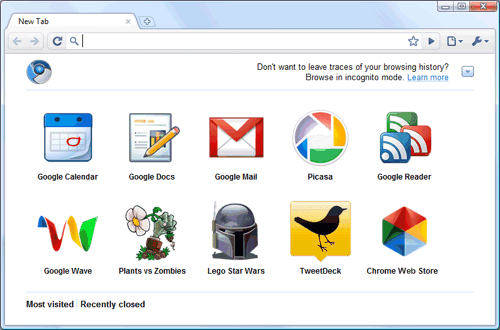



 Regardless of
